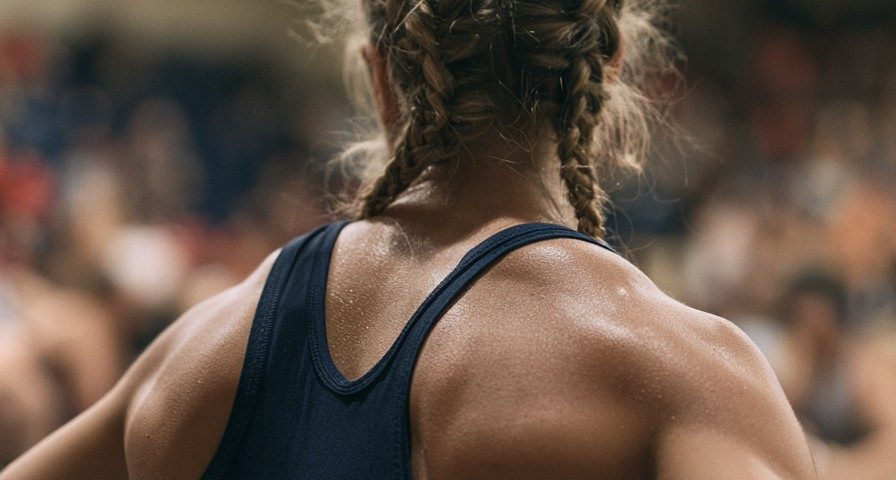
The line at the scale moves one wrestler at a time. The referee checks nails and skin, then points at the end of a braid where a metal cuff is catching the light. “That has to come off before you wrestle.”
Two spots back, a teammate is on her knees, unzipping every pocket of her bag for the hair cap she swore she packed. Most hair trouble here is like that: small, fixable, found at the worst moment. Good wrestling hairstyles aren’t about looking polished in the corner; they keep hair flat, out of your eyes, away from an opponent’s fingers and free of anything an official will make you remove.
Below: the real high school rule (it changed in 2020), a pick-your-style table, 14 styles with steps and timing, a hair kit, a 10 minute match day plan and a free printable card.
Quick answer
Under NFHS high school rules there’s no hair length limit and no required hair cover, but nothing hard, sharp, abrasive or oily is allowed, and any cover you wear must be solid, non-abrasive and attached to your ear guards. For long hair, two Dutch braids tucked under (about 15 minutes) is the most secure match day style. Coily hair does best in cornrows or flat twists done the night before, and short hair needs nothing at all.
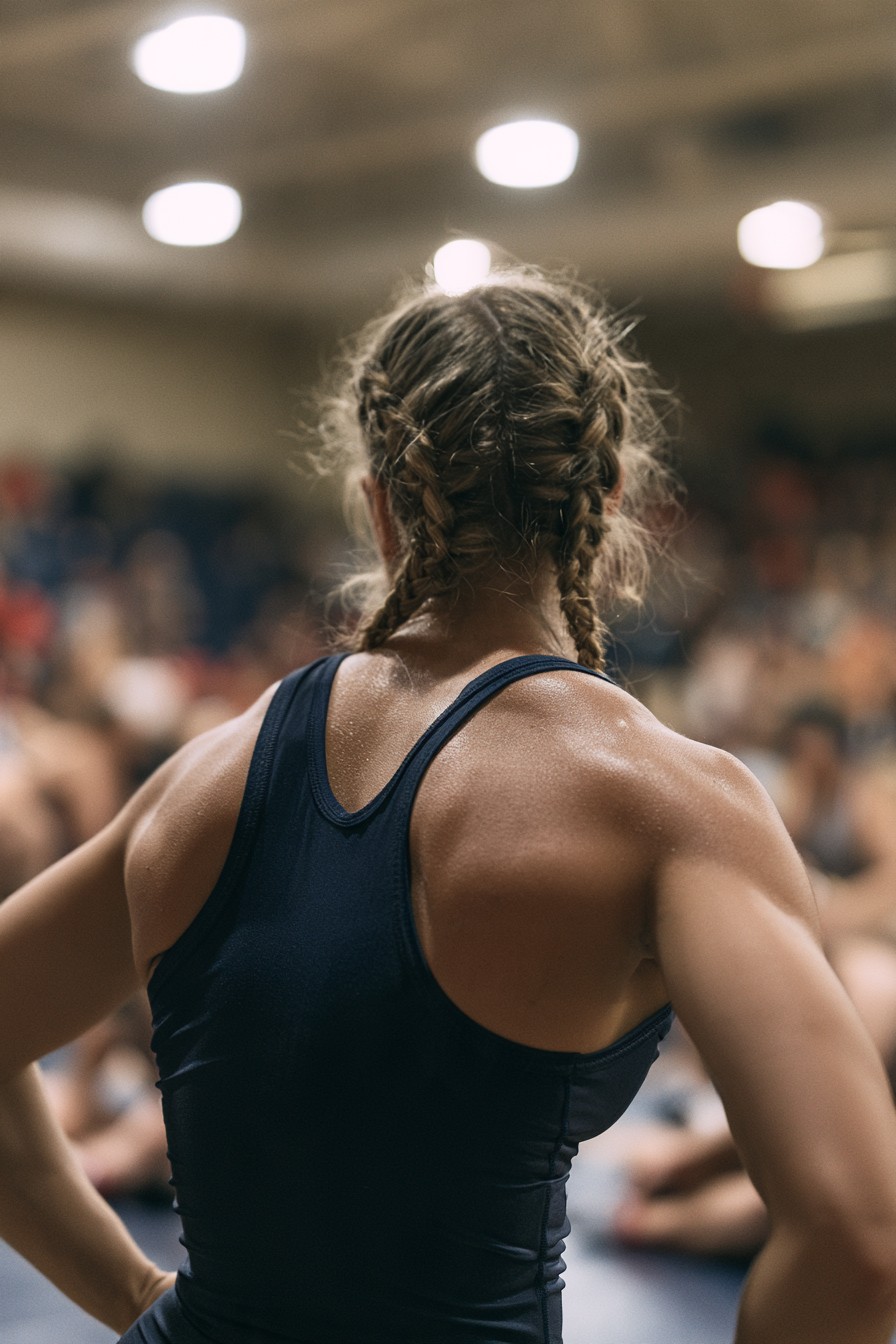
Why hair matters on the mat, and how to pick a style
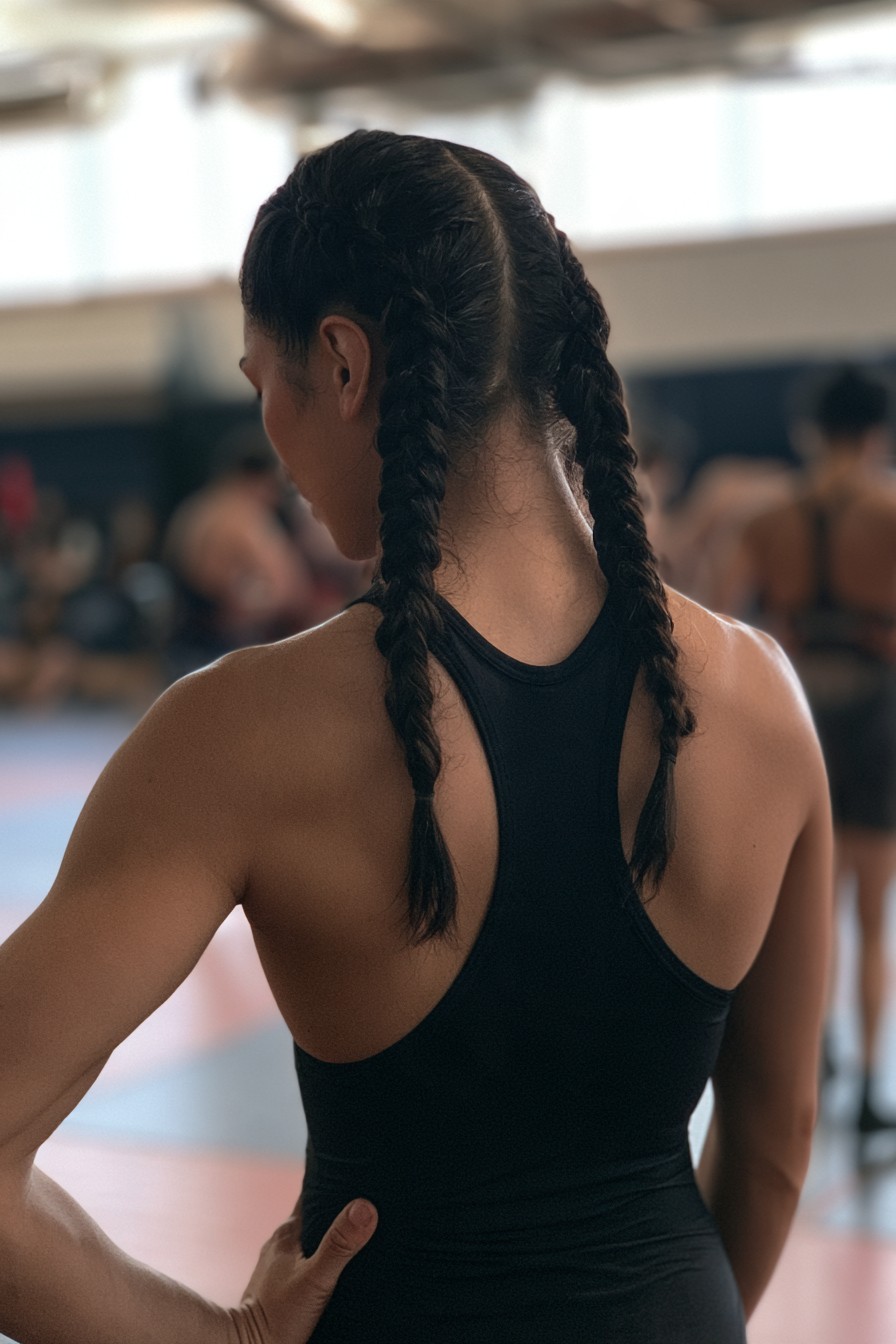
Every style below solves three problems.
- Tangles. Loose hair gets trapped under an arm or knee in a scramble,. Flat braids tucked at the ends leave nothing to pin.
- Vision. A strand across your eyes costs you a beat on a shot or a sprawl. If anything reaches your eyebrows after a hard head shake, braid it back or cover it.
- Skin. Wrestling means constant contact with mats and partners. The CDC’s MRSA prevention steps for athletes include showering right after exercise and not sharing towels, razors or uniforms. Treat elastics, combs and caps exactly the same way.
Pick in ten seconds; “holds for” is typical, not guaranteed.
| Your hair | Match day pick | Time | Holds for | Cap? |
|---|---|---|---|---|
| Long, straight or wavy | Two Dutch braids tucked under | 15 min | 1 day | Optional |
| Long, short on time | Braided low bun | 10 min | 1 day | Yes |
| Curly or coily, can plan ahead | Straight-back cornrows | 45 to 90 min | 1 to 2 weeks | Optional |
| Curly or coily, midweek | Flat twists | 30 to 40 min | 3 to 4 practices | Optional |
| Box braids or locs already in | Flat low bun | 5 min | Life of the install | Yes |
| Chin to shoulder length | Two mini Dutch braids | 8 min | 1 day | Optional |
| Bangs | Braided-back fringe | 5 min | 1 day | If too short to braid |
| Short crop | Nothing | 0 min | 3 to 4 weeks between trims | No |
Nobody tells you this: a hair cap that never gets washed turns into a sweaty sponge pressed to your scalp for six minutes at a time. Own two, rotate them, and wash one after every use.
The wrestling hair rules, checked
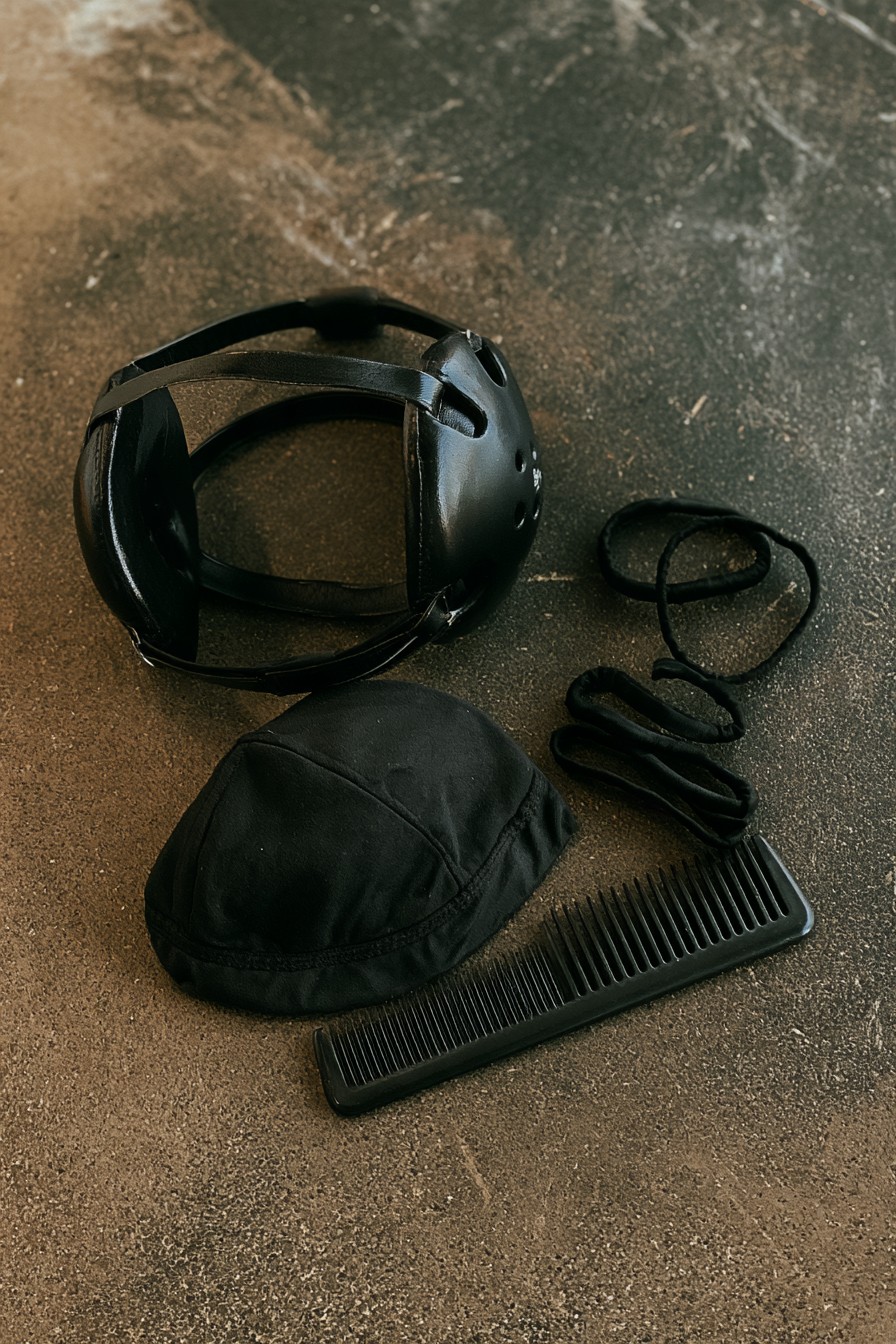
You’ll still hear that hair past the collar must be braided and covered. That was the old rule. Starting in 2020-21, NFHS removed the hair length limits and the mandatory cover, the book most American high schools follow.
- No length limit, no required cover. Long hair on its own is not a violation for anyone.
- A cover is optional, but if you wear one it must be legal. Solid material, non-abrasive, and attached to the ear guards. A loose stretchy cap worn without headgear doesn’t qualify.
- No hard, sharp or abrasive hair items. That rules out metal cuffs, beads, barrettes, bobby pins and plastic clips.
- No oils or greasy substances on or in the hair. Skip heavy oils and greasy pomades on match day.
- Facial hair is permissible under a later NFHS change, which also says facial hair length doesn’t factor into the referee’s decision. Officials still check the skin underneath.
The detail that trips people up: the same 2020-21 update barred shoes and ear guards during weigh-ins. Since a legal cap clips to your ear guards, you’ll weigh in with your braids showing, so the braids themselves have to be clean of metal and beads at the scale.
College and freestyle events use their own rule books, and states add guidance. Decision rule: if you’re unsure about an item, show it to the official at weigh-ins, not on the mat. Common mistake: trusting a teammate’s memory of the rule instead of your state’s current handbook.
Wrestling hairstyles for long hair
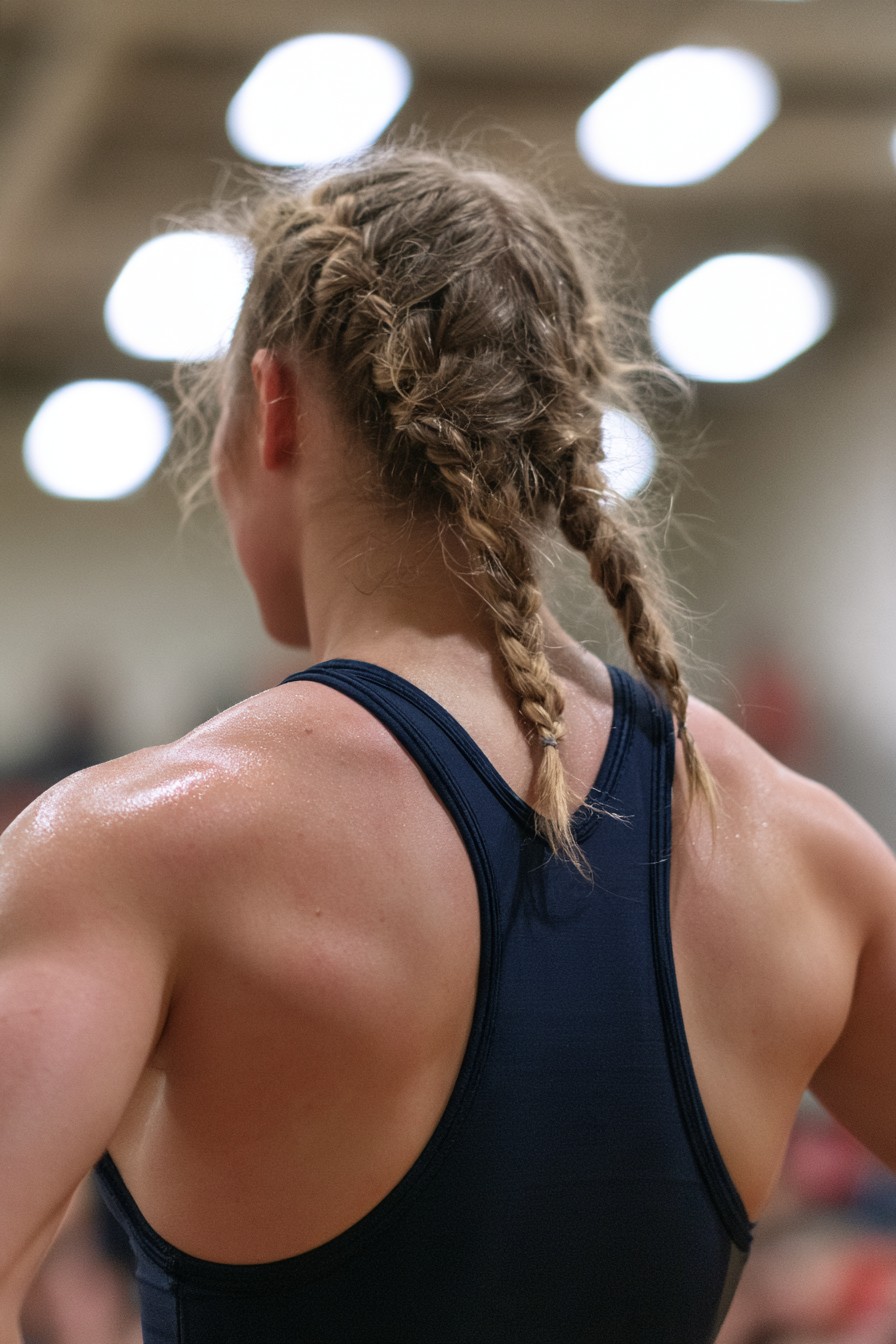
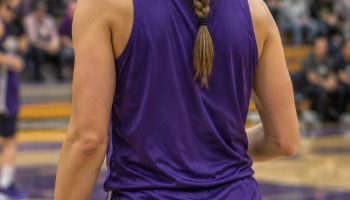
Sweaty straight and wavy hair slides, so these wrestling hairstyles rely on braids that start at the hairline and end tucked flat. “Secured” here means soft elastics with no metal, never pins. Braid on slightly damp hair for grip.
1. Two Dutch braids tucked under (15 minutes, harder)
- Part down the center from forehead to nape and band one side out of the way.
- Take a 1 inch section at the hairline, split it in three, and cross the outer strands under the middle.
- Add a small section of loose hair each time you cross, keeping your hands against the scalp.
- At the nape, keep braiding plain three-strand to the ends and wrap a soft elastic.
- Fold the tail up under the braid and wrap a second elastic around the fold. Repeat on side two.
This is the most secure option on the list. Common mistake: trying it for the first time on tournament morning. Practice twice during the week, because a loose first attempt slips by the second period.
2. One French braid folded up (12 minutes, medium)
Start at the crown, crossing strands over and adding hair from each side down to the nape. Braid the tail, loop it up under itself and secure with a second elastic. Easier solo, but it leaves a thicker ridge at the back.
3. Braided low bun under a cap (10 minutes, easy)
Make a low ponytail at the nape, braid it, coil it flat and wrap a wide fabric band around it. Add a cap attached to your ear guards. Keep it low: a high bun becomes a hard knot under your skull every time you bridge.
4. Two low braids for practice (8 minutes, easy)
Two simple three-strand braids behind the ears, each finished with an elastic. The trade-off: loose tails swing into faces, so fold them up before live wrestling.
Protective wrestling hairstyles for curly and coily hair
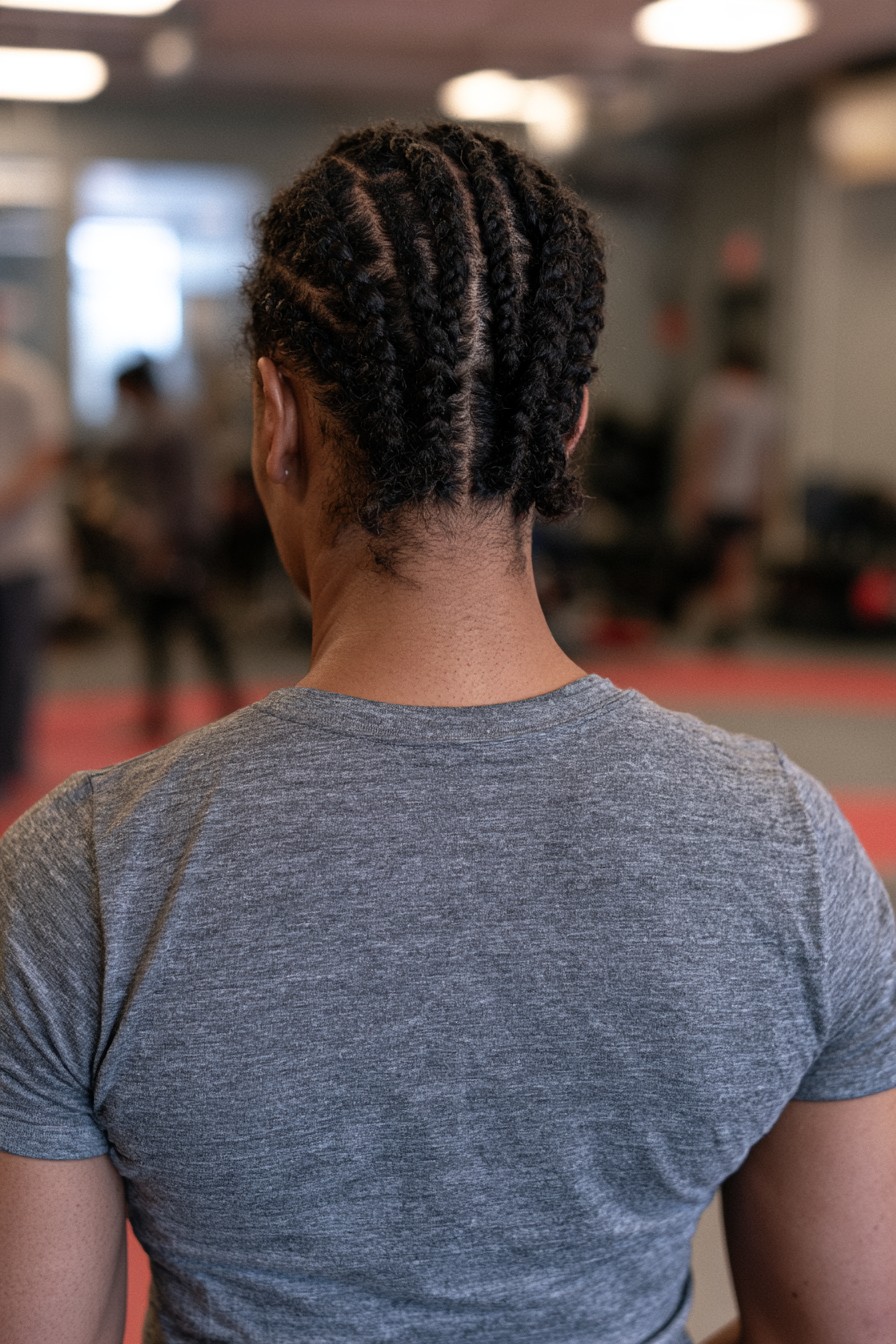
Textured hair holds a style better than straight hair. The cost is moisture: daily practice showers dry it out fast. Install the long styles the night before, and use water-based leave-ins instead of oils on match day.
5. Straight-back cornrows (45 to 90 minutes, harder)
Braid six to ten rows from the hairline to the nape and tuck the ends under the last row or into a cap. Fewer, thicker rows pull less and last one to two weeks; curved or zigzag parts add 10 to 20 minutes.
6. Flat twists (30 to 40 minutes, medium)
Two strands twisted flat against the scalp. Faster and gentler than cornrows, but they loosen sooner. Plan a touch-up after three or four practices.
7. Box braids or locs in a flat low bun (5 minutes, easy)
Remove every bead and cuff, gather everything at the nape, coil it flat, secure with a large fabric band and cover with a cap. Don’t re-tighten the edges to make it look fresh for photos.
8. Chunky two-strand twists tucked into a cap (8 minutes, easy)
On wash-and-go curls, make four to six chunky twists back from the hairline and tuck everything into the cap. It’s the fix for the morning you didn’t plan ahead.
The American Academy of Dermatology warns that tight hairstyles can cause traction alopecia, and its rule is simple: if a style feels painful, it’s too tight. It suggests thicker braids and locs, loosening braids around the hairline, and wearing braids no longer than 6 to 8 weeks. Decision rule: if a fresh install still stings after the first night, get it loosened.
Short hair, bangs, and styles for men and boys
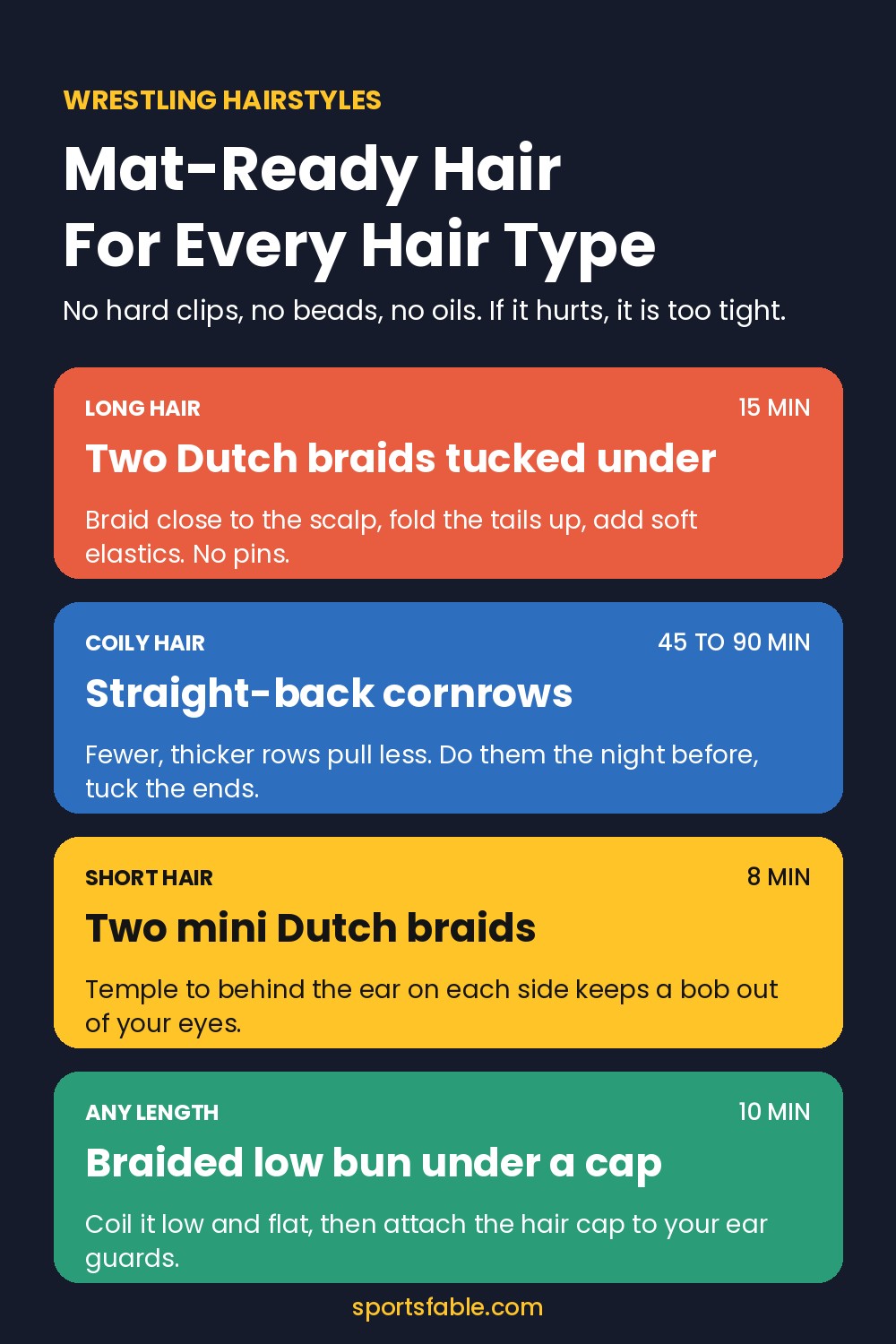
9. Two mini Dutch braids for a bob (8 minutes, medium)
For chin to shoulder length hair, Dutch braid each side from the temple to just behind the ear and finish with a tiny elastic. Skip this and you’ll spend the match pushing hair off your face.
10. Braided-back bangs (5 minutes, medium)
Braid the fringe sideways along the hairline and tie the end into a side braid or tuck it under the cap. Bangs under about 3 inches won’t hold a braid, so use a cap that covers the forehead edge.
11. The short crop (no styling, trim every 3 to 4 weeks)
A buzz, crew cut or short fade is the classic look for men and boys because it needs nothing on match day. With no NFHS length limit, it’s a preference, not a requirement. Nobody tells you this: book the trim three to five days before a big tournament, not the night before, so razor bumps and nicks settle before skin checks.
12. Textured top, clean sides (2 minutes)
Keep the sides short and leave 2 to 3 inches on top. Rinse, towel dry and go, with no oily pomade or wax. Decision rule: if the top reaches your eyebrows when wet, it’s time for a trim.
Pigtails, cute practice styles and what to avoid
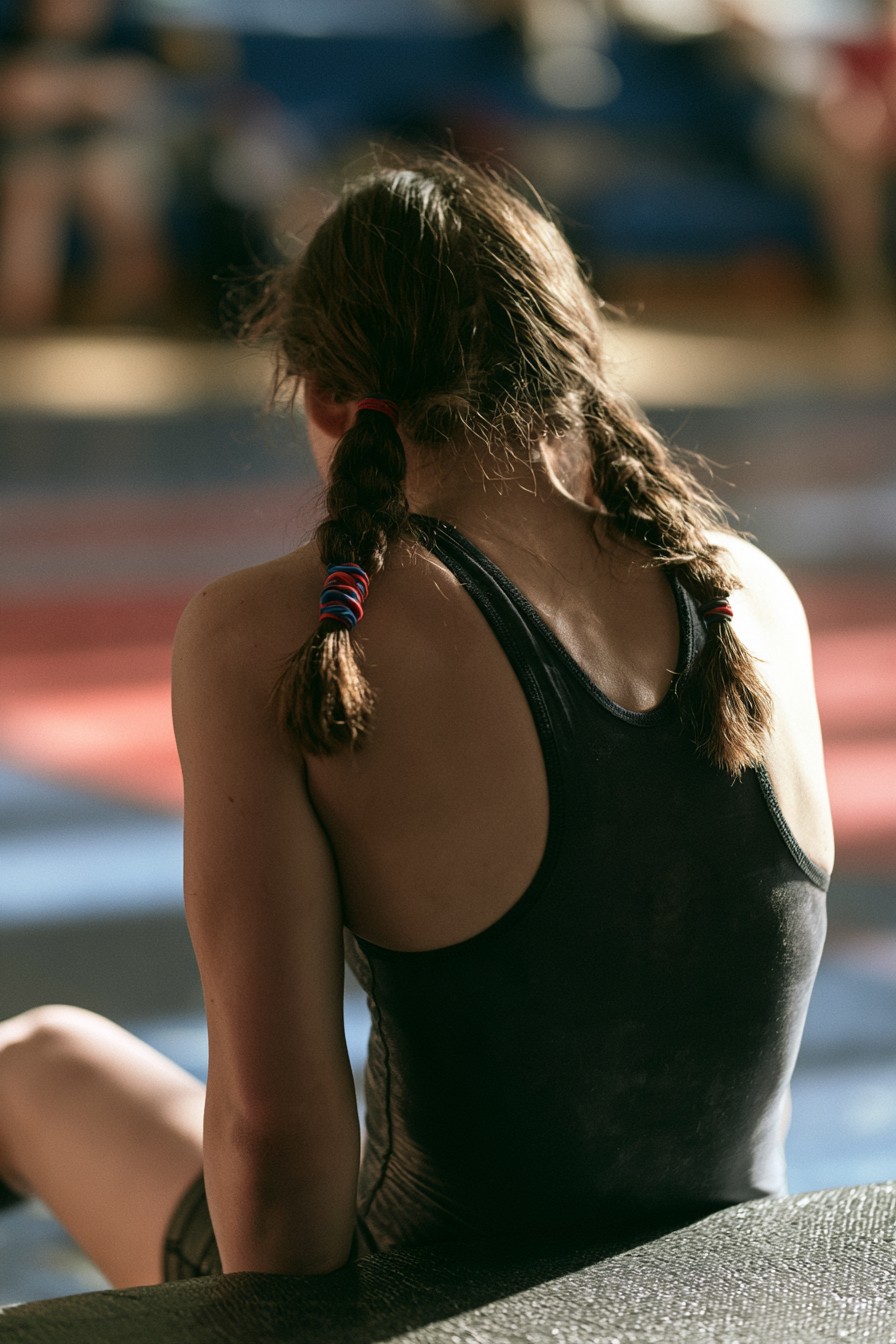
13. Pigtail braids (10 minutes, easy)
Part down the middle and braid each side into a low pigtail, finishing with colored soft elastics. Cute for practice and photo days. For matches, fold the ends up so nothing dangles.
14. Bubble braids for drills (8 minutes, easy)
Two low ponytails with an elastic every 2 inches, each section puffed wider. Practice only: the bubbles are too bulky under a cap.
Leave these out on match day, and use the swap instead:
| Leave it out | Why | Use this instead |
|---|---|---|
| Bobby pins, claw clips, barrettes | Hard or sharp; falls on the mat | Soft elastics with no metal joint |
| Beads, metal cuffs, rings | Hard items an official will make you remove | Plain braid ends tucked under |
| High bun or top knot | Hard knot under your head on your back | Low coiled bun at the nape |
| Loose ponytail | Swings into faces and tangles | Braided and folded up |
| Hair oil, greasy pomade, shine spray | Oils and greasy substances are barred | Water mist or a water-based gel |
Common mistake: elastics with a small metal crimp where the ends join. They count as metal to a strict official, so buy seamless ones.
Your hair kit, a 10 minute plan and aftercare
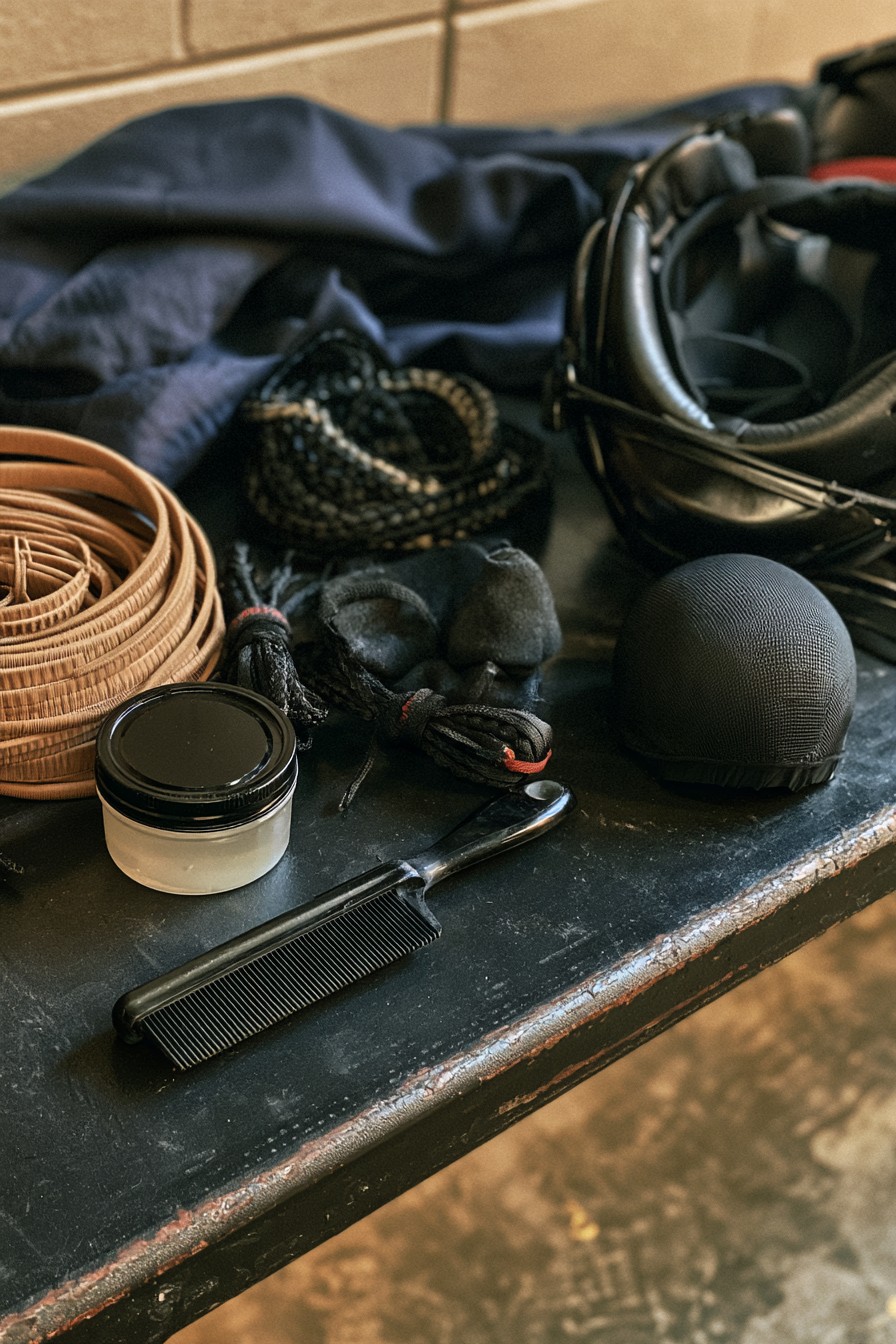
Keep one zip pouch in the bag all season, next to the rest of your gym bag essentials. Expect the whole kit to run about $20 to $45.
- 12 seamless soft elastics and two wide fabric bands
- Two hair caps that attach to your ear guards (one to wear, one in the wash)
- A wide-tooth comb and a mini spray bottle of water
- A small water-based gel for edges and flyaways
- A satin scrunchie or scarf for the ride home
The match day plan for wrestling hairstyles that go in fast:
- Minute 1: remove all jewelry, beads and metal.
- Minutes 2 to 3: mist with water and detangle with the wide-tooth comb.
- Minutes 4 to 7: braid or twist.
- Minute 8: fold the tails up and secure with soft elastics.
- Minute 9: weigh in, then attach the cap to your ear guards and put the headgear on.
- Minute 10: shake test. Shake your head hard for five seconds: nothing reaches your eyes, nothing hard, nothing loose.
Free printable
Wrestling Hairstyles Match Day Card
A free 2 page printable: a chart of 14 styles by hair type with time and difficulty, a hair kit and hair cover rule checklist, step cards for 4 styles and a season hair and scalp check planner.
The free printable match day card puts the style chart and rule checklist on page 1, and step cards plus a season scalp planner on page 2. Planning a team photo too? Pair it with our wrestling media day poses.
Aftercare and hygiene
- Shower right after practice, and wash your scalp, not just your body.
- Wash caps and fabric bands after every use. The CDC says to dry uniforms and towels in a dryer, not on a line; do the same for caps if the label allows.
- Never borrow a teammate’s comb, elastic or cap.
- Once a month, check your hairline for broken hairs or sore spots and your scalp for any rash or scaly patch.
Something nobody mentions: a scaly patch on the scalp can be a skin infection, not dandruff, and hair hides it. Tell your athletic trainer and talk to your doctor about anything that looks off. See a board-certified dermatologist early for thinning, since the AAD notes traction alopecia can become permanent if it isn’t treated.
Keep building your wrestling season
Find something for the wrestler in your life with gifts for wrestlers, thank the staff with gifts for coaches, outfit the whole room with team gifts, and loosen up after practice with our stretching routine.
Questions people ask
Do wrestlers have to wear a hair cover?
No, not under current NFHS high school rules, which dropped the mandatory cover along with the length limit in 2020-21. If you choose to wear one, it must be solid, non-abrasive and attached to your ear guards. College and freestyle rules can differ.
Is there a hair length rule in high school wrestling?
Not anymore. NFHS removed the length restriction that used to limit hair to the top of a shirt collar in back. What still applies: no hard, sharp or abrasive hair items and no oils or greasy substances.
What’s the easiest wrestling hairstyle?
For long hair, a braided low bun under a cap takes about 10 minutes. For short hair, a crop takes no styling at all. For curly hair, four to six chunky twists tucked into a cap take about 8 minutes.
Can you wrestle with a ponytail?
Yes, a ponytail isn’t banned under NFHS rules, but a loose one swings into faces and gets trapped in scrambles. Braid it, fold it up and secure it with soft elastics, or tuck it under a legal cap.
Can you wrestle with braids or locs?
Yes, and cornrows, flat twists, box braids and locs are some of the most practical wrestling hairstyles because they stay flat for days. Remove beads and cuffs before weigh-ins, and coil long installs into a low bun under a cap.
Can boys wrestle with long hair?
Yes. Length alone isn’t an NFHS violation for any wrestler. Braid it back or get cornrows, then add a cap attached to the ear guards if it still moves during the shake test.
Can you use gel or hairspray before a match?
A light water-based gel is generally fine, but NFHS bars oils and greasy substances on or in the hair. When in doubt, use water and braids.
Can wrestlers have beards?
Yes. The current NFHS rule says facial hair is permissible, and its length doesn’t affect the referee’s decision. The skin underneath still gets checked.
Images in this article are AI-generated illustrations and original graphics created by SportsFable. They show outfit ideas, not real people, teams or events. The printable is an original SportsFable resource.
Related Post