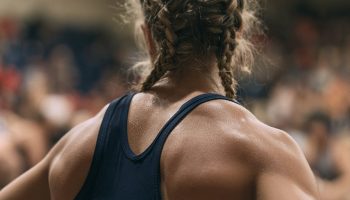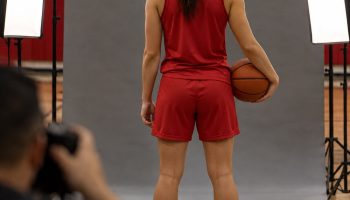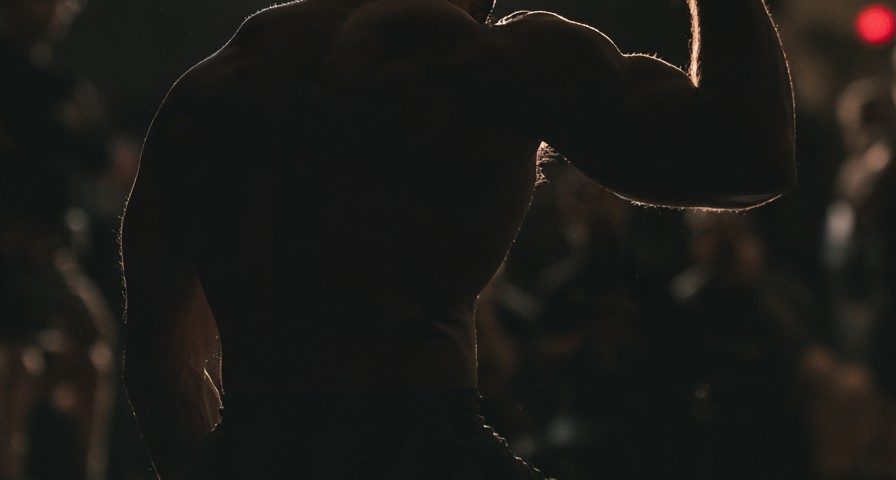
Someone has rolled a practice mat out along the bleachers, and the tape seams still show where it got folded. A single softbox hums on a stand beside a black backdrop. Down the wall, a line of wrestlers waits their turn, and one by one they pull off warm-up shirts, toss them on a pile and step onto the mat.
The photographer says “go,” fires a few frames, and says “next.” Each wrestler gets maybe ninety seconds, and most spend the first forty working out where their hands should go. Plan your wrestling media day poses the night before and you get the shot on frame two instead of frame twenty.
Below: 14 solo poses with body cues, a pose picker, group and coach setups, lighting by budget, a packing list and senior banner math.
Quick answer
Lock in three poses first: the wrestling stance, arms crossed and headgear in hand, each with your lead shoulder turned about 30 degrees off the lens. Add one personality frame (crown, flag, flex or hand raise), then join the groups. Shoot your competition singlet or two-piece first and a team warm-up second, and your turn takes under 2 minutes.
How wrestling media day works
Media day is the preseason session where every wrestler gets a headshot plus a few full-length frames for the roster, programs and senior night. Most programs run it in this order:
- Check in (5 to 10 minutes early): hand in the permission form, fix your hair.
- Headshot station (20 to 30 seconds): neutral face, then a smile.
- Full-length set (60 to 90 seconds): three or four poses on the mat or backdrop.
- Warm-up set (30 seconds): quarter-zip or hoodie, one or two frames.
- Groups and team (15 to 25 minutes): captains, weight-class groups, seniors, siblings, then the full roster.
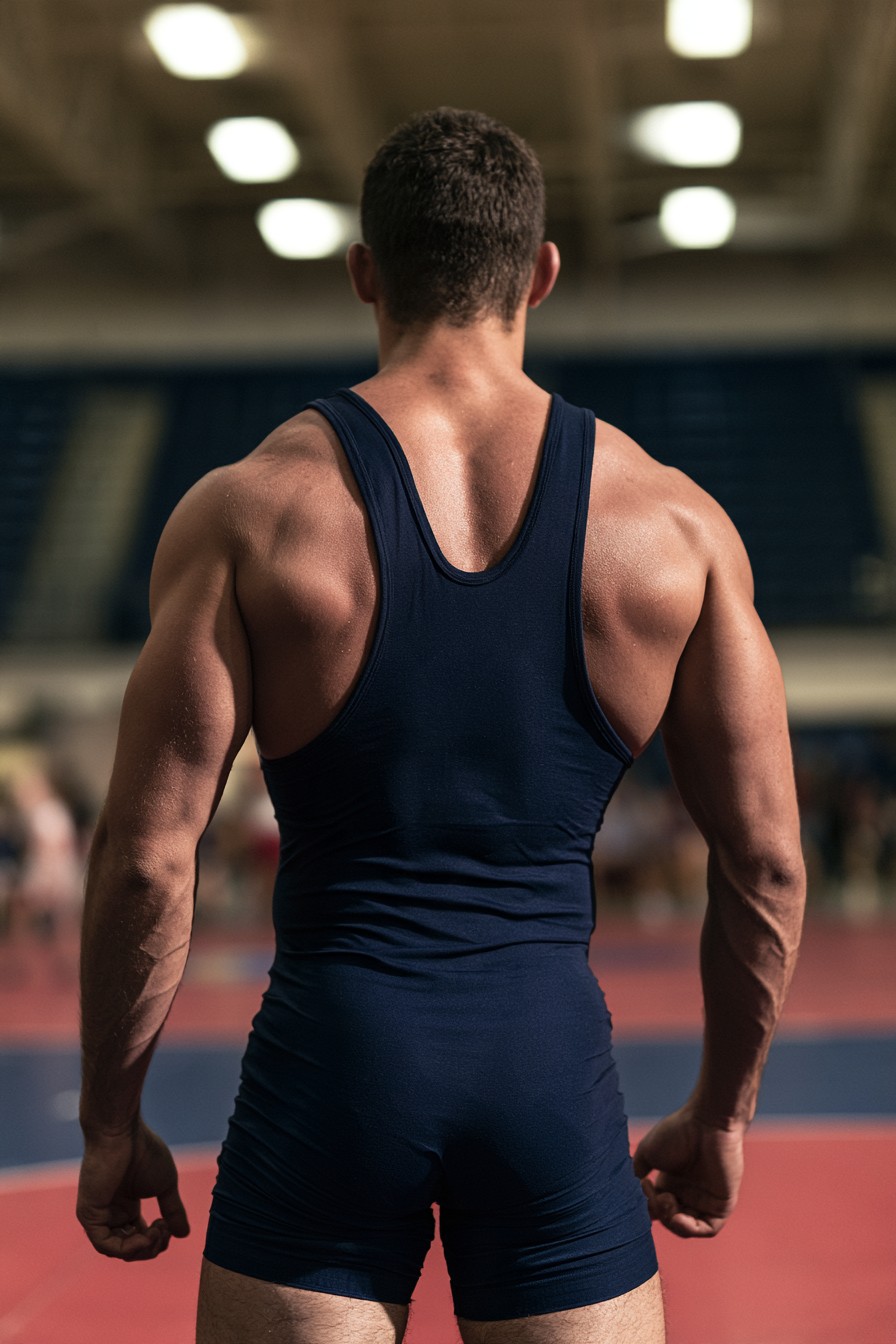
Uniform: wear exactly what you compete in, because roster photos get reused all season. Since the 2017 to 2018 season, high school rules have allowed a two-piece option. The Hawaii High School Athletic Association notice on the NFHS rule change describes school-issued shorts with at least a 4-inch inseam plus a compression shirt that stops above the elbow.
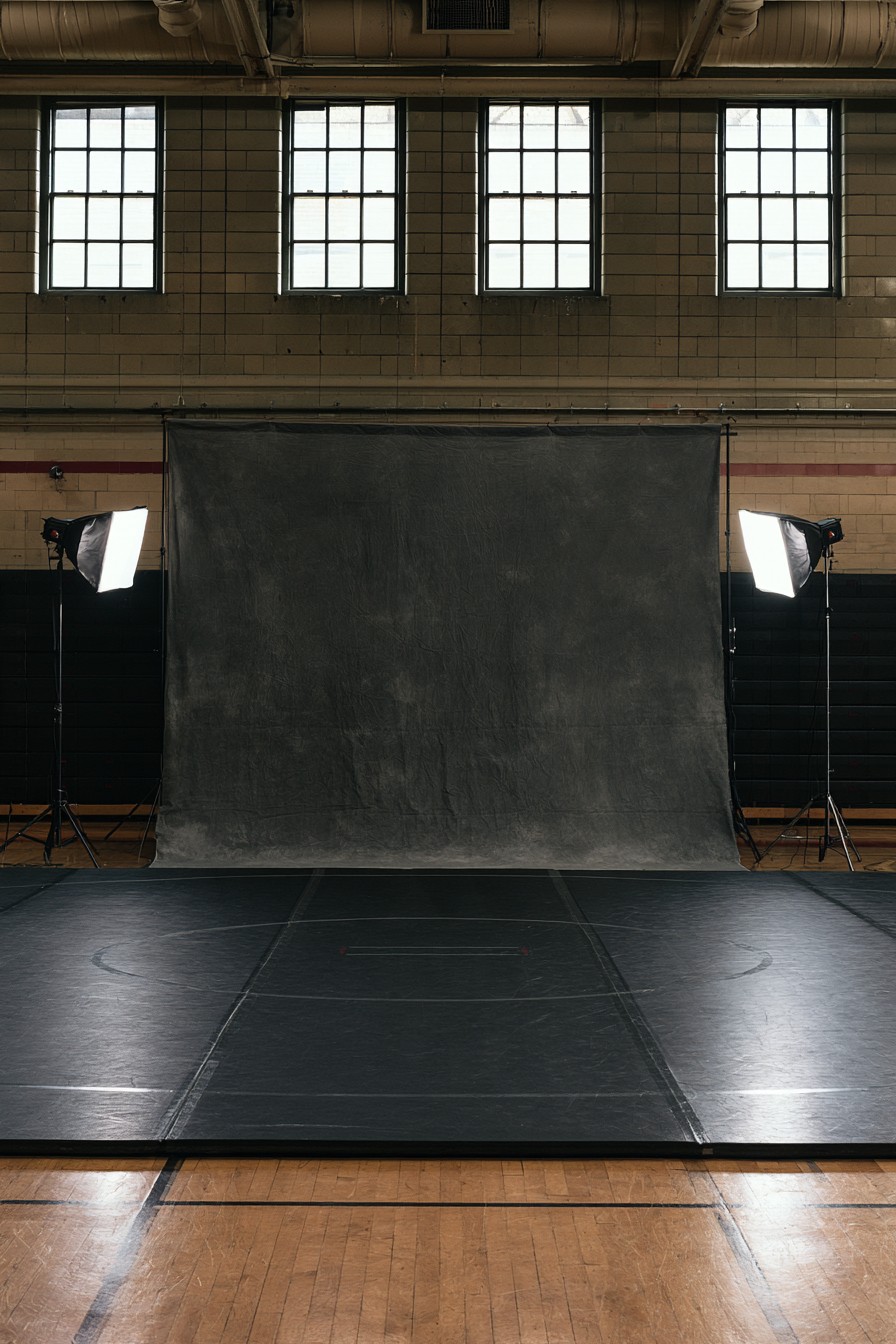
Setting rule: with about 15 feet of open floor and a clean logo circle, shoot on the mat. If the ceiling is low or the walls are cluttered, use a backdrop.
Nobody tells you this: the warm-up frame is often the one families order. Wrestlers who feel self-conscious in a singlet relax in a quarter-zip.
Many wrestlers are minors. The Department of Education FERPA photo and video FAQ notes that schools often designate event photos as directory information or get parental consent before sharing them, so follow your school’s rules before posting.
Solo wrestling media day poses: 14 with exact cues
Default setup for every pose unless the cue says otherwise: lead shoulder turned about 30 degrees off the lens, chin forward half an inch, eyes into the camera. Hold each pose for 2 to 3 seconds, then reset.
- Stance shot: feet a little wider than your hips, lead foot forward, knees bent, hips back, hands up at chest height with palms open. Camera at hip height.
- Low stance: same shape, but sink until your thighs are close to parallel and fingertips nearly brush the mat. Hold 3 seconds; legs start shaking at about 5.
- Hands on hips: stand square, thumbs forward on the hip bones, elbows slightly back so a sliver of light shows between arm and body.
- Arms crossed: fold arms just below the chest and tuck your fingertips under the opposite bicep instead of making fists.
- Headgear in hand: hold it by one strap at your side, arm relaxed. Variation: both hands at your chest, ear cups facing the lens.
- Headgear on the shoulder: straps looped over two fingers, headgear resting on the shoulder nearest the camera.
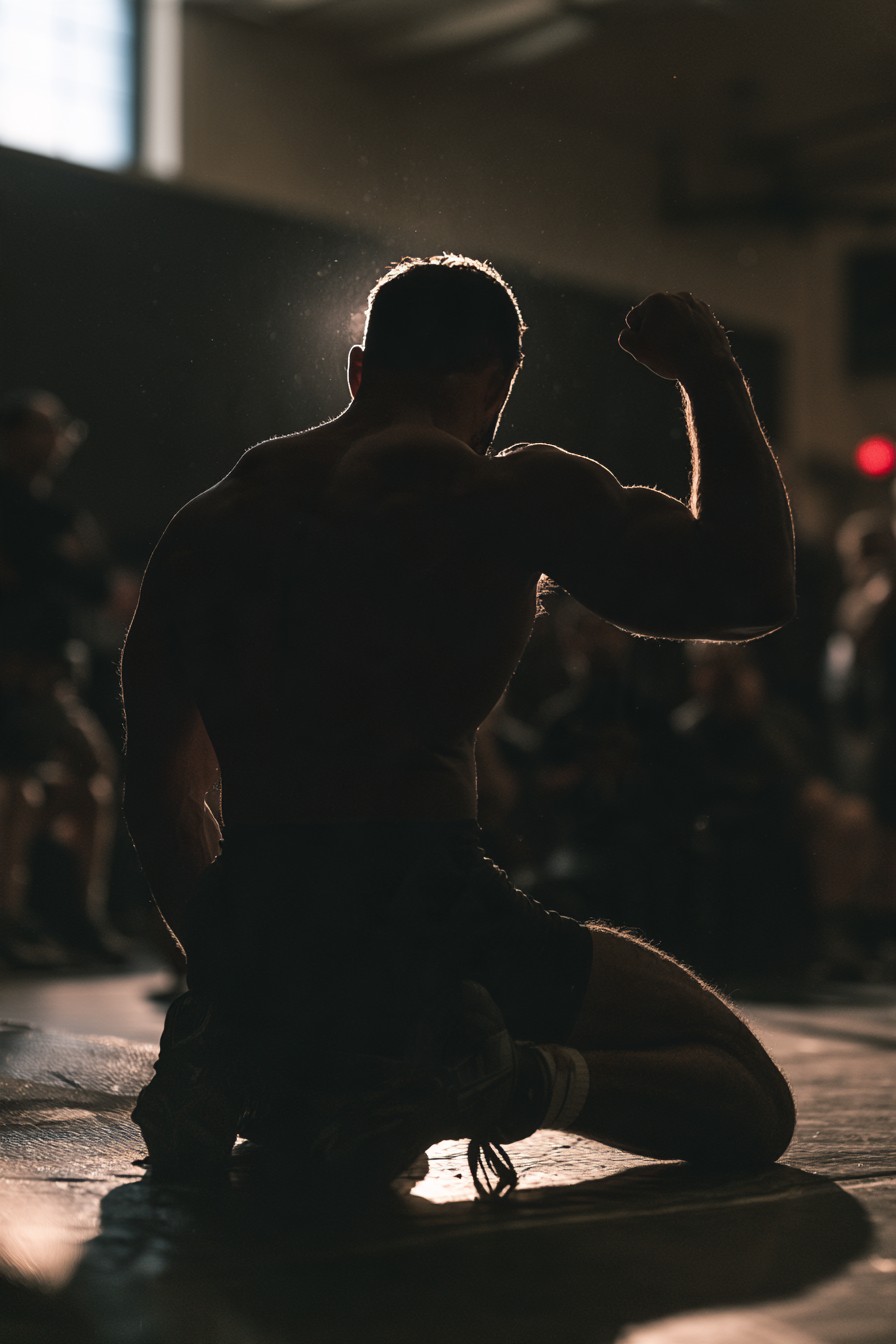
- The tasteful flex: one arm bent at shoulder height with a closed fist, the other relaxed, small smile. One flex reads strong; three in a row reads like a physique shoot.
- Over the shoulder: back angled to the camera, look back over your near shoulder with your chin just above it.
- One knee on the mat: lead knee up, back knee down, forearm resting on the raised knee, headgear on the mat beside you.
- Sitting on the mat edge: feet flat, forearms on your knees, hands loosely clasped.
- The crown pose: a $5 to $15 prop crown from a party store, held at chest height, or set on your headgear while you kneel. Holding it beats wearing it.
- Flag pose: hold the school flag behind your shoulders with both hands, arms out and slightly bent, so it frames your upper body. Pull it taut.
- The hand raise: your own arm straight up, fist closed, as if a referee just raised it. Shoot it serious, then shoot the grin.
- Looking away: three-quarter turn, eyes on a point 4 feet to the side of the lens. The easiest pose for camera-shy wrestlers.
Match the pose to where the photo will end up:
| Pose | Best use | Camera height | Orientation |
|---|---|---|---|
| Stance shot | Roster page, programs | Hip | Vertical |
| Arms crossed | Senior banner, team poster | Chest | Vertical |
| Headgear in hand | Program, parent prints | Chest | Vertical |
| Hand raise | Win graphics, social posts | Waist, aimed up | Vertical or square |
| Low stance | Matchup graphics | Knee | Horizontal |
| Looking away | Shy wrestlers, feature stories | Eye | Vertical |
| Crown or flag | Senior night, rankings posts | Chest | Vertical |
| One knee on the mat | Team banner front row | Waist | Horizontal |
Common mistake: shrugged shoulders and white-knuckle fists. Exhale right before the frame, let your shoulders drop an inch, and keep your hands soft.
Decision rule: if the line is long, shoot the stance shot and arms crossed first. Coaches pick those two most often.
Duo, trio, sibling and coach poses
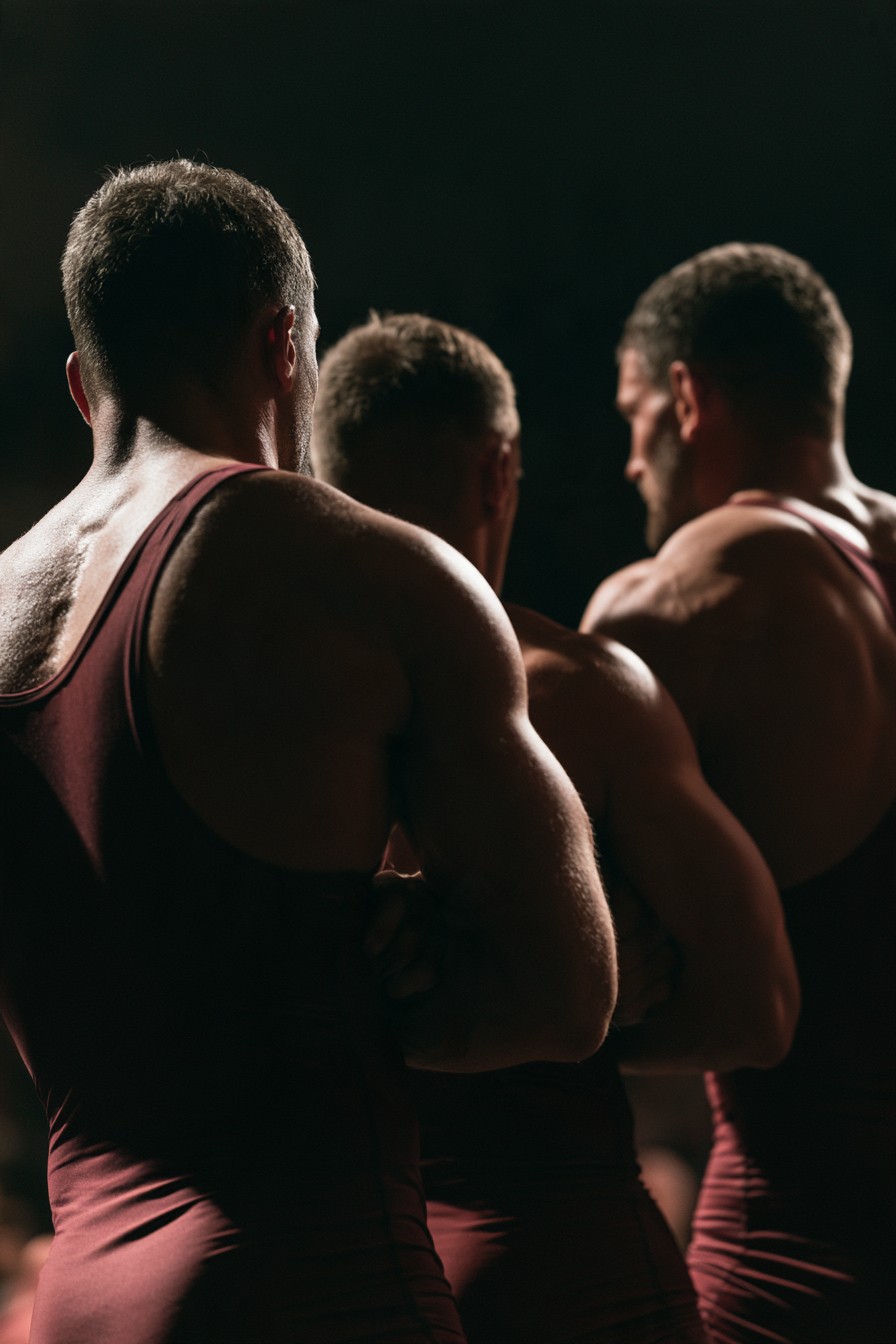
Group frames fail for two reasons: gaps between bodies and heads all at the same height. Close gaps to 4 inches or less and stagger heads by about half a head.
Wrestling media day poses for 2 people
- Back to back: shoulder blades touching, each turned 30 degrees out, arms crossed, both looking at the lens.
- Facing stance: both in stance, foreheads about a foot apart, then both turn heads to the camera on “3.” Works for teammates, best friends or a wrestling couple.
- Mirror headgear: side by side, headgear in the outside hands so the shapes frame the middle.
Trio poses (3 people)
- Wedge: center wrestler one step forward with hands on hips, the outside two angled in with arms crossed.
- Kneel and stand: one kneeling in front, two standing behind on either side.
- Captains row: three captains in a line, shoulders overlapping, all dropping into stance at once on a countdown.
Group, team and the guys’ lineup
For 4 or 5 wrestlers, put two in front on one knee and the rest standing in the gaps. For the full team, this sequence takes about 6 minutes:
- Line up by weight class, lightest on the left.
- Split into rows: one kneeling, one standing, one on the bleacher step if you have more than 20.
- Coaches go on the ends of the back row.
- Shift each row half a body so every face shows between two heads in front.
- Shoot 5 frames serious, then 5 frames laughing. Someone always blinks.
Nobody tells you this: the laughing round is usually the one that ends up on the team social page.
Siblings and coach poses
Siblings line up oldest to youngest by height and drop into the same stance at the same moment, which looks great on a banner. For the coach shot, the coach stands one step behind and beside the wrestler with arms crossed, or raises the wrestler’s hand like a referee.
Funny, women’s and faith-themed poses
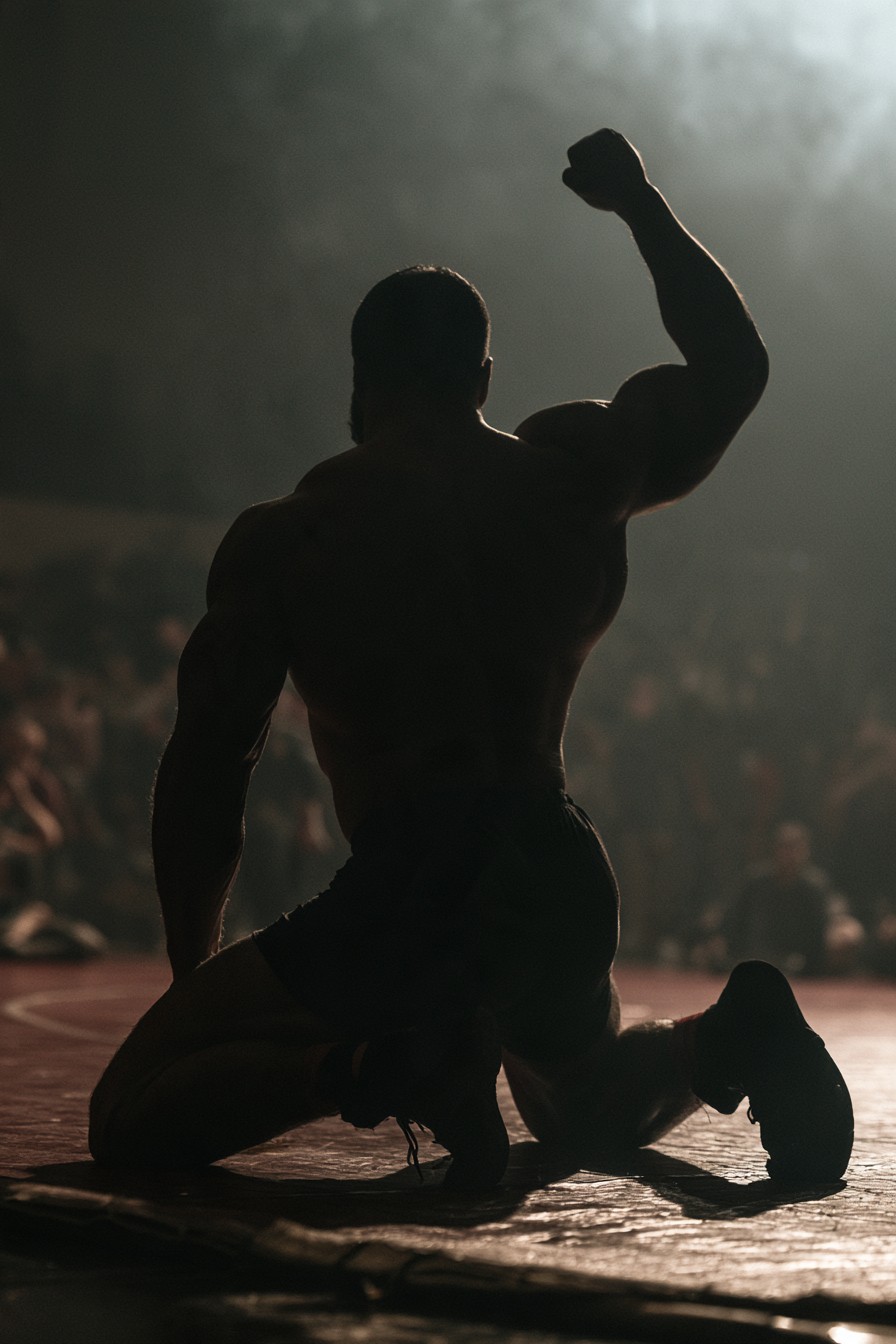
Save these for after the headshot and two standard frames; each takes 15 to 30 seconds.
Funny wrestling poses
- The pin count: one wrestler lies flat on the mat grinning, a teammate kneels beside them and slaps the mat like a referee counting. Nobody is actually pinned.
- Fake handshake: two wrestlers shake hands, each giving the camera an exaggerated “I’ve got this” face.
Keep the joke on the situation, never on someone’s body or weight class.
Women’s wrestling poses
Every pose here works for women’s teams, and the stance shot, headgear in hand and hand raise read strong and athletic. Let each wrestler choose singlet, two-piece or warm-up for her full-length frames. If anyone is uncomfortable with a pose, skip it.
Faith-themed poses
Keep these optional and simple. A wrestler can kneel on one knee with head bowed and hands folded over the headgear, or hold a small cross necklace or a Bible at chest height for one frame. Check your school’s guidance on religious content in official team graphics.
College-style dramatic lighting
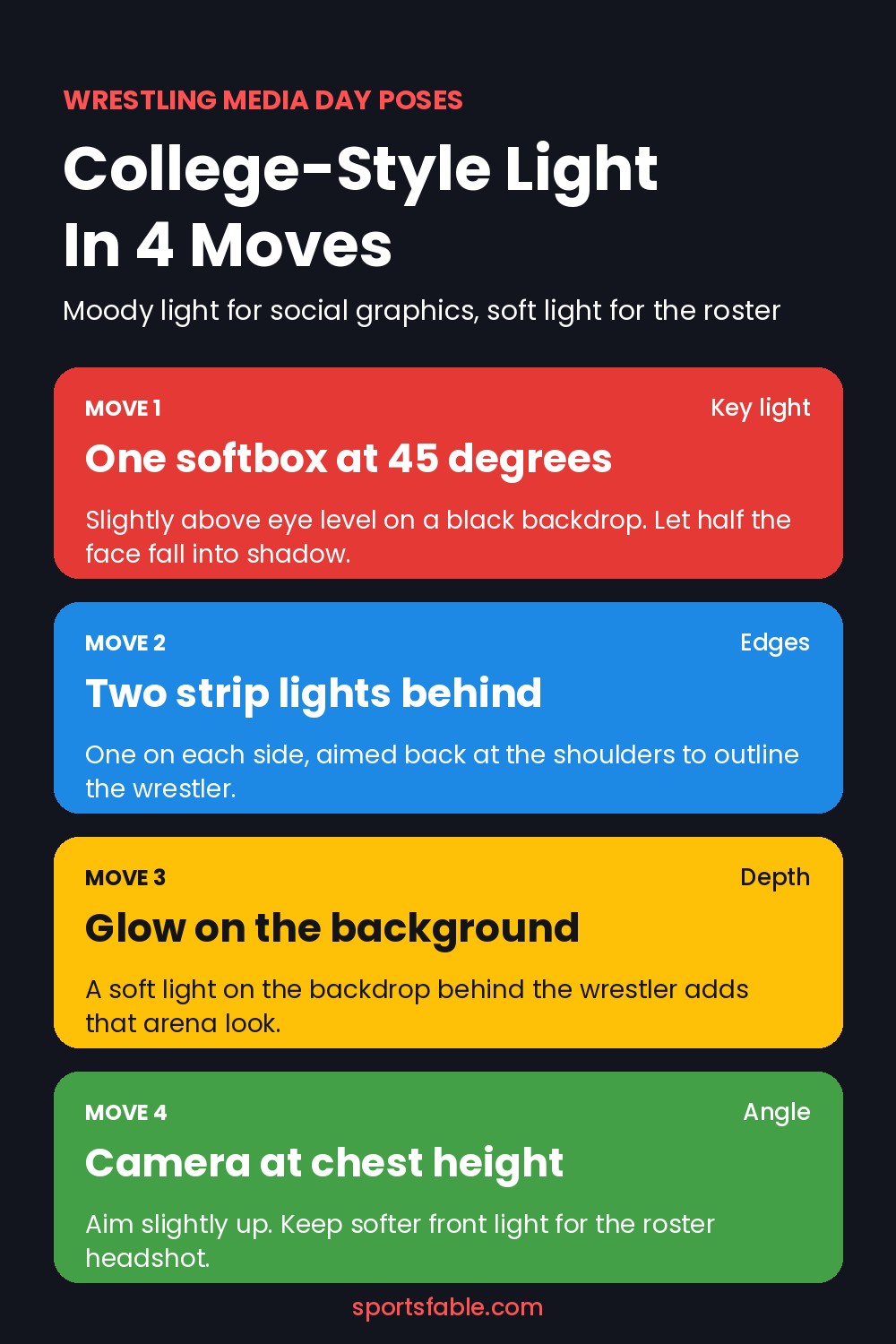
College media days look dramatic because of light, not poses. The full recipe, from a pro sports photographer’s athlete portrait class notes: two 2 by 3 foot softboxes glowing on the background, two 12 by 56 inch strip softboxes behind the athlete to trace the edges, and one 36 inch beauty dish in front as the main light. The sample frames ran around f/6.3 at 1/200 second.
You don’t need four lights to get close:
| Setup | Rough cost | What you get | Best for |
|---|---|---|---|
| Window or open door plus phone | $0 | Soft, even light | Roster headshots |
| One LED panel at 45 degrees | $40 to $120 | Half the face in shadow | Moody social graphics |
| LED panel plus one strip light behind | $90 to $250 | Bright edge on one shoulder | Senior banners |
| Full four-light college setup | $1,500 and up | Glowing background, edges both sides | Program covers, posters |
To build the one-light version:
- Hang a black backdrop or use a dark wall, and stand the wrestler 6 feet in front of it so light doesn’t spill onto it.
- Place the light 45 degrees to one side, about 1 foot above eye level, aimed down at the face.
- Turn off the gym lights nearest the backdrop if you can.
- Set the camera at chest height or lower, aimed slightly up.
- Take a test frame; the shadow side should still show the eye.
Trade-off: hard, moody light shows every bit of skin texture and mat burn. Use it for social graphics, and keep softer front light for the roster headshot.
What to wear and bring, plus the shot list
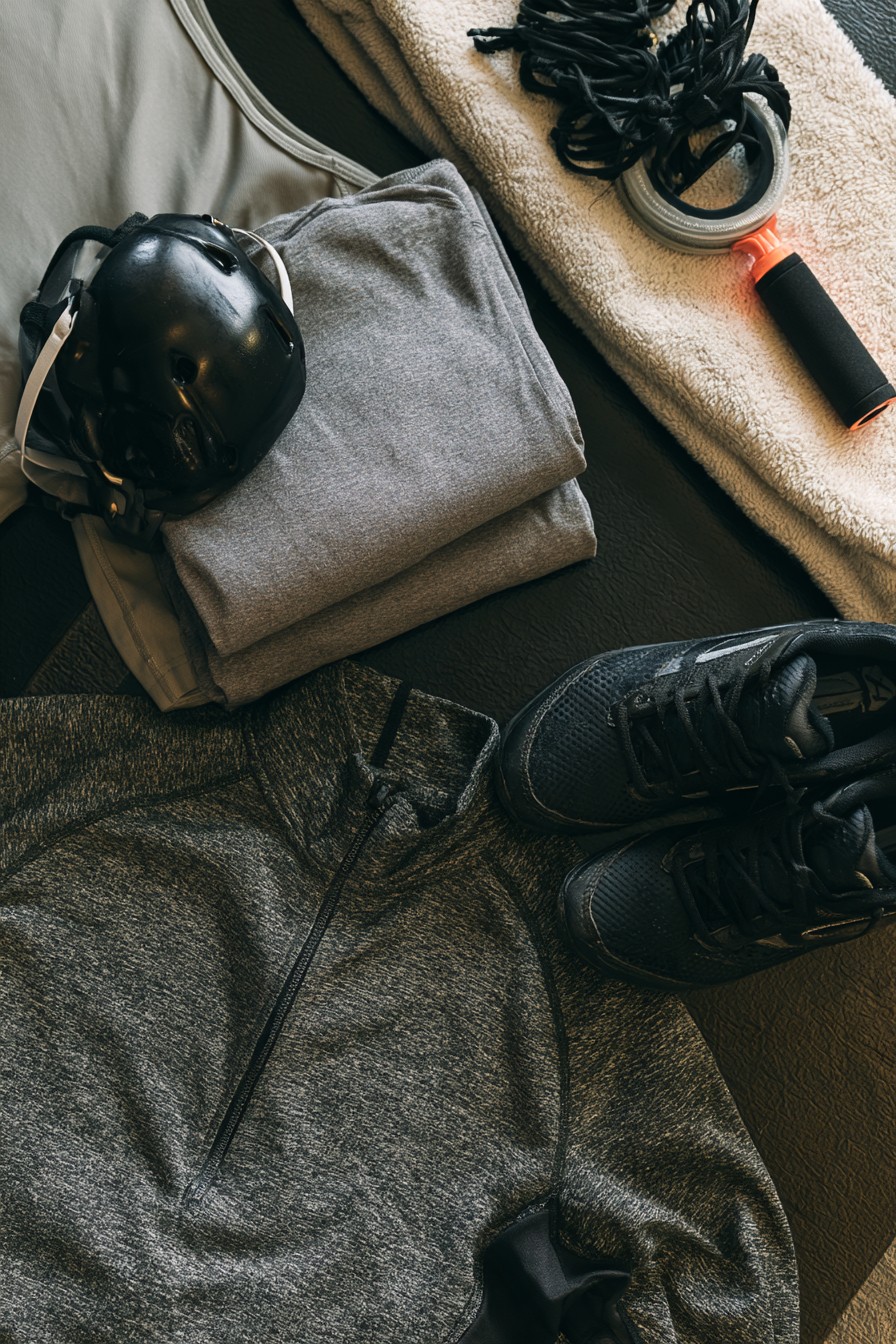
Grab our free printable pose card and shot list, tick the poses you want and hand it to whoever is shooting.
Free printable
Wrestling Media Day Pose Card and Shot List
A free 2 page printable: 14 solo poses plus duo, trio, sibling, coach and funny setups with one-line cues and phone settings, then a day-of checklist, a team shot order table and a senior banner planner.
- Clean singlet: washed inside out in cold water and air dried. Hang a new one for 24 hours so fold creases drop out.
- Warm-up: team quarter-zip, hoodie or shooting shirt.
- Headgear: wiped down, straps straightened, no tape residue.
- Shoes: clean wrestling shoes with laces tucked or taped.
- Bag extras: towel, water, comb, hair ties, a lint roller for dark singlets.
- Skin check: if a rash, sore or mat burn bothers you, tell the photographer and ask for warm-up frames. Anything that looks like a skin infection goes to your athletic trainer or doctor; don’t cover it up for photos.
Need hair that survives a stance shot? Our wrestling hairstyles guide covers braids and short cuts that stay put.
The order that saves the most time:
- Headshot, neutral face.
- Headshot, smile.
- Stance shot, full length.
- Arms crossed or hands on hips.
- Headgear in hand.
- One extra: crown, flag, flex or hand raise.
- Seniors: one vertical banner frame.
- Warm-up frame.
- Duo, trio and sibling frames, then the team.
Common mistake: changing into the warm-up between poses. Do the whole singlet set first, then change once.
Phone tips for parents and senior banners
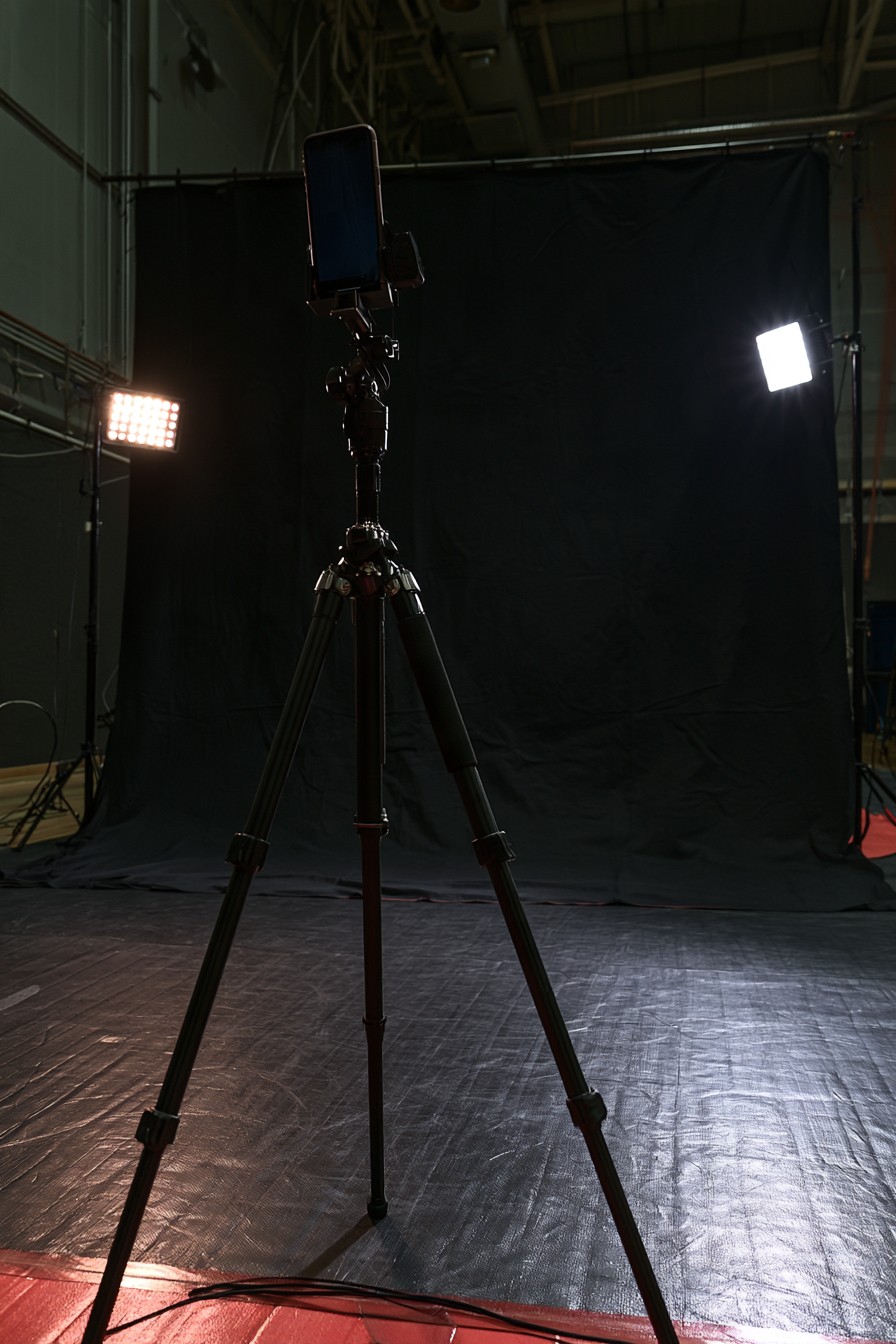
If the team photographer is a parent with a phone, these settings close most of the gap with a pro.
- Lens: 2x from about 8 to 10 feet for single wrestlers, 1x for groups. Skip the 0.5x lens; it stretches whoever is near the edge.
- Light: ceiling lights shadow the eyes, so turn the wrestler toward an open door or window, or use one LED panel at 45 degrees.
- Exposure: tap to focus on the eyes, then drag brightness down a notch.
- Burst: hold the shutter for stance drops, hand raises and laughing groups.
- Height: phone at chest height, held steady or on a $15 to $30 tripod.
Using the photos for senior banners
Shoot the banner frame vertical and full length, with roughly a quarter of the frame empty above the head for the name, weight class and year. Stance, arms crossed and the flag pose are the safest picks.
Here is the math nobody shows you: a full 12 megapixel phone file on a 2 by 4 foot vertical banner works out to about 84 pixels per inch. That looks sharp from 6 feet away and soft up close, so avoid heavy cropping.
Expect $30 to $90 for a vinyl banner and order 10 to 14 days before senior night. A framed print also makes one of the better gifts for wrestlers. Ask families before you post photos of anyone else’s wrestler.
Keep building the season
Shooting another sport? Borrow from our basketball media day poses. For the end of the season, see our team gifts, gifts for coaches and gifts for athletes guides.
Questions people ask
What are the best wrestling media day poses for guys?
The stance shot, arms crossed and the hand raise. They show the sport, work at every weight class and crop well for rosters and posters.
What are good wrestling media day poses for 2 people?
Back to back with arms crossed is the easiest and works for any height difference. The facing stance with heads turned to the camera looks the most like wrestling. Keep the gap between you under 4 inches.
How do you do a flexing pose without it looking cheesy?
Flex one arm at shoulder height, relax the other and keep a small smile. Shoot one or two frames, then move on. Cheesy comes from stacking several flexes.
What should I wear for wrestling media day?
Your competition singlet or two-piece uniform, plus a team warm-up for a second set. Make sure the singlet is clean, unfaded and crease free.
Do college wrestling media days use different poses?
Mostly the same poses under stronger light: dark backdrops, edge lights and low camera angles. Expect to hold poses for short video clips too, often 3 to 5 seconds of slow movement into the pose.
Can a coach be in wrestling media day photos?
Yes. The coach stands a step behind and beside the wrestler with arms crossed, or raises the wrestler’s hand like a referee. Shoot coach frames near the end so the line keeps moving.
How long does wrestling media day take?
Plan on 1 to 2 minutes per wrestler for portraits, plus 15 to 25 minutes for groups. A team of 30 usually needs 60 to 90 minutes in total.
Images in this article are AI-generated illustrations and original graphics created by SportsFable. They show outfit ideas, not real people, teams or events. The printable is an original SportsFable resource.
Related Post