
It’s 6:40 on a Tuesday and the outfit you picked last night is already losing. The leggings roll down every time you bend over, the cute cotton tee is soaked by the second set, and the shoes you love for errands feel like pillows under a barbell. Nobody else notices. You notice, for the entire hour.
That’s the gap most outfit roundups skip. A look can be great in a mirror selfie and still fight you through a workout. The best ones do both: they photograph well, and you forget you’re wearing them once the timer starts.
So this guide to gym outfits for women starts with the three things that make or break a session (fabric, support and shoes), then builds seven complete looks for different kinds of training, from heavy leg day to a modest, hijab-friendly cardio fit. Every look comes with the reason it works, not just the colors.
The three things that matter more than the look
Fabric that moves sweat
Plain cotton feels great until you sweat, then it holds the water against your skin, gets heavy and starts to rub. Nuffield Health’s gym clothing guide goes as far as calling plain cotton and standard polyester two of the worst gym fabrics, and points instead to lightweight wicking versions of nylon, polyester and polypropylene. A cotton tee is fine for a light lifting day. For anything that makes you breathe hard, reach for something technical.
Support that matches the bounce
This is the piece most worth spending on. Researchers at the University of Portsmouth, who have studied breast movement for years, found that an unsupported breast can move up to 15 centimetres during running, and that three in four female athletes they surveyed had never had a sports bra professionally fitted. Low support is fine for yoga and lifting. Treadmill sprints, jump rope and HIIT classes deserve high support, even if it’s the least exciting thing in your drawer.
Shoes chosen for the session
Cushioned running shoes are great for cardio and a little vague under a heavy squat, where a flatter, firmer sole feels more stable. If you do both in one session, a cross-training shoe splits the difference. When you shop, the American College of Sports Medicine’s shoe guide suggests going later in the day, when your feet are at their largest, and leaving about half an inch of room past your longest toe. For a deeper dive, read our guide on how to choose running shoes.
7 gym outfits for women that work as hard as you do
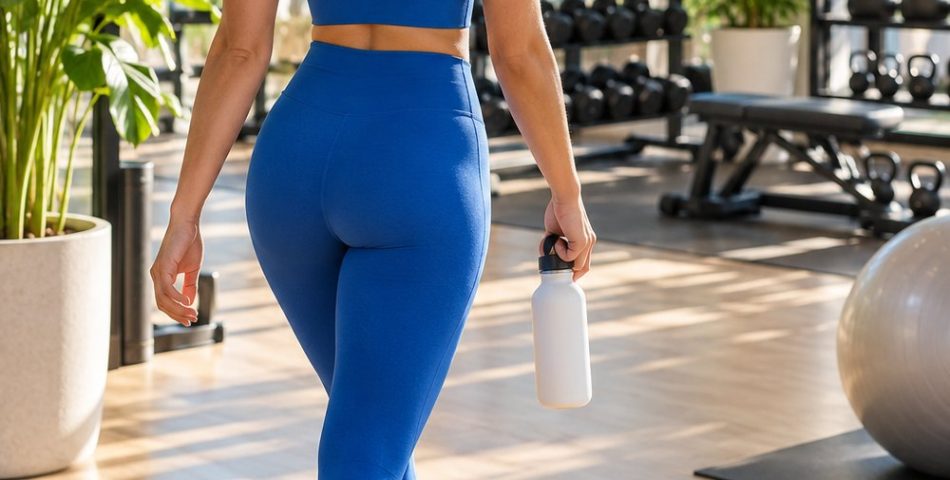
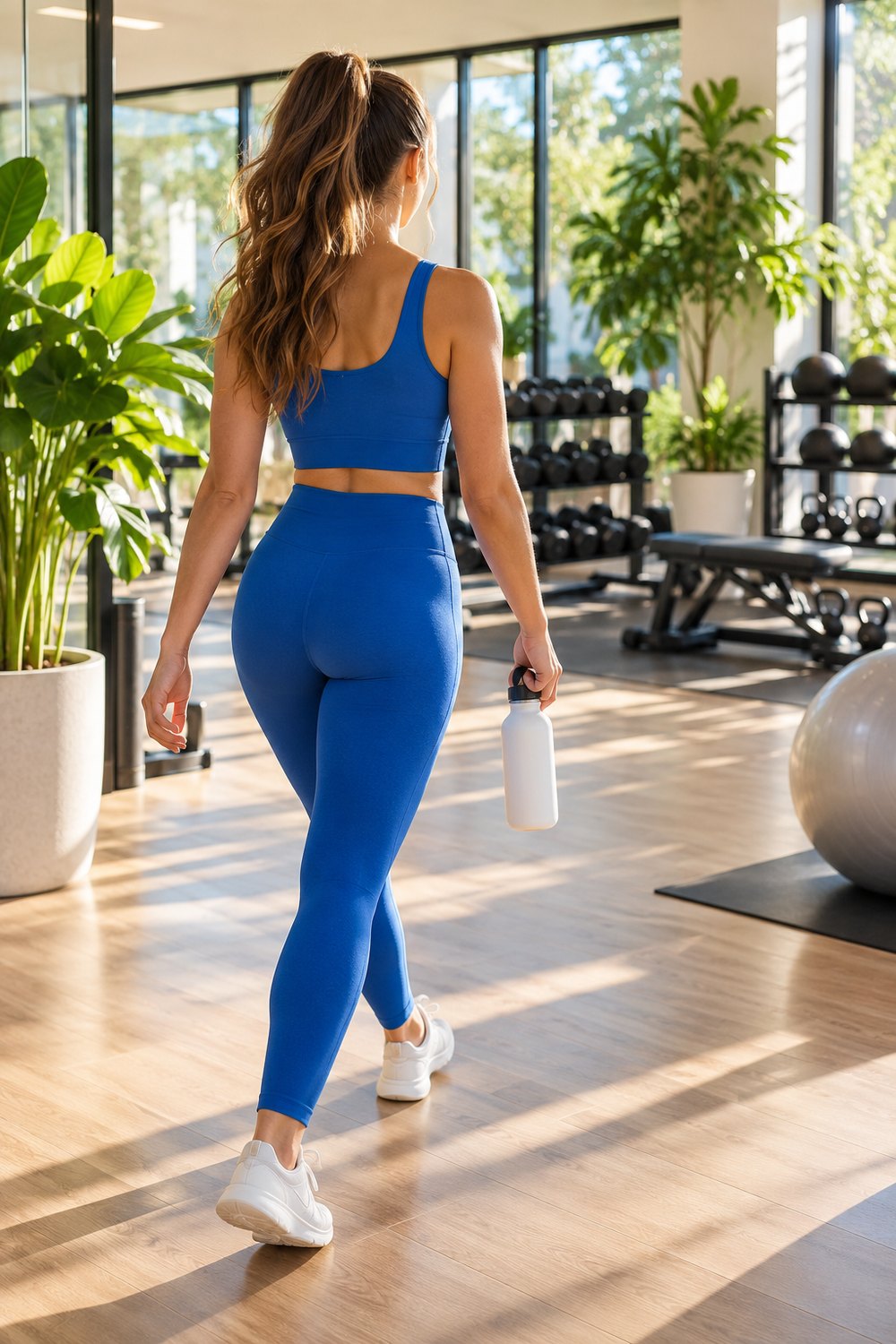
1. The bright matching set
The look: cobalt blue seamless high-waisted leggings, a matching cropped tank or longline bra, white socks and clean white trainers.
Why it works: a matching set is the fastest way to look put together at 6 a.m. with zero decisions. Seamless fabric means no side seams to dig in on a hip thrust, and a high waist stays put through bending and twisting. Bright color is also a quiet motivator on dark winter mornings.
Watch for: do the squat test in the fitting room. Bend all the way down in good light. If the fabric goes sheer, it’ll go sheer in the gym too.
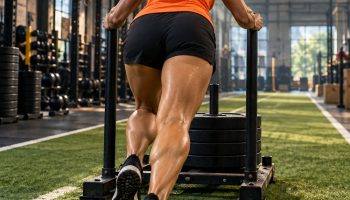
2. Leg day shorts and a loose tee
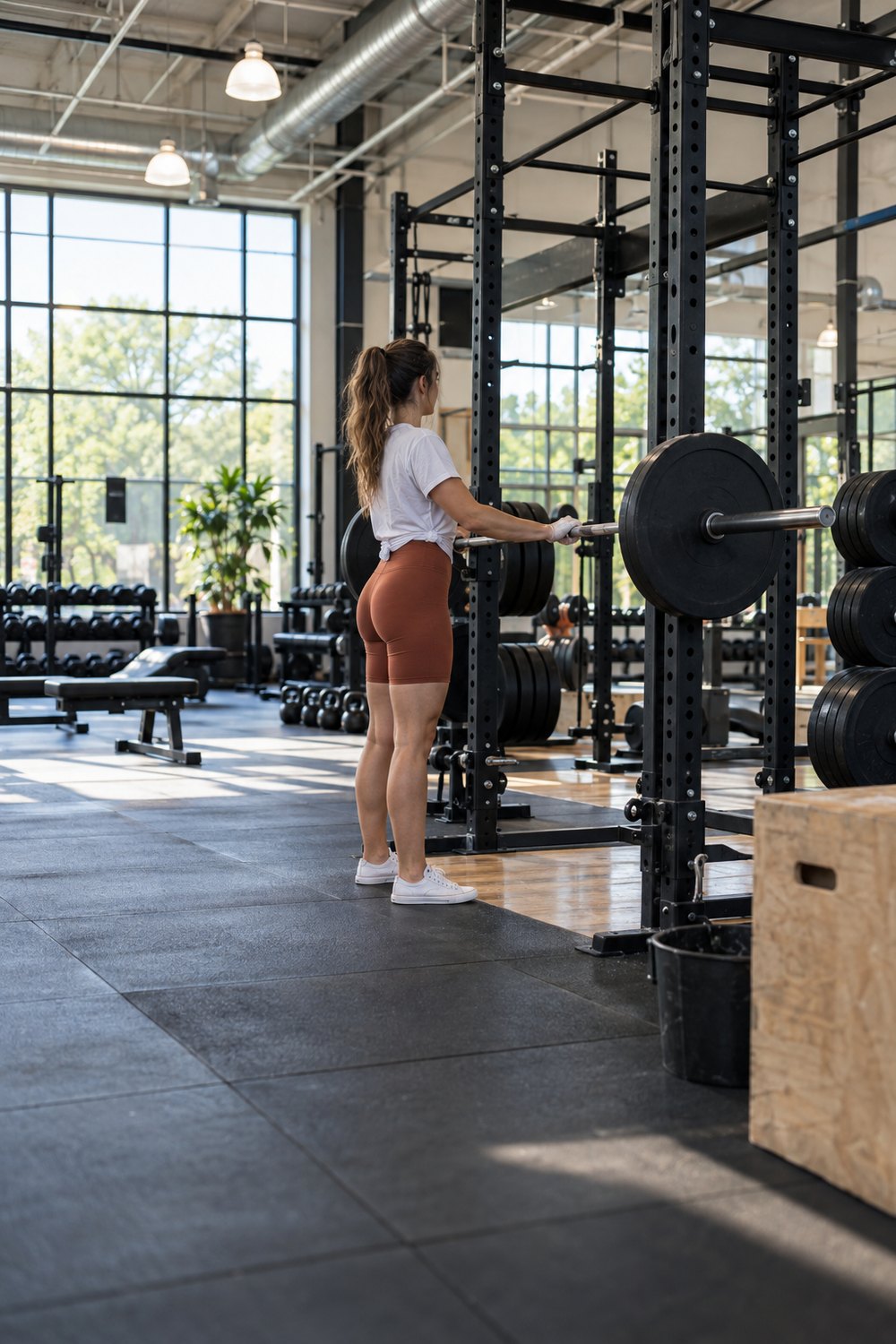
The look: high-waisted biker shorts in a warm color like terracotta, a loose white tee knotted at the hip, and flat canvas or cross-training shoes.
Why it works: shorts let you see your knees track over your toes on squats and lunges, which is useful feedback when you’re learning. The flat shoe keeps you planted. Knotting the tee stops it from flipping over your face on hip thrusts and bridges.
Watch for: biker shorts with at least a 6 to 8 inch inseam ride up far less than short shorts. If you’re following a lower body day like our leg day workout for beginners, this is the outfit to pair it with.
3. Modest and hijab-friendly cardio fit
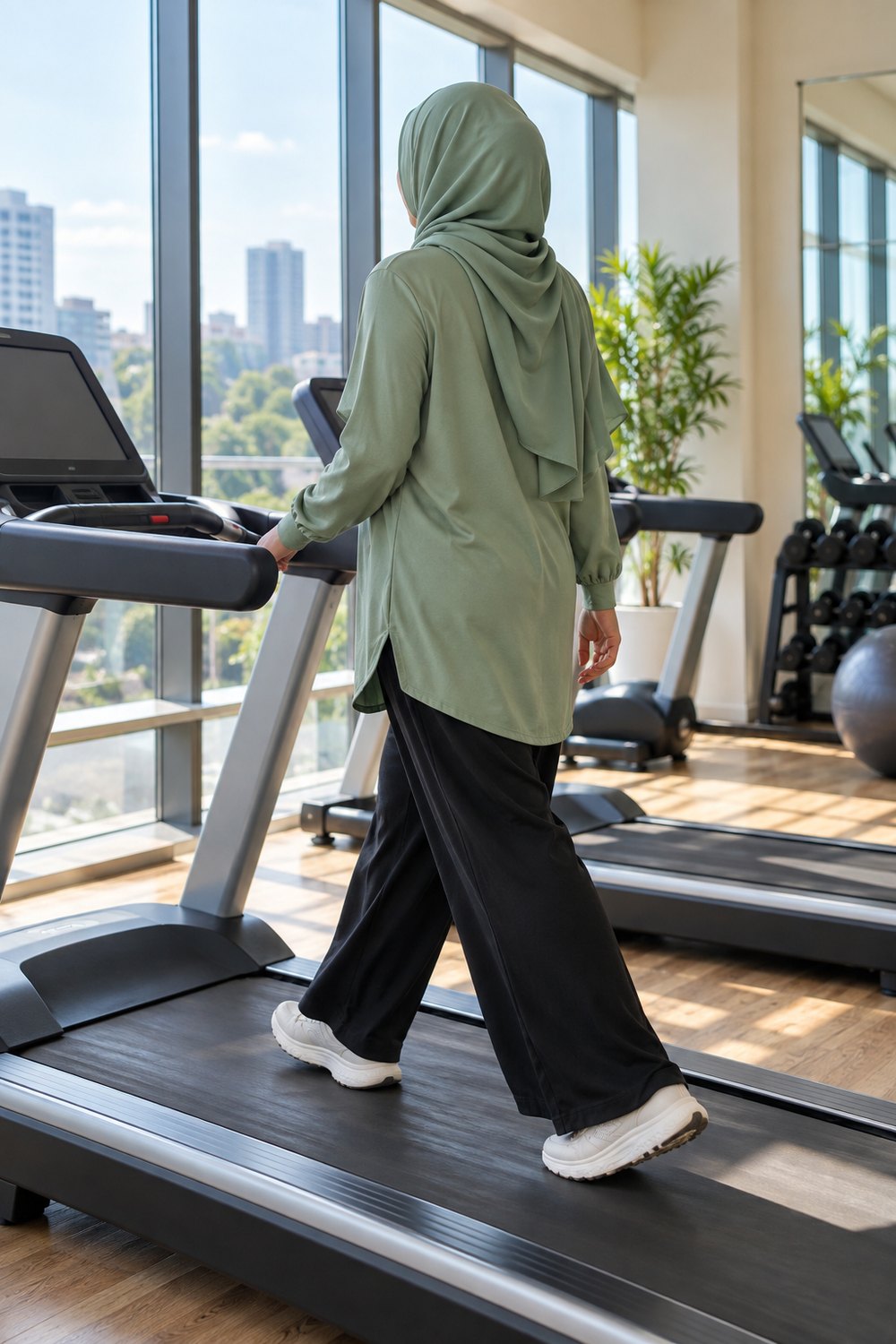
The look: a pull-on sport hijab, a loose long-sleeve tunic top that covers the hips, and wide-leg or straight joggers, all in one soft color like sage.
Why it works: modest gym wear doesn’t have to mean hot and heavy. A one-piece sport hijab in wicking fabric needs no pins, so there’s nothing to slip or poke during burpees. A tunic in a technical fabric breathes far better than a cotton layer on top of a fitted tee.
Watch for: wide hems near moving parts. On a treadmill or bike, choose a straighter leg or a cuffed jogger so nothing catches on a belt or crank.
4. Baggy and comfy for mobility days
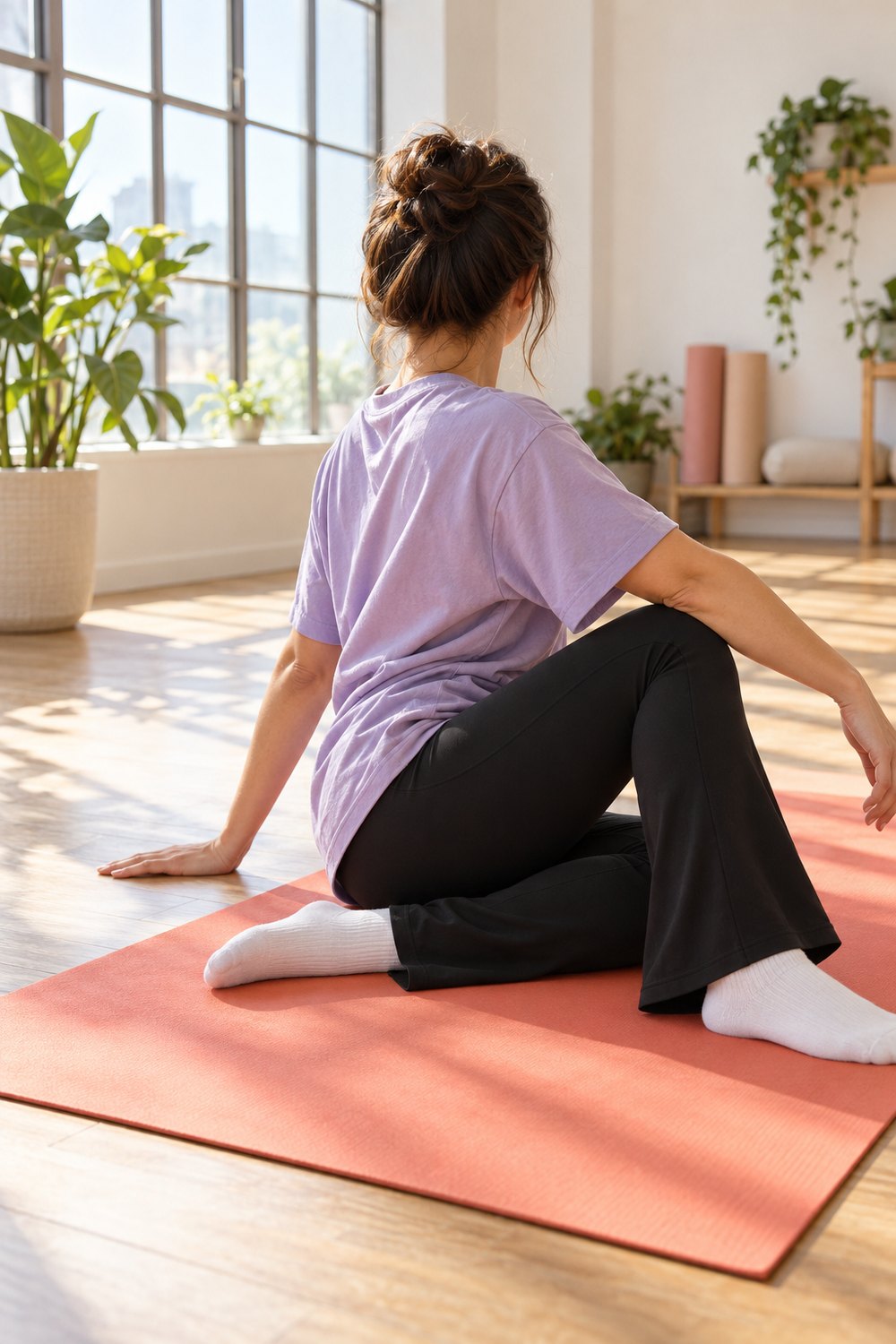
The look: an oversized lavender tee, black flare leggings and white crew socks or grip socks.
Why it works: stretching, yoga and recovery days are when comfort wins. Flare leggings are fitted through the hip and thigh, so they don’t bunch on a mat, and the flare hides the fact that you’re wearing socks with them.
Watch for: a very loose tee will slide toward your chin in a downward dog. Tuck the front into your waistband or tie it at the side before any inverted pose.
5. The pink and burgundy color combination
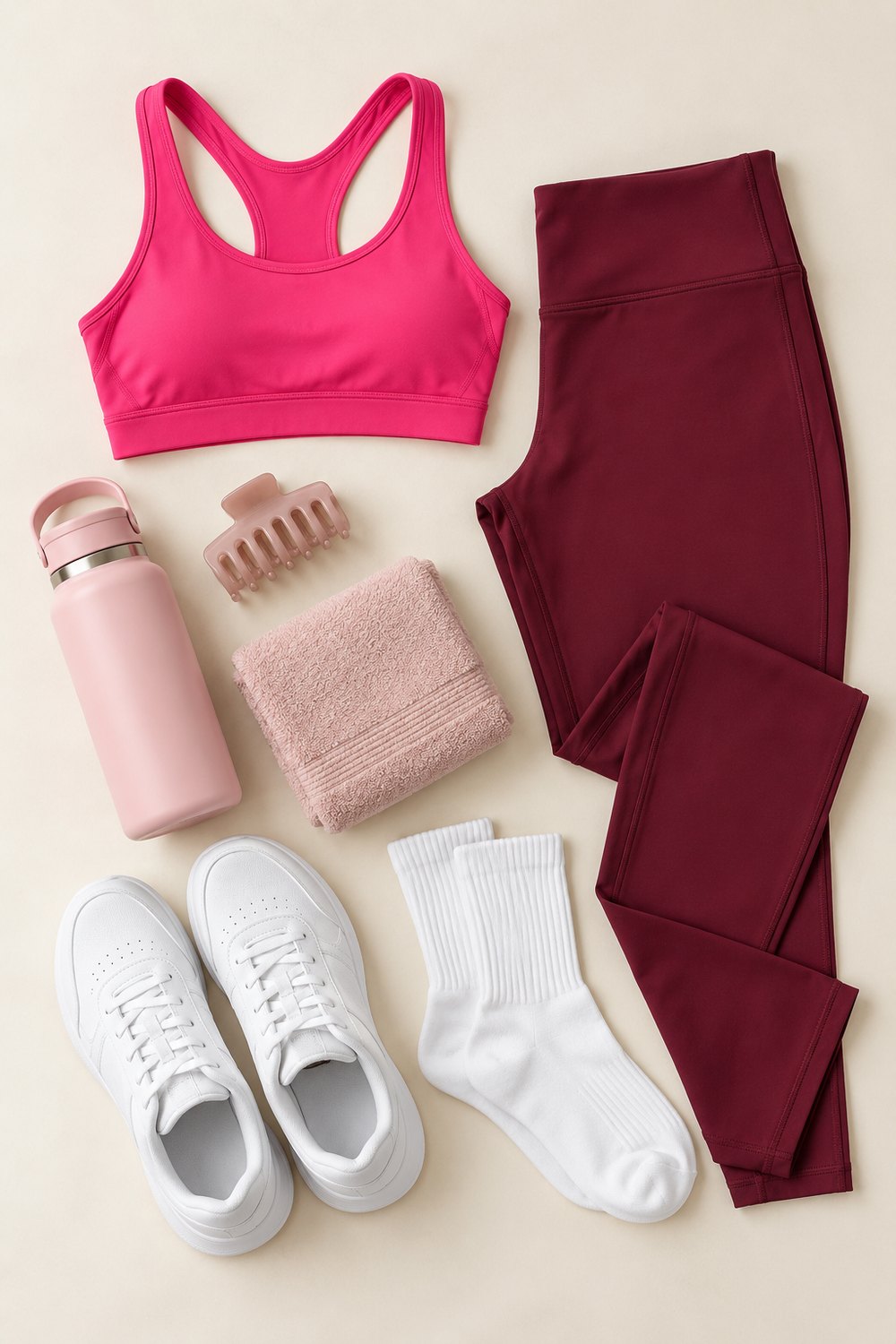
The look: a hot pink sports bra, deep burgundy leggings, white socks, white trainers and a claw clip.
Why it works: two shades from the same color family look intentional without being a matching set, and you can split them across other pieces later. Burgundy, navy and forest green also hide sweat marks far better than light grey, which shows every drop.
Watch for: if you only buy one pair of leggings this season, make it a dark color in a thicker fabric. It goes with everything and stays opaque.
6. Shorts and t-shirt for hot gyms
The look: a lightweight wicking tee or tank, 3 to 5 inch running shorts with a built-in liner, and no-show socks.
Why it works: some gyms run warm all year, and summer garage sessions are worse. A liner short does the job of two layers in one, and a wicking tee keeps you from feeling like you’re training in a wet towel.
Watch for: chafing on long cardio sessions. A slightly longer short or a pair of bike shorts underneath fixes most of it.
7. Sweatpants and a cropped zip hoodie for the walk in
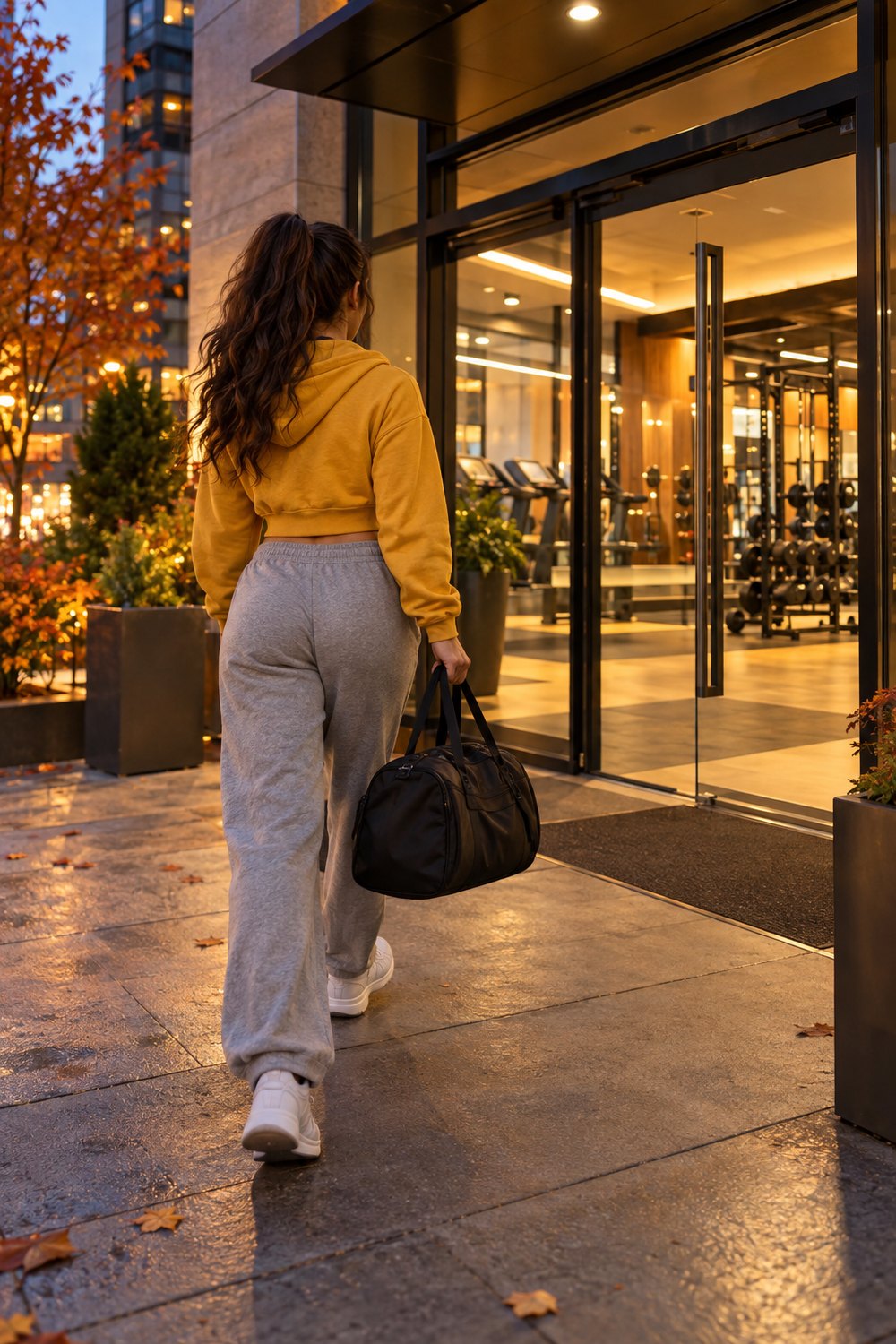
The look: relaxed heather grey sweatpants and a cropped zip hoodie in a strong color like mustard, layered over your training set, with a duffel on your shoulder.
Why it works: on cold mornings, the outfit you arrive in is not the outfit you train in. A zip layer comes off in one move once you’re warm, and sweatpants keep your legs loose while you warm up. Pack what you need using our gym bag essentials for women checklist.
Watch for: don’t deadlift in baggy sweatpants with deep pockets. The bar catches on loose fabric at the thigh.
Save this: what to wear for each session
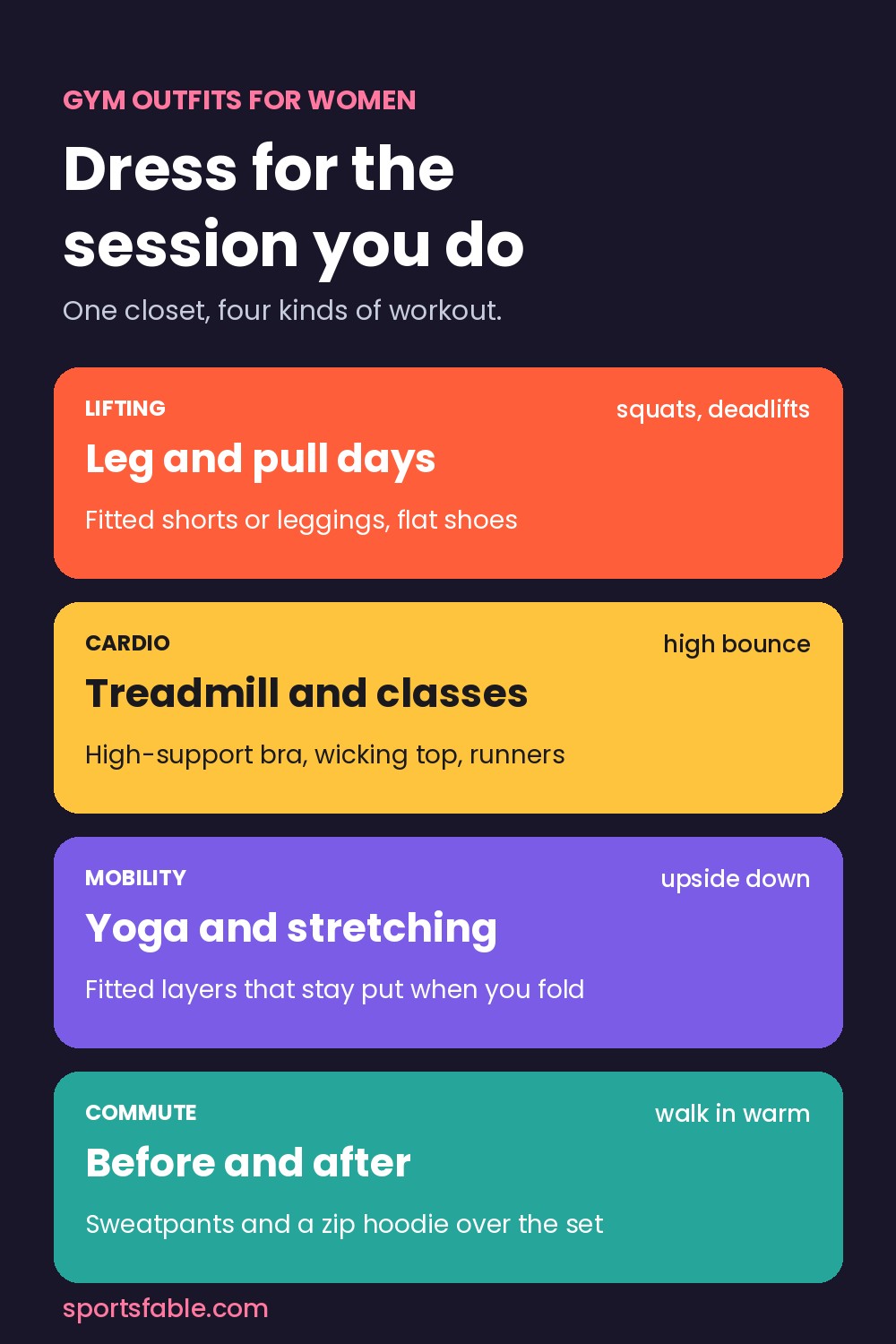
If you only remember one thing, remember this: dress for the hardest part of the session, not the easiest. Here’s the cheat sheet.
Fit, sizing and care that make outfits last
Body types and sizing: there’s no outfit that’s off-limits for a body type. What changes is cut. Higher waistbands stay put better for most people, longer tops cover more if that’s what you prefer, and a sports bra fitted by band size first, then cup, makes more difference than any trend.
Wash after every session. The CDC’s guidance for athletes is to wash workout clothes and towels after each use, not share them, and shower soon after training. That means owning at least two or three sets if you train most days.
Check the care label before using fabric softener. Many technical fabrics ask you to skip it, wash cold and hang to dry, which also keeps leggings opaque for longer.
Your quick gym outfit checklist
- One high-support sports bra for cardio days and one lighter one for lifting and yoga
- Two pairs of squat-proof leggings in dark colors
- One pair of biker shorts with a 6 to 8 inch inseam
- Two wicking tops and one oversized tee
- A flat shoe for lifting and a cushioned shoe for cardio (or one cross-trainer)
- A zip layer and sweatpants for the walk in and out
- Enough socks for every session of the week
Keep building
Now that the outfit’s sorted, give it a plan worth wearing it for. Our 5-day workout split for women spreads strength and glute work across the week, and the beginner gym workout plan is the place to start if you’re new to the weights floor. For outfits outside the gym, browse our sporty outfit ideas, and if you’re shopping for a training partner, see our gym outfits for men.
Questions people ask
What are the best gym outfits for different body types?
The best outfit is the one you don’t adjust between sets. High-waisted leggings, a properly fitted sports bra and a top length you’re comfortable in work for every body. Plus size shoppers should look for wider waistbands and longer inseams on shorts to stop rolling and chafing.
What is a good modest gym outfit?
A loose long-sleeve tunic in a wicking fabric, straight or wide-leg joggers and, if you wear one, a pull-on sport hijab. Keep wide hems away from treadmill belts and bike cranks.
Are baggy gym clothes okay?
Yes, with one rule: keep the lower half fitted or cuffed for lifting and cardio machines. Baggy tops are fine. Baggy, long pants catch on bars and belts.
How do I make a gym outfit look aesthetic?
Pick a color combination and repeat it: a matching set, two shades of one color, or one bright piece with black. Add white socks, a clean trainer and a claw clip, and it looks deliberate.
Should I wear shorts or leggings to the gym?
Shorts for leg day and hot gyms, leggings for cooler days, yoga and any session where you want more coverage. Both work. Pick the one you won’t tug at.
Are black gym outfits a good idea?
Black is the safest buy: it’s opaque, hides sweat and pairs with everything. If you want color, add it on top and keep black on the bottom.
Can I wear sweatpants or joggers to work out?
For warm-ups, mobility and upper body days, yes. For deadlifts and cardio machines, swap to something fitted so nothing catches.
Images in this article are AI-generated illustrations and original graphics created by SportsFable. They show outfit ideas, not real people, teams or events.
Related Post