
The hotel bathroom light is too bright, the counter is covered in hair ties, and there are four bobby pins sticking out of your mouth like a tiny metal mustache. Behind you, a gymnast in a team jacket keeps checking the phone and announcing how many minutes are left until the bus.
You can’t tell them the bun is fine until it actually is. So you smooth, twist, pin, and hope nothing shifts on the first back walkover of warm-ups.
Good gymnastics meet hairstyles do one quiet job: they stay put so the gymnast can stop thinking about them. This guide covers the rules, the classic buns, braids for every hair texture, a style picker by length, and a meet-morning timeline you can follow half asleep.
Quick answer
The safest gymnastics meet hairstyles are a secured high bun, a braided low bun, two buns, or Dutch braids, with bangs and flyaways gelled back off the face. Use snag-free hair ties and about 6 to 8 bobby pins per bun, keep it snug but never painful, and check your coach or meet info packet for accessory and jewelry rules.
Meet hair rules and what judges and coaches expect
Here’s the honest version: there’s no single national rule that says a gymnast must wear a bun. What every level cares about is that hair stays off the face, nothing dangerous is in it, and jewelry follows the rulebook for that program.
For high school meets, the NFHS girls gymnastics uniform rules say hair devices that don’t pose a risk of injury and are securely fastened may be worn to keep hair away from the eyes and face. Jewelry isn’t allowed, with an exception for one stud earring per ear, and medical alert or religious medals must be taped to the body.
Club meets under USA Gymnastics and college meets have their own rulebooks, and individual teams often add their own look on top. Rules change, so check with your coach or meet info packet before you buy anything sparkly.
| Level | What the rules say | What to do |
|---|---|---|
| High school (NFHS) | Secure, non-injurious hair devices allowed; no jewelry except one stud per ear; medical alert and religious medals taped | Pick soft scrunchies or ribbons and pin them firmly |
| Club (USA Gymnastics) | Attire and accessory rules live in the program rulebook and meet packet | Check with your coach or meet info packet |
| College | Teams may set their own hair look on top of the program rules | Ask your coach or team captain |
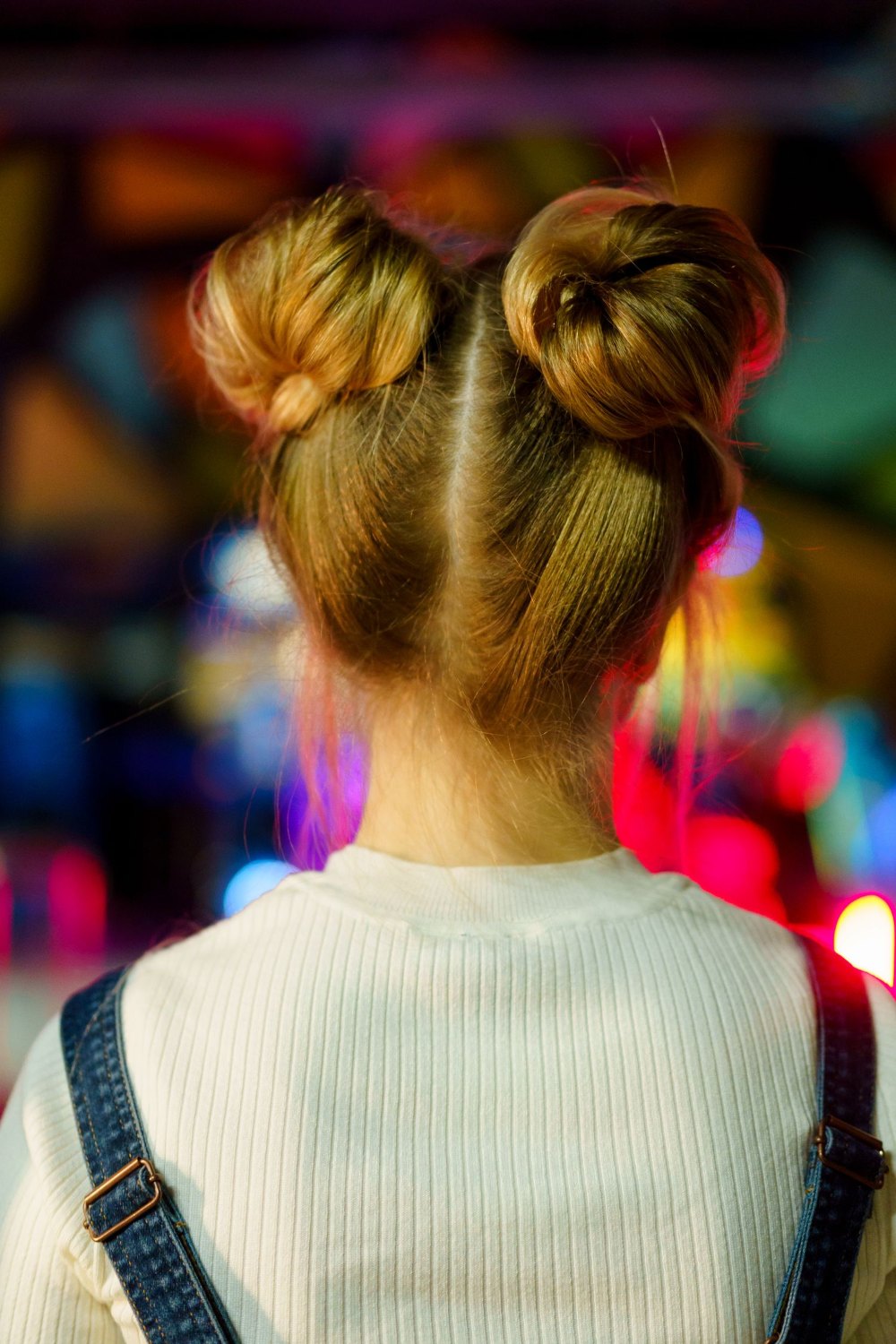
Coaches mostly want three things: no hair in the eyes, nothing that can snag on the bar, and no pins dropping onto the beam. A clean part and gelled flyaways also look polished from the judges’ table, and that tidy first impression is free.
Classic meet buns: high, low, braided, and two buns
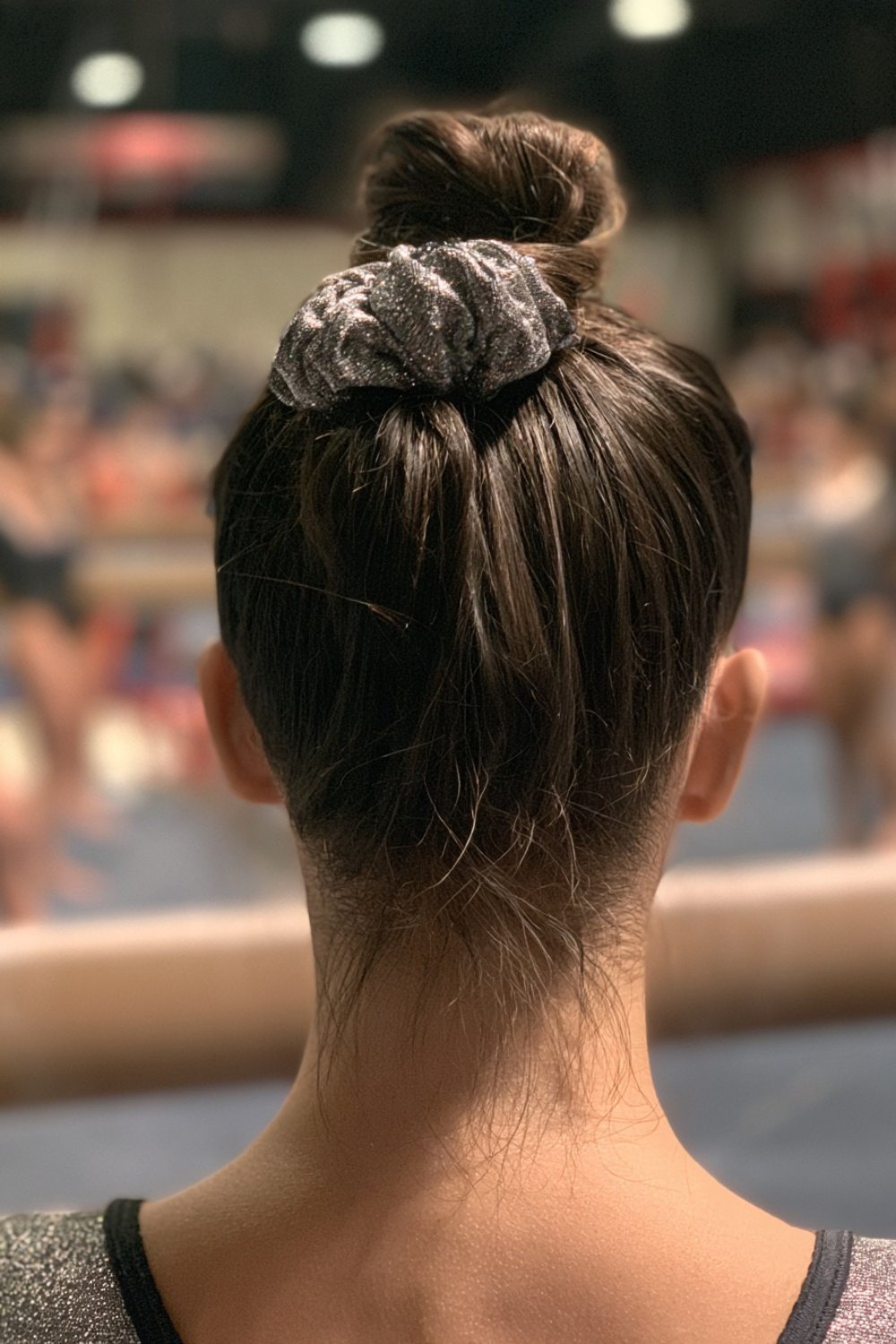
The bun is the default for a reason. It keeps long hair compact through twisting, swinging, and landing, and it holds a scrunchie or ribbon neatly at the base.
High bun tutorial (7 steps)
- Detangle all the hair with a paddle brush. For curly or coily hair, work while it’s damp with fingers or a wide-tooth comb.
- Smooth a pea-size amount of gel over the hairline and brush everything up toward the crown.
- Secure a ponytail at the crown with a snag-free hair tie, snug enough to hold but never painful.
- Twist the ponytail, or braid it for a braided bun, then wrap it around the base.
- Tuck the ends under and pin the bun to the base with about 6 to 8 bobby pins, crossing pairs into an X where it feels loose.
- Add a hair net for fine or very long hair, then slide the scrunchie or tie the ribbon around the base.
- Do a shake test with a few hard head nods and side turns, then finish with a light mist of hairspray.
A low bun follows the same steps at the nape of the neck. It sits lower for forward rolls and doesn’t press into the mat, which some gymnasts find more comfortable on floor.
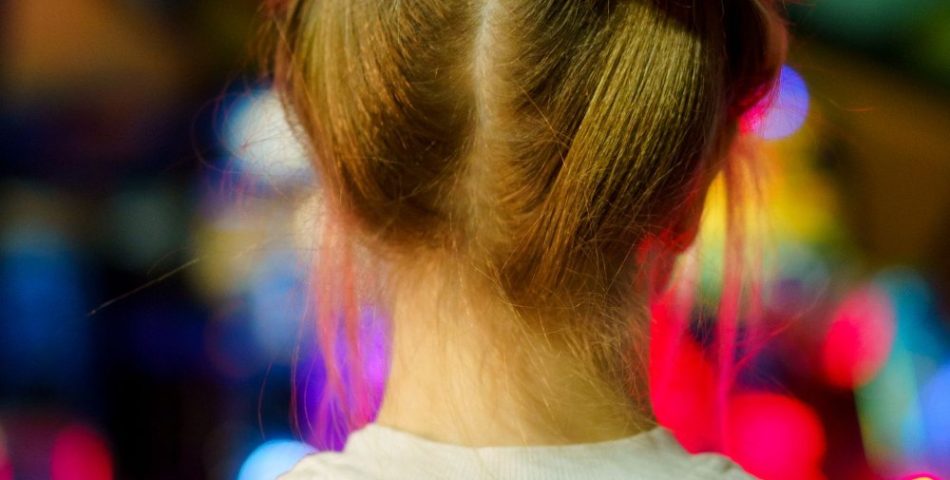
For two buns, part the hair down the center, make two ponytails just behind the ears or higher, and repeat the twist and pin steps on each side. Two buns split the weight of thick hair, so neither one feels like it’s tugging. The trade-off is time: expect it to take about twice as long, and the parts have to match or someone will notice.
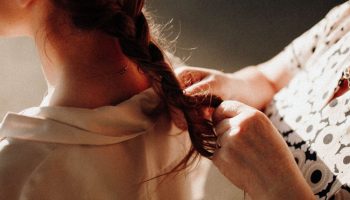
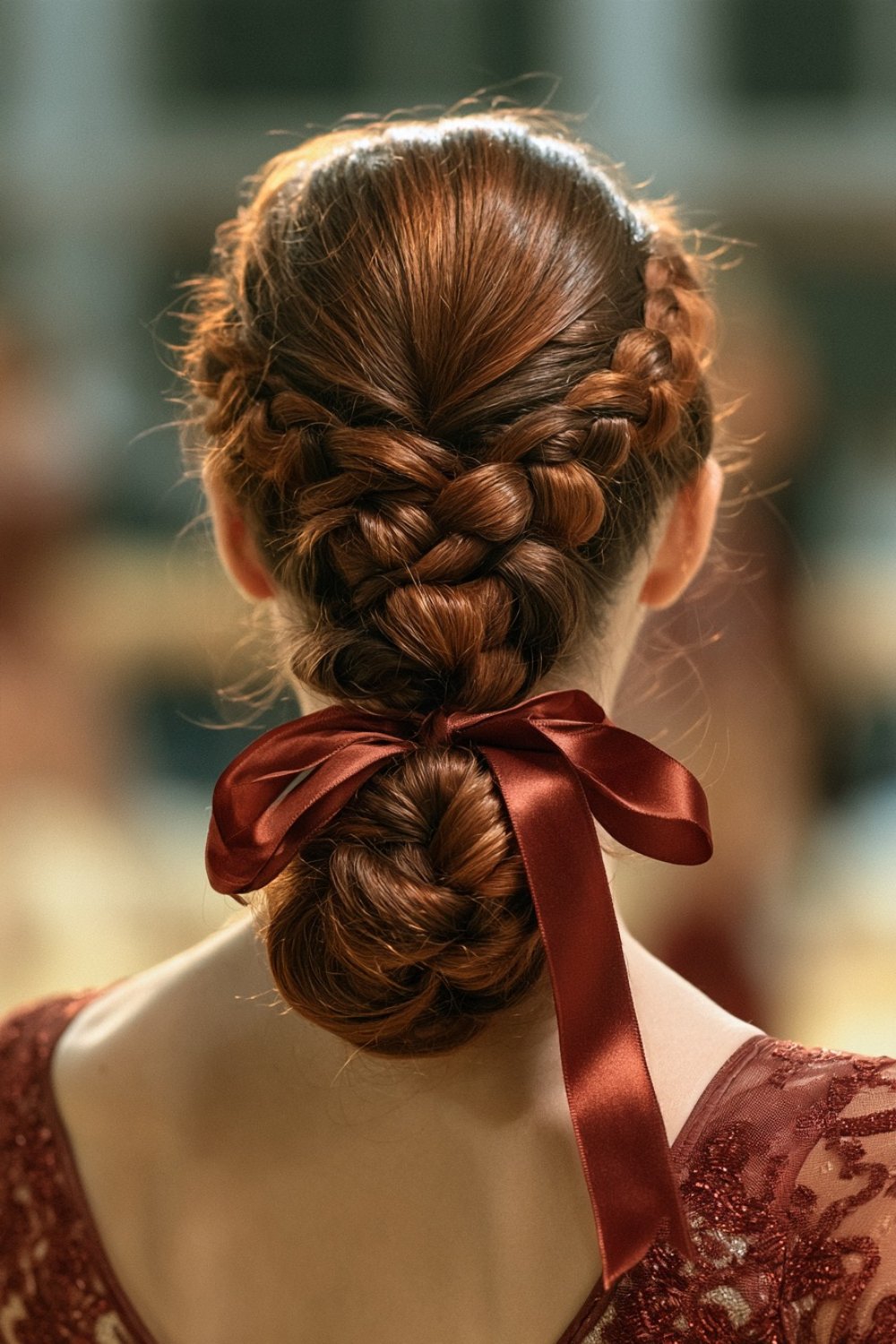
The braided low bun with a satin ribbon is a smart middle ground. A braid packs tighter than a twist, so it unravels less, and the ribbon hides the hair tie.
Ponytails and bubble braids that survive bars and beam
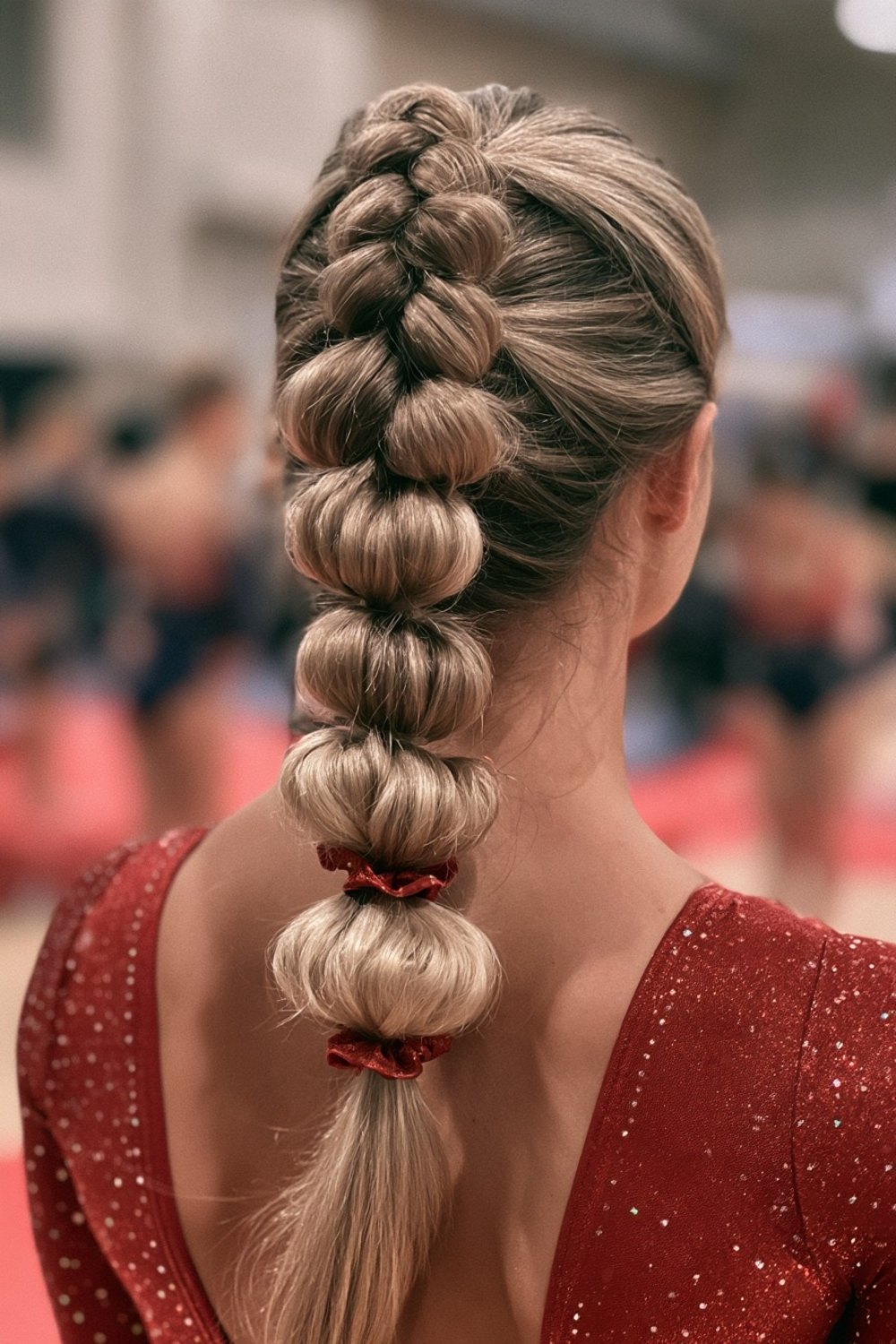
Some gymnasts hate buns. They give headaches, or the hair is too layered to hold one. A ponytail can work, as long as it’s contained.
A loose ponytail swings on every twist and can slap the face mid-skill. The bubble braid fixes that: you add a hair tie every 2 to 3 inches down the length, then gently pull each section wider so it looks like a row of bubbles. It looks fun and holds much better than a plain ponytail.
How to make a bubble braid ponytail
- Gel the hairline and make a high or mid ponytail with a snag-free hair tie.
- Add a small clear hair tie about 2 to 3 inches below the first.
- Pull the hair between the two ties outward with your fingertips to make the bubble.
- Repeat down to the ends and finish with a matching scrunchie at the top.
For bars, shorter is better. If the ponytail reaches the middle of the back, fold the last bubble up and pin it so it can’t brush the bar on a kip or wrap around a hand. For beam, focus on the front: bangs and face-framing pieces need gel and a pin or two, since a single strand in the eyes on a leap is a real distraction.
One more thing. If the gymnast keeps reaching up to fix the ponytail during warm-ups, it’s too loose or too heavy, and the better answer is usually a bun.
Braids and hair patterns: zigzag parts, Dutch, and French braids
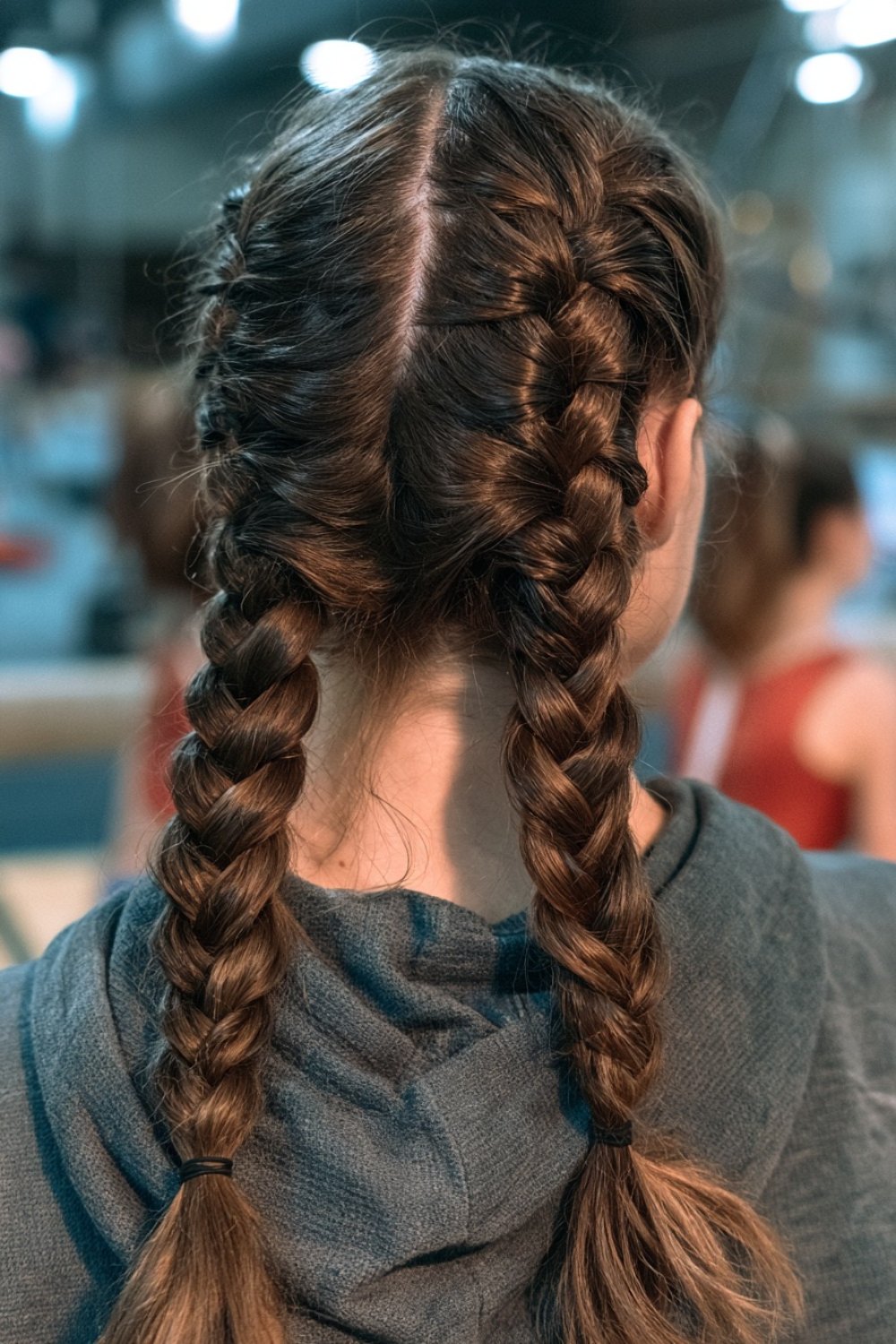
Braids are where meet hair gets personality. Two Dutch braids with a zigzag part look sharp from the stands, and they hold through every rotation because each section is anchored to the scalp.
A French braid crosses strands over the middle, so it lies flat. A Dutch braid crosses them under, so the braid pops up on top of the head. Dutch braids tend to read better in photos, while French braids feel smoother under a scrunchie or bun.
Making a zigzag part
Start at the hairline with the tail of a rat-tail comb and draw it back about an inch on a diagonal, then switch direction for the next inch. Keep going to the crown and clip each side out of the way. It takes practice, so try it on a regular weeknight first, not in the hotel bathroom.
Other hair patterns worth knowing: a heart part on the crown for team spirit days, a side part with one Dutch braid along the hairline into a bun, and two small braids at the front that feed into a high bun. Patterns are where you can match teammates without matching every detail.
Watch the tension at the hairline. Small, tight braids at the edges look neat on Saturday and can hurt by Sunday. Thicker sections at the front are kinder to the scalp and still look clean.
Short, thick, curly, and coily hair (protective styles)
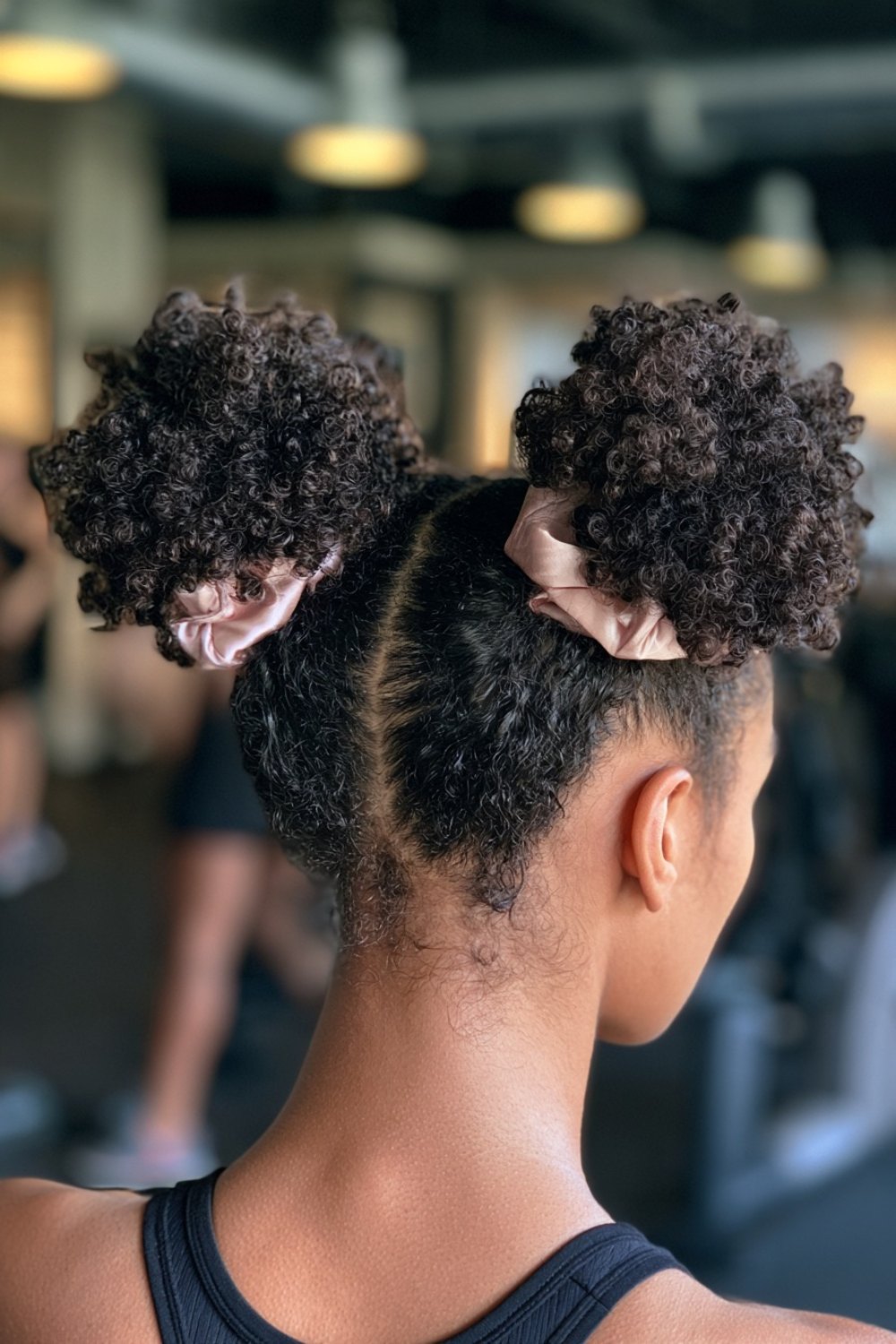
Every texture and length can look meet-ready. Straight and wavy hair tends to slip, so gel and a net do the work, and no hair type has to be forced into a sleek bun to count as good gym hair.
Short hair
Chin-length or shorter hair rarely makes a full bun. Try two to four mini twists or small braids from the front, pinned back behind the ears, or a half-up top knot with the rest gelled flat. A soft, no-slip headband works if your team packet allows one.
Thick hair
Thick hair can be heavy at the crown, so a single high bun may pull. Two buns, a braided low bun, or two Dutch braids spread the weight. Use sturdier jumbo pins, and expect to use a few more than the 6 to 8 you’d use on fine hair.
Curly and coily hair
Two neat puffs with satin scrunchies are fast, cute, and secure. Flat twists, cornrows, or two Dutch braids also hold well through tumbling. Detangle when damp, use a leave-in or edge cream, and skip brushing dry curls into a frizz cloud right before warm-ups.
Protective styles such as box braids or twists put in before a meet weekend can save a lot of mornings. Just keep them loose at the hairline.
Traction safety
The American Academy of Dermatology’s guide to hairstyles that cause hair loss warns that tight buns, ponytails, and braids worn often can lead to traction alopecia. Its advice includes loosening braids at the hairline, choosing thicker braids, keeping braids in no longer than 6 to 8 weeks, and changing the style right away if it hurts.
Warning signs include broken hairs around the forehead, a receding hairline, stinging, or a scalp that tents up under the pull. If you notice any of these, loosen the style and talk to your doctor or a board-certified dermatologist. A meet style should feel secure, never sore, and young scalps deserve the same gentleness.
Pick a style by event and hair length
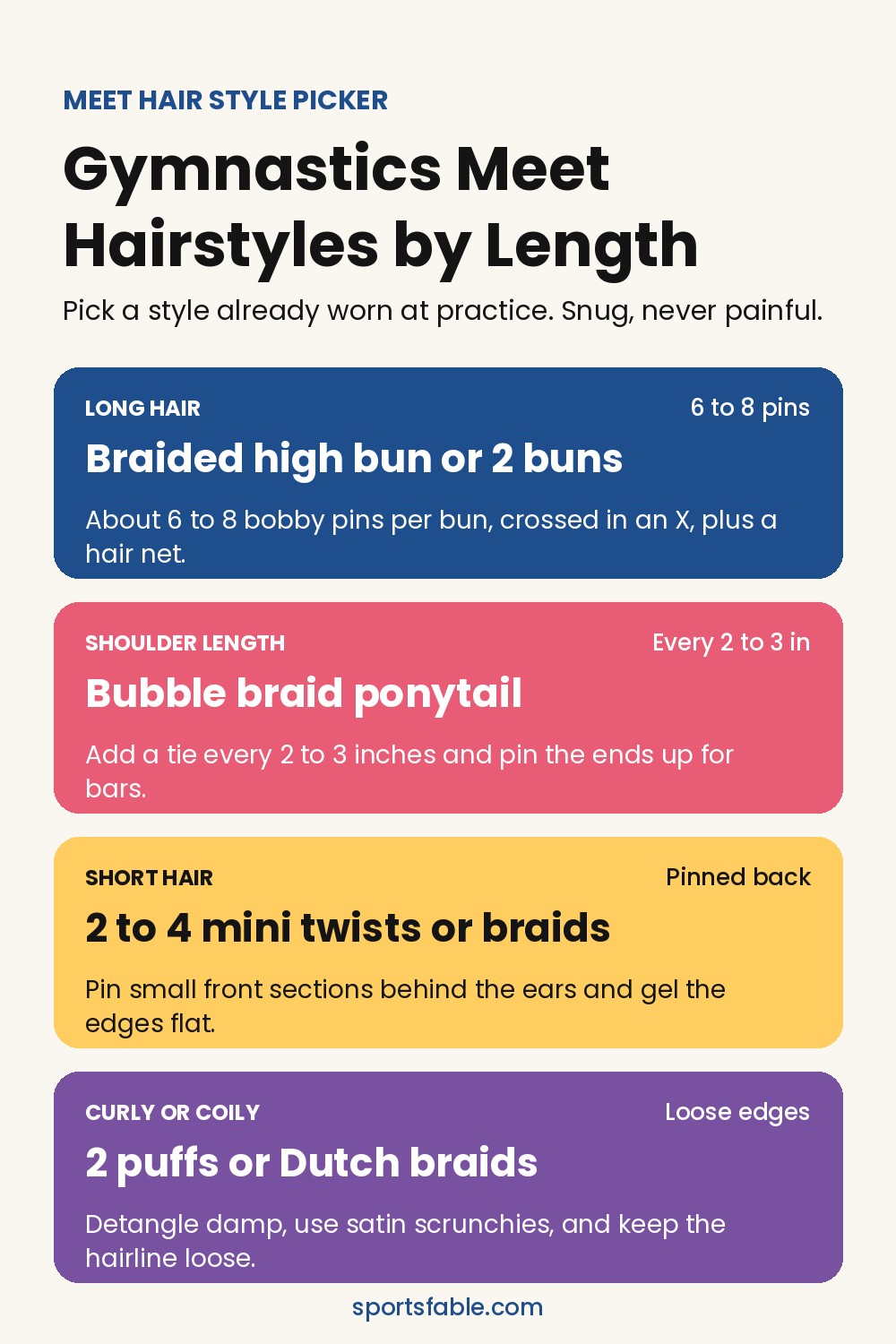
Most gymnasts wear one style for the whole meet, so pick for the toughest event. For many, that’s floor, where flips and twists test every pin. Bars test anything long enough to brush the bar, and beam tests the front of the hair.
| Hair length or texture | Best meet styles | Hold tip |
|---|---|---|
| Long hair | Braided high bun or 2 buns | About 6 to 8 pins per bun plus a net |
| Shoulder length | Bubble braid ponytail or 2 Dutch braids | Tie every 2 to 3 inches; pin the ends up |
| Short hair | 2 to 4 mini twists or braids pinned back | Gel the edges; add a soft headband if allowed |
| Thick hair | 2 buns or a braided low bun | Jumbo pins; split the weight |
| Curly or coily hair | 2 puffs, flat twists, or Dutch braids | Detangle damp; loose at the hairline |
If you’re stuck between two styles, choose the one the gymnast has already worn to practice. A new style on meet day is a gamble, and nerves are high enough without wondering whether the bun will hold on the first tumbling pass.
Sleek buns and low-friction braids carry over to other sports too. Our ice skating hairstyles guide has more ideas for spins and jumps.
The meet day hair kit and timeline
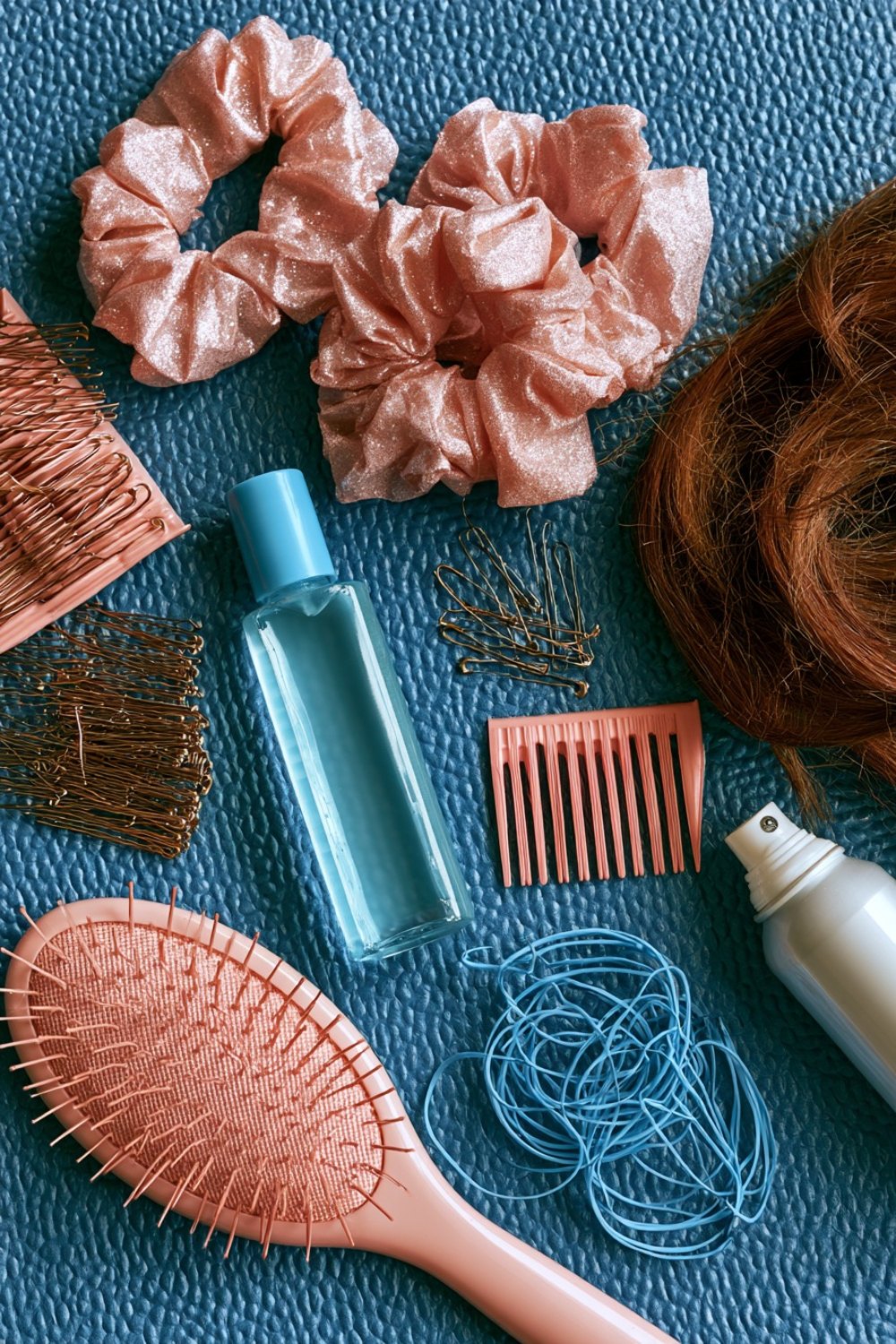
The kit is small. The panic when something’s missing is not. Pack it the night before in a zip pouch that lives in the gym bag.
- Snag-free hair ties, plus a few spares
- Small clear hair ties for bubble braids
- About 20 bobby pins in the gymnast’s hair color
- Hair net for buns
- Team scrunchie or ribbon, if allowed
- Gel or edge cream
- Travel-size hairspray
- Paddle brush and a rat-tail comb
- Spray bottle of water
- Satin scrunchie or bonnet for the drive home
Most of this usually comes in under $30 total. A sparkly team scrunchie also makes a sweet small present, and our gifts for gymnasts list has more ideas.
Meet-morning timeline (6 steps)
- The night before: wash if needed, detangle, and pack the kit.
- About 60 minutes before you leave: set out the kit and dampen the hair lightly.
- About 45 minutes before you leave: part the hair and build the base ponytails, braids, or puffs.
- About 30 minutes before you leave: finish the bun or braid, pin, net, and add the scrunchie or ribbon.
- Just before you leave: shake test, gel any flyaways, and a light mist of hairspray.
- At the gym: check for loose pins after warm-ups and after each rotation.
Starting about 60 minutes out leaves room for the braid that has to be redone. There’s always one. Grab the free printable below for the checklist, the timeline, and a style log to track what held up best.
And when the hair’s done early, use the spare minutes for team photos. Our gymnastics media day poses guide has simple ideas for those.
Free printable
Gymnastics Meet Hair Checklist and Style Picker
A free 2-page printable: a 6-step meet morning hair timeline and kit checklist, plus a style picker by hair length and texture and a style log.
Download the free PDFKeep building your meet season
- A splits stretching routine for leaps and jumps
- Hip mobility stretches for floor and beam
- Team gift ideas for the end of the season
- Gifts for coaches who made the year count
Questions people ask
What is the best hairstyle for a gymnastics meet?
A secured high bun or braided low bun is the most reliable choice for long hair, because it stays compact through flips and twists. Two buns or two Dutch braids work well for thick hair. Pick a style the gymnast has already worn to practice.
Are scrunchies and ribbons allowed at gymnastics meets?
In high school, NFHS rules allow hair devices that are securely fastened and don’t pose a risk of injury. Club and college rules vary by program and team, and rules change. Check with your coach or meet info packet before meet day.
What are easy gymnastics meet hairstyles for kids?
A bubble braid ponytail, two puffs, or a simple high bun are quick and secure for young gymnasts. Keep each style snug but never painful, and loosen it at the hairline if the gymnast complains. Practice once before meet day so the morning stays calm.
How many bobby pins does a gymnastics bun need?
Most buns hold with about 6 to 8 bobby pins, pinned into the base and crossed in an X where it feels loose. Thick hair may need a few more, and sturdier jumbo pins help. Pack about 20 pins so you have spares.
Can gymnasts wear braids or protective styles at a meet?
Yes, braids, twists, cornrows, and puffs are all good meet styles because they stay close to the head. The American Academy of Dermatology advises keeping braids loose at the hairline and in no longer than 6 to 8 weeks. Talk to your doctor or a dermatologist if you notice pain or thinning edges.
How do you keep short hair out of the face for a meet?
Twist or braid two to four small sections from the front and pin them back behind the ears. Gel the rest flat, and add a soft headband if your team packet allows one. A half-up top knot also works for chin-length hair.
Do college gymnasts have hair rules?
College gymnasts follow their program’s rulebook and, often, a team hair look set by the coaches or captains. Rules change, so the best source is the coach or team captain. Sleek buns and braided styles are a safe starting point.
The featured photo is a licensed stock photo credited in its caption. The other images in this article are AI-generated illustrations and original graphics created by SportsFable. They show hairstyle ideas, not real people, teams or events. The printable is an original SportsFable resource.
Related Post