

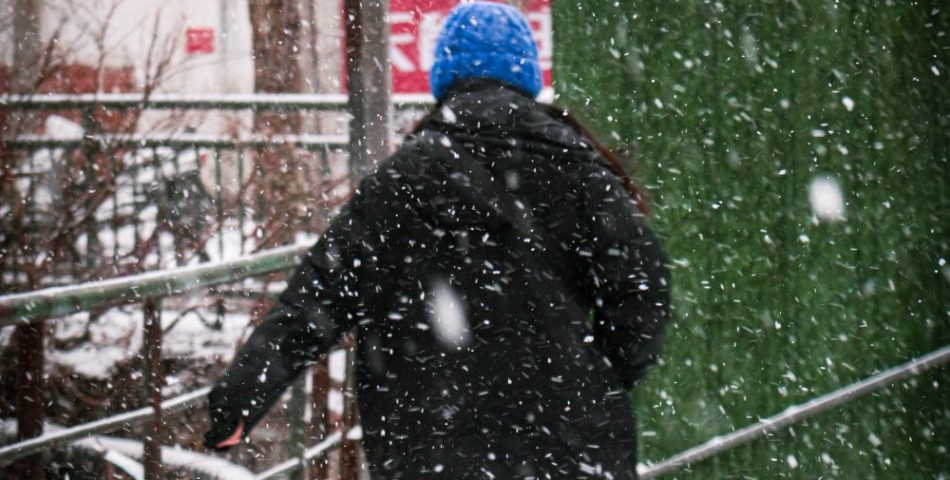
The first real snow does something strange to a street. You pull back the curtain and everything is too bright and too quiet, like the whole block is holding its breath, and you stand there with your coffee going cold in your hand.
By the door, the coats have already started to pile up: the puffer, the wool one, and the rain jacket that’s definitely wrong. Then the small panic hits. What do you actually wear to go out in that, stay warm for more than ten minutes, and still look cute in the photos?
Good snow outfits answer both questions at once. Below you’ll find the layering order, outfit ideas for women and men, a simple chart for dressing by temperature, and a free printable planner near the end.
Quick answer
Build snow outfits in three layers: a wool or synthetic base layer (skip cotton), a fleece or sweater mid layer, and a water-resistant puffer or shell, plus waterproof boots, wool socks, a hat, and mittens. Dress for the air temperature band, from 32°F to 40°F down to below 0°F, and go one band colder when the wind chill is lower.
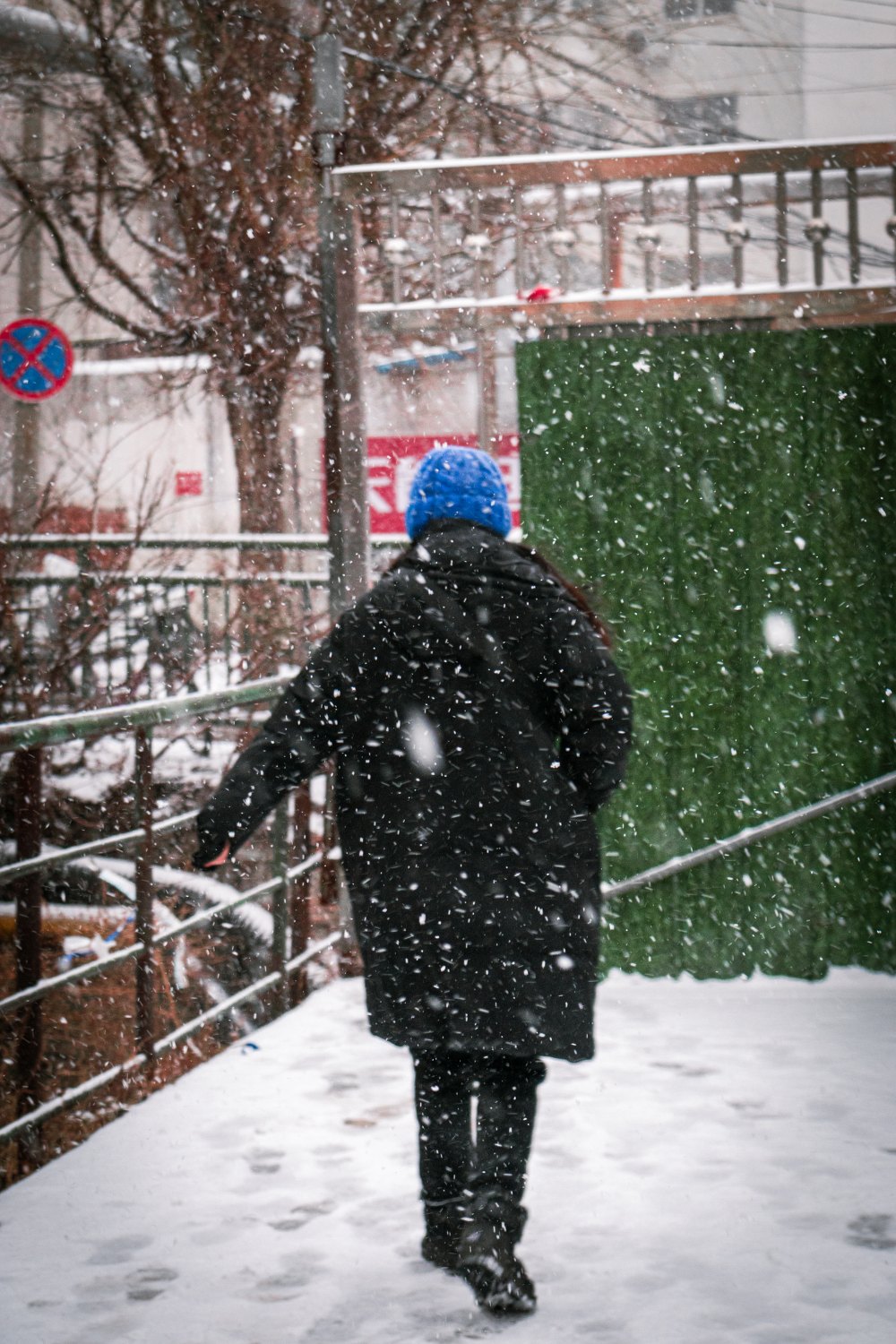
How to layer for snow: base, mid, and shell
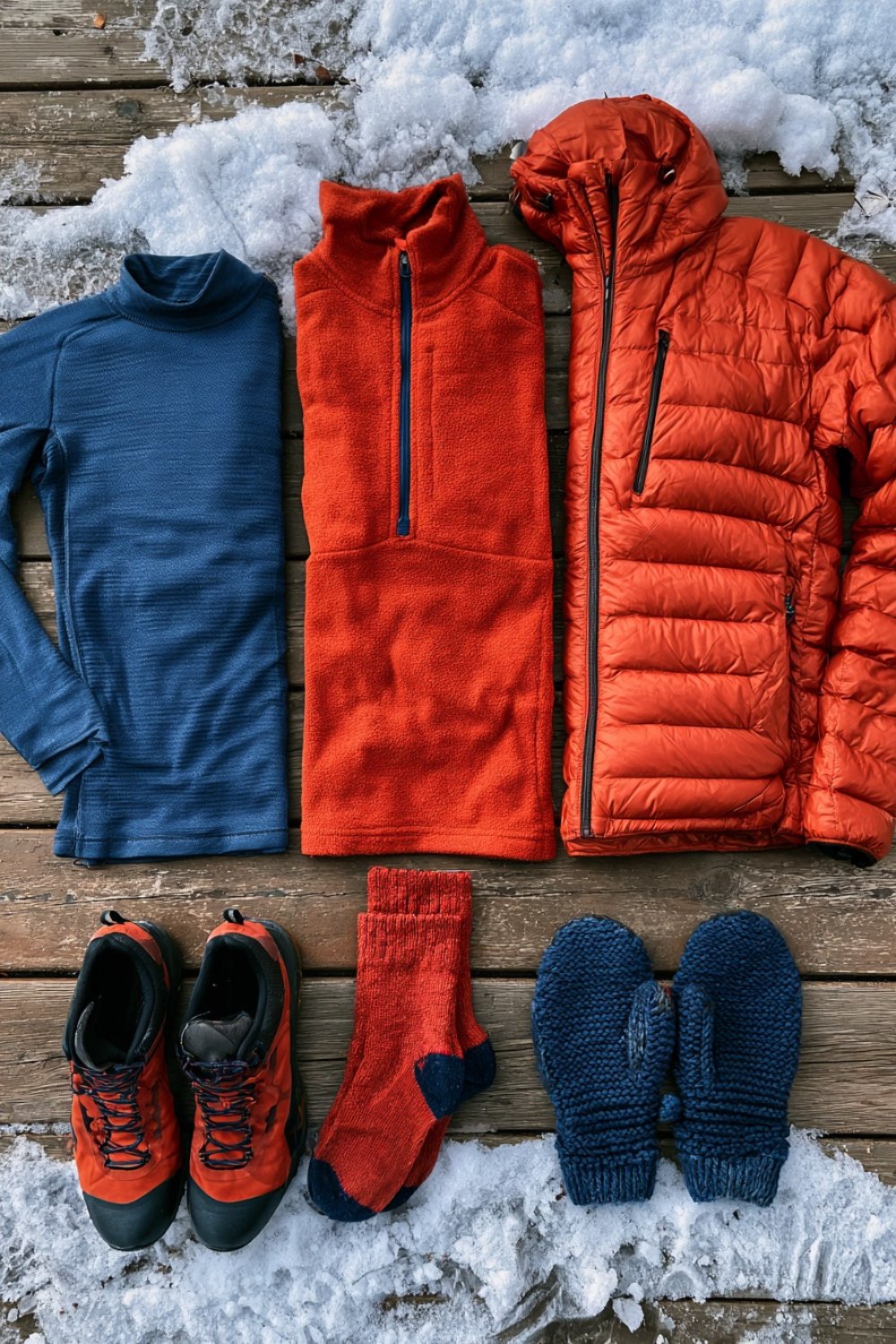
Looking good in the snow mostly comes down to being warm enough that your shoulders aren’t up by your ears. That comes from layering in the right order: base, then mid, then shell.
Keep cotton away from your skin. Once it gets damp from sweat or melted snow, cotton holds that moisture and keeps pulling heat out of you, and the National Weather Service’s extreme cold safety tips say to avoid cotton for strenuous outdoor activity and choose synthetic fabrics that wick moisture and dry quickly.
- Put on a snug base layer top and leggings in merino wool or a synthetic fabric. Midweight works for most snow days, and heavyweight is worth it from 0°F to 19°F air temperature.
- Add a mid layer for warmth, such as a fleece, a wool sweater, or a light down vest. This is the layer you unzip or pull off when you start to sweat.
- Finish with a hooded, water-resistant shell, puffer, or parka. The weather service suggests outer layers that are tightly woven, water repellent, and hooded.
- Cover your legs with snow pants for play, or water-resistant or wool pants over thermal leggings for town.
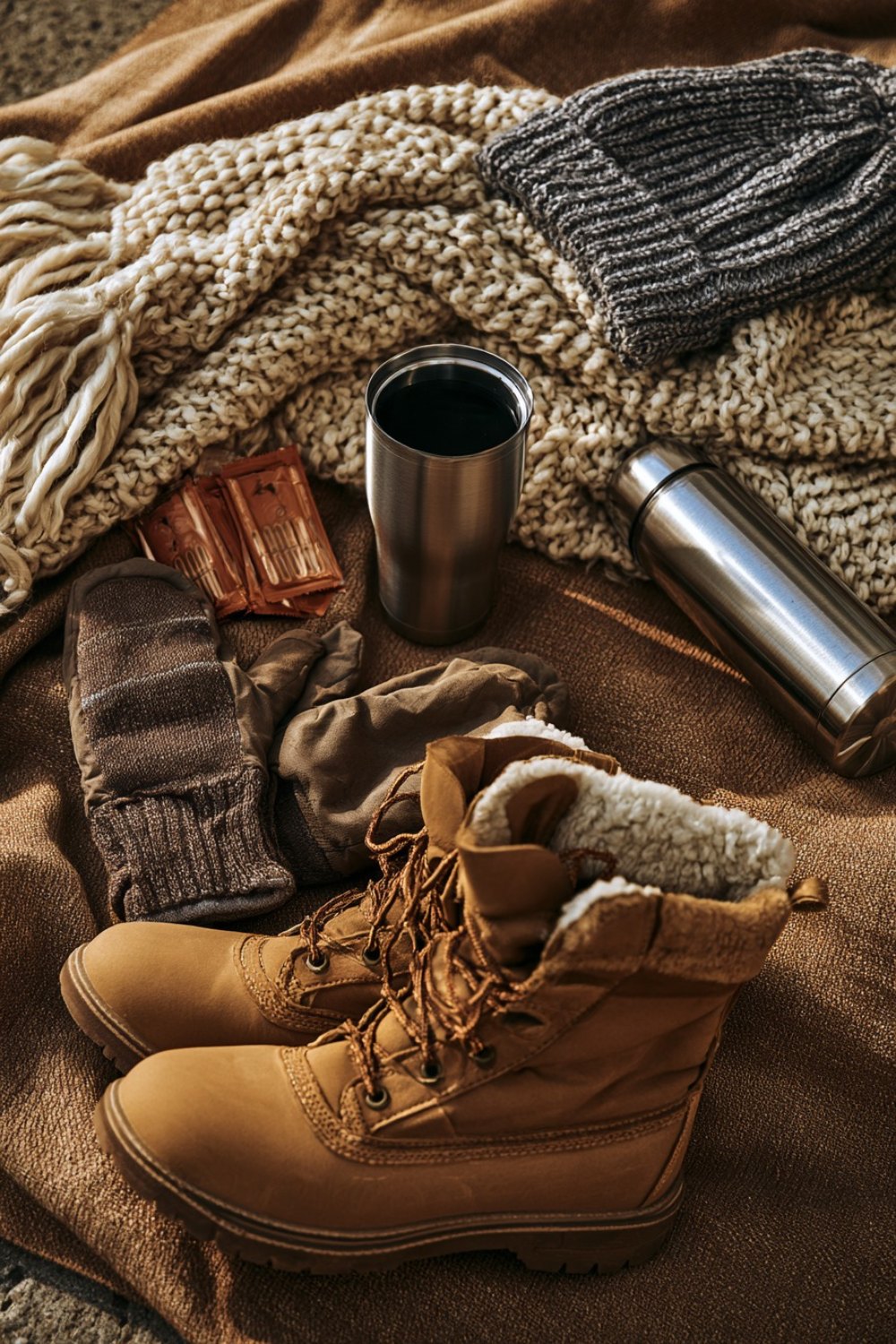
- Cover the edges: one pair of wool or synthetic socks, waterproof insulated boots, a hat that covers your ears, a scarf or neck gaiter, and mittens, which the weather service says are better than gloves.
Here’s the honest part: the cutest jacket you own might be the least warm. For an hour outside, wear the warm one and let your hat, scarf, and mittens carry the style. It’s the same layering logic as a good winter running outfit, just with more time standing still.
| Layer | What works | What to skip | Usual price band (at the time of writing, November 2026) |
|---|---|---|---|
| Base | Merino or synthetic thermal top and leggings | Cotton tees and cotton leggings | About $20 to $60 a set |
| Mid | Fleece, wool sweater, light down vest | Heavy cotton hoodies | About $25 to $80 |
| Shell | Water-resistant puffer, parka, or snow jacket with a hood | An unlined coat in wet snow | About $60 to $250 |
| Boots | Waterproof, insulated boots with lug soles | Canvas sneakers, smooth-soled fashion boots | About $50 to $180 |
Cute and aesthetic snow outfits for women
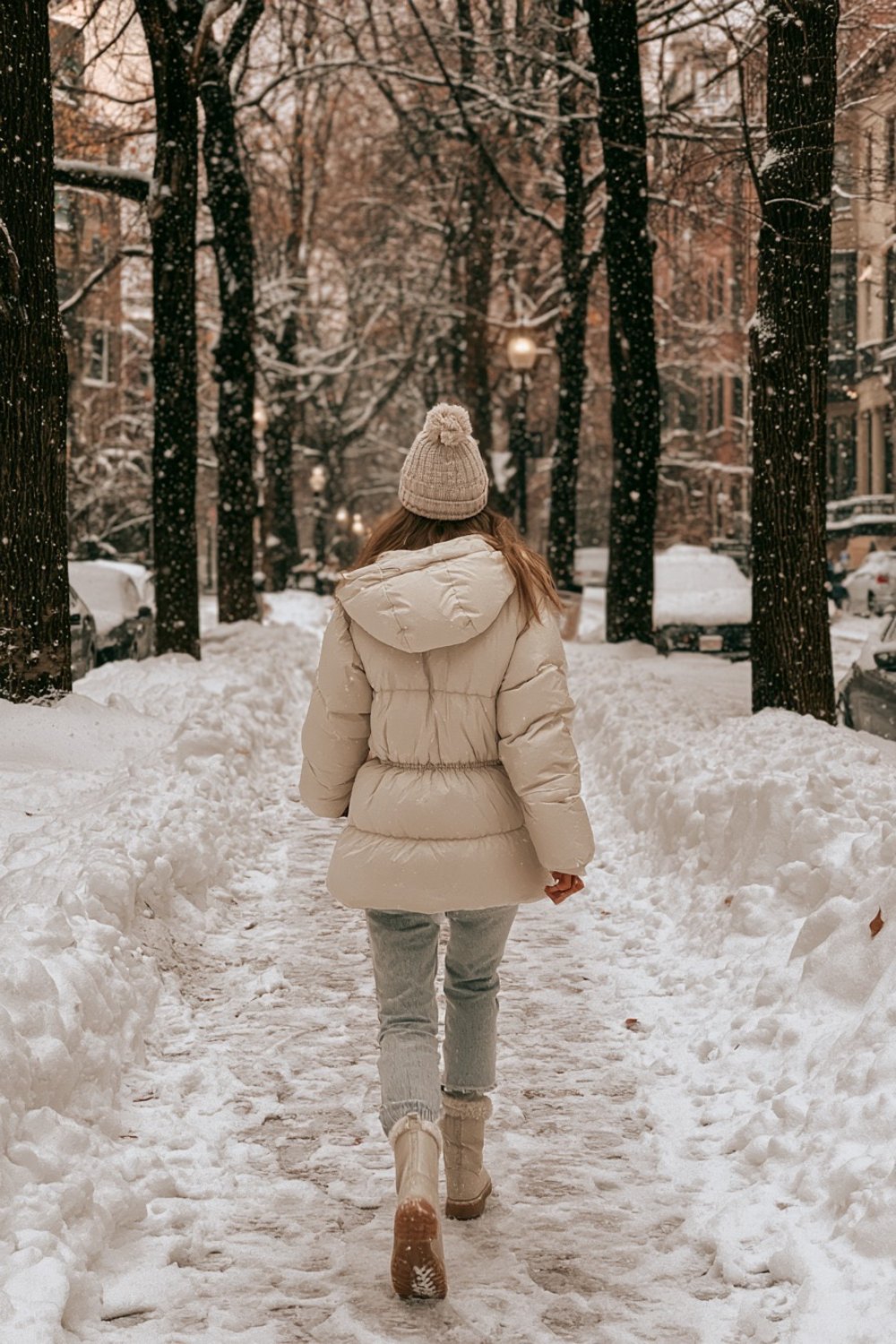
The best snow outfit inspo usually starts with one strong piece, like a cream puffer or a long dark coat, and keeps everything else simple and warm. These ideas work on any body and budget, since most of the look lives in color.
- A cream mid-length puffer, a ribbed cream beanie, black thermal leggings, and tan waterproof boots with a faux-fur cuff.
- A pink fleece half-zip under a white shell, pink mittens, and white snow boots.
- A brown sherpa fleece jacket, a chocolate beanie, and cream wide-leg snow pants.
- A patterned wool sweater under an open puffer vest, fleece-lined leggings, and wool knee socks peeking over your boots.
For photos, a light outfit glows against a gray sky and a dark one pops against white snow. There’s always someone who says “just one more” right when your fingers go numb, so wear thin liner gloves under your mittens and you can slip the mittens off for the phone without bare skin.
Color palette ideas: pink, white, black, and brown
| Palette | Pieces to try | Why it works in snow |
|---|---|---|
| Pink | Blush puffer, pink beanie and mittens, cream boots | Soft and warm next to cold blue light |
| White | White or ivory puffer, cream knit set, light gray boots | Tone on tone looks calm and wintry; add one darker accessory so you don’t vanish |
| Black | Long black puffer, black thermals, black lug-sole boots, gray scarf | Sharp contrast against snow and hides salt stains |
| Brown | Camel or chocolate coat, oatmeal beanie, brown boots | Cozy and earthy, and it pairs with almost any scarf |
Chic looks for really cold days
For women in cold weather below about 20°F, a down coat that reaches your knee or calf is the chic choice that also works. Thighs get colder than you’d expect, and a long coat covers them. Wear a heavyweight base under wool trousers or fleece-lined leggings, then add a knit balaclava or a hood with a big scarf.
A fun Y2K snow outfit
Go retro with a shiny baby-blue or silver puffer, a faux-fur trimmed hood, flared snow pants, fuzzy earmuffs, and tinted goggles pushed up on your head. It’s a little ridiculous, and that’s the point. Keep a real base layer underneath.
Modest and hijabi snow layering
Start with a full-length thermal top and thermal leggings so wrists and ankles stay covered even when you reach or bend. Add a long tunic-length puffer or a wool maxi coat to mid-calf, and wear wide-leg snow pants or a long skirt over your thermals and tall boots.
A wool or jersey hijab over a thermal underscarf keeps your head warm, and a second scarf layered over it blocks wind at the neck. Pin it flat enough that your hood slides over the top.
City snow outfits for walking all day
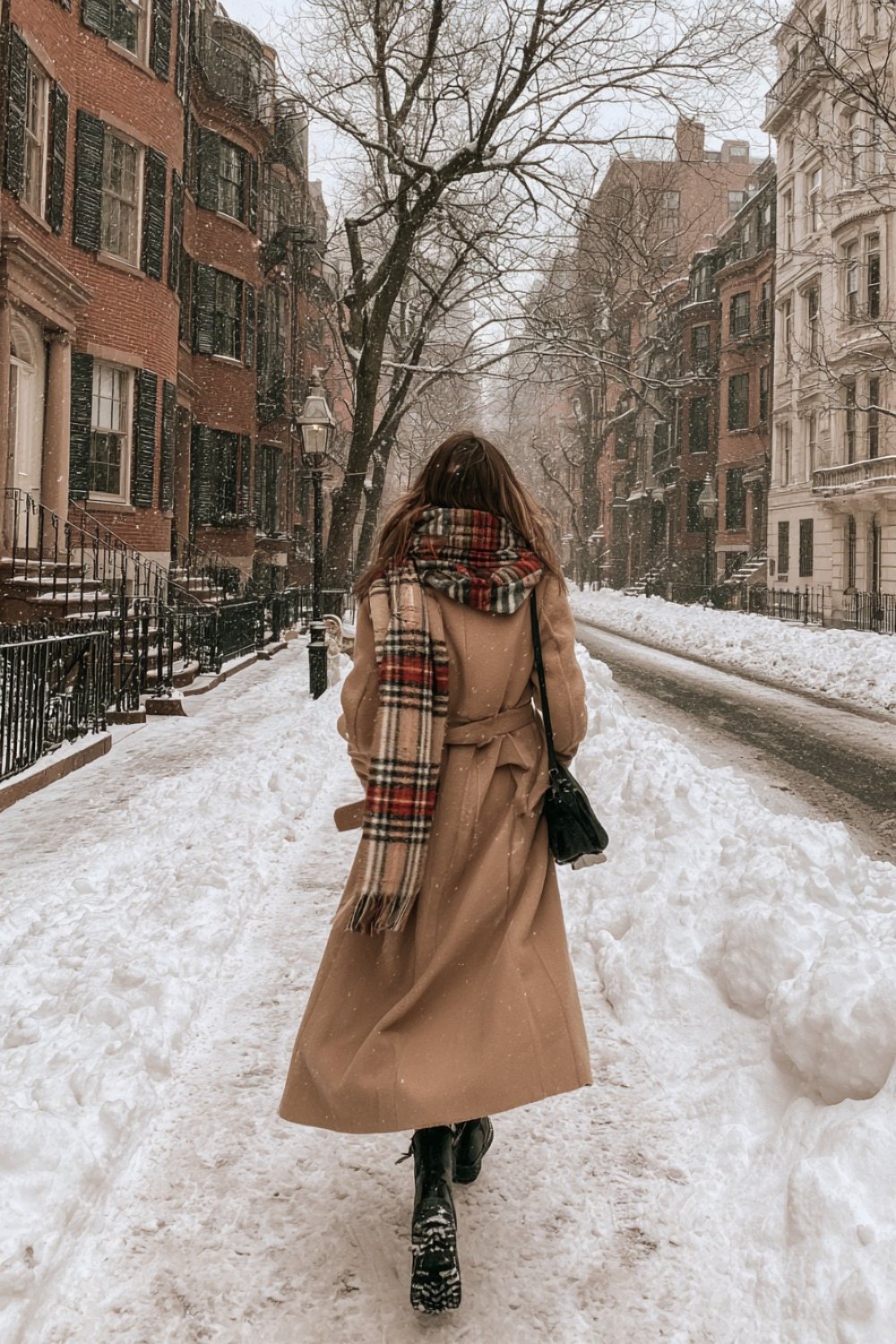
City snow is its own weather. You’re in and out of heated trains and shops, and every crosswalk has an ankle-deep slush puddle you only spot once you’re standing in it.
In a big city like New York, dress so you can open up indoors and close up fast outside. A long wool coat is lovely on dry, cold days, while a water-resistant puffer or a shell over your sweater handles wet snow and sleet better.
- Choose waterproof boots with deep lug soles, since salted, slushy sidewalks are slick and wet.
- Wear a light base layer and a zip mid layer so you can vent on the train instead of sweating.
- Pick a coat that covers your hips or longer, with a hood or a hat you won’t lose.
- Tuck a spare pair of socks in a zip bag in case the slush wins.
Jeans are tempting, but they’re cotton and soak up melted snow at the hem. Save them for short, dry outings, or wear thermal leggings underneath and switch to water-resistant pants on wetter days.
Snow outfits for men
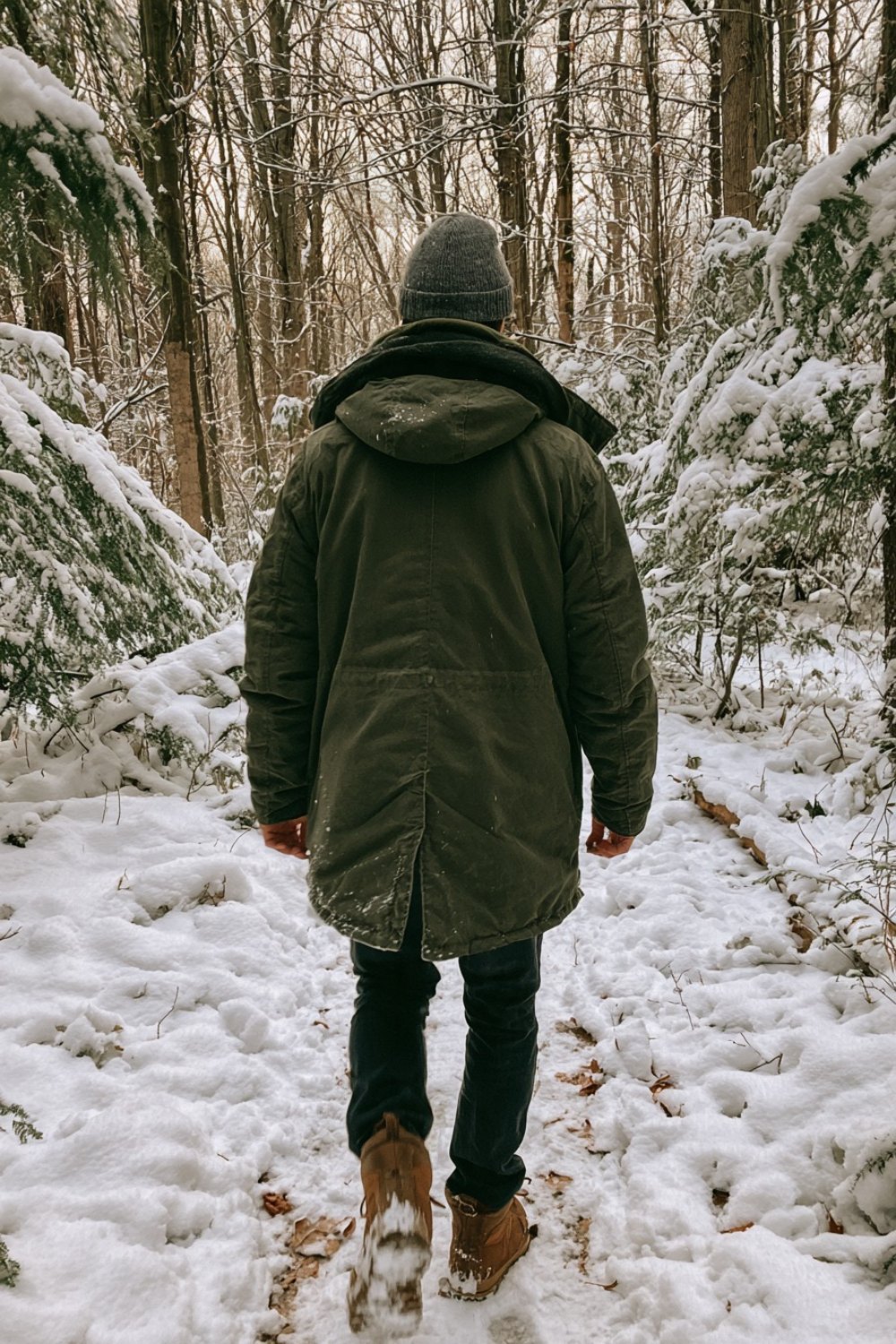
Men’s winter fashion in the snow looks sharpest when it’s simple: a good coat, warm layers, and boots that can actually handle the weather.
- An olive parka, a gray merino base, a charcoal fleece, dark water-resistant pants, brown waterproof boots, and a ribbed beanie.
- A navy wool peacoat over a merino crewneck with wool trousers and lug-sole boots, best on dry, cold days.
- A black puffer, a synthetic fleece hoodie, and insulated snow pants for shoveling or sledding.
- A retro color-block fleece under a shell with a knit hat.
Men’s base layers are meant to fit close, so buy your usual size and check the length at the wrist and hem. Then try the coat on over your fleece, because a parka that only fits over a T-shirt will feel tight the first cold morning.
Outfits for sledding, snowboarding, and snow play
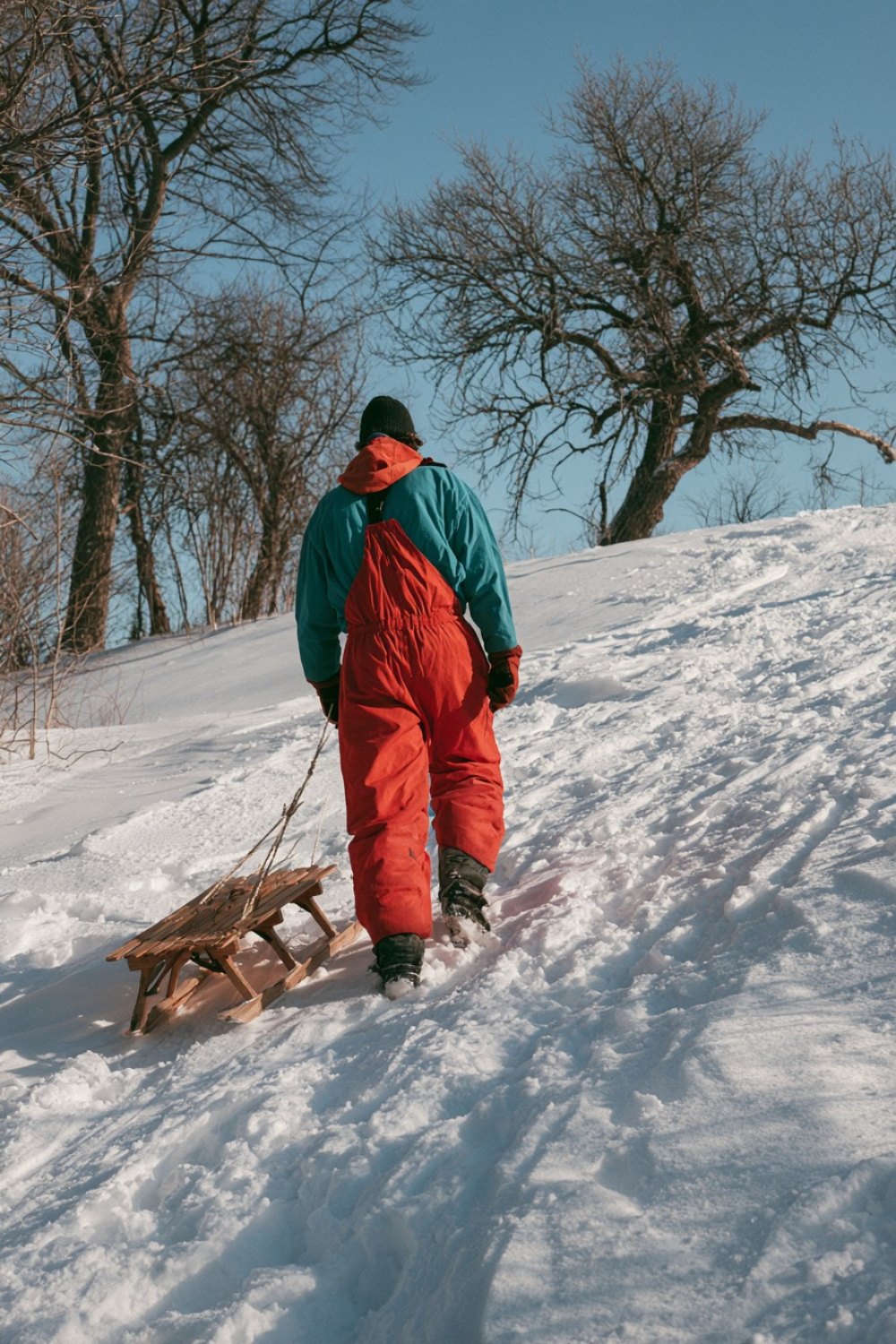
Snow play is where waterproof gear earns its price. You’ll sit, kneel, and fall in snow, and by the third climb up the sledding hill your legs burn, your jacket is unzipped, and you’re laughing too hard to care.
That climb is why a synthetic or wool base matters. You’ll sweat on the way up and cool off fast on the way down, so wear a waterproof jacket and snow pants or bibs, pull the pant cuffs over your boots, and choose waterproof mittens. If kids are coming along, dress them in the same three layers and check for wet clothes often.
Snowboarding outfits for women
Women’s snowboarding jackets and pants usually fit a bit looser than street clothes so you can bend and twist. Bibs are worth a look because you’ll sit in the snow to strap in, and they keep snow out of your waistband.
Wear a helmet and goggles, and many beginners like wrist guards for early falls. For more ideas, see our guide to snowboarding outfits.
Pick an outfit by temperature
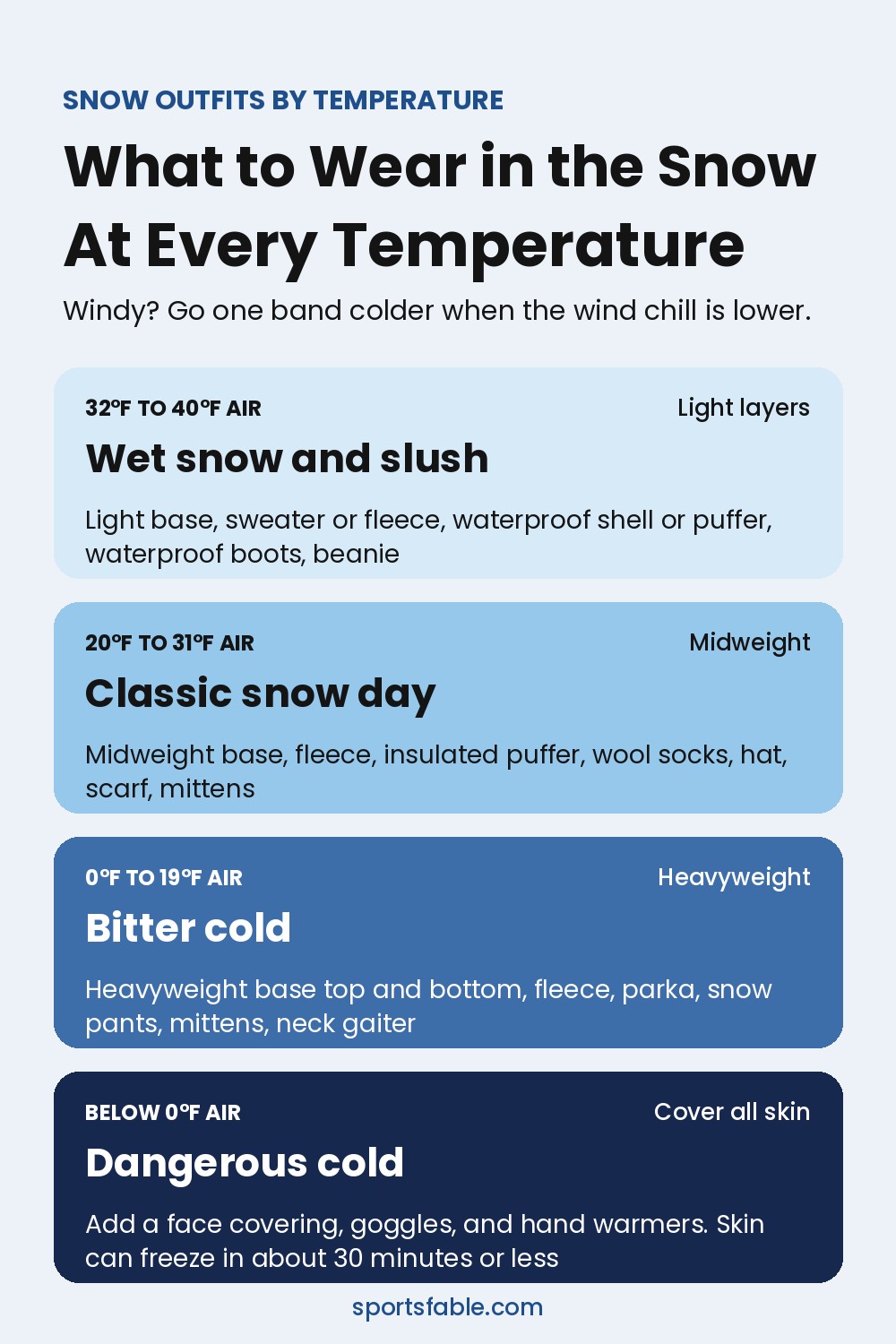
Check two numbers before you get dressed: the air temperature and the wind chill. Wind chill is how cold it feels on skin when wind speeds up heat loss, and it can be far lower than the thermometer.
The National Weather Service’s wind chill chart gives an example: an air temperature of 0°F with a 15 mph wind makes a wind chill of minus 19°F, and at that wind chill exposed skin can freeze in about 30 minutes. In colder, windier conditions it can happen faster, so use the bands below by air temperature and go one band colder when the wind chill is lower.
| Air temperature | What it feels like | What to wear |
|---|---|---|
| 32°F to 40°F | Wet snow and slush | Light base, sweater or fleece, waterproof shell or puffer, waterproof boots, beanie, light gloves |
| 20°F to 31°F | Classic snow day | Midweight base, fleece, insulated puffer, wool socks, hat, scarf, mittens |
| 0°F to 19°F | Bitter cold | Heavyweight base top and bottom, fleece, insulated parka, snow pants or lined pants, mittens, neck gaiter |
| Below 0°F | Dangerous cold | Everything for 0°F to 19°F plus a face covering, goggles, and hand warmers; cover all skin and keep trips short |
Know the warning signs, too. The CDC lists frostbite and hypothermia signs including redness or pain, skin that looks white or grayish-yellow or feels firm or waxy, numbness, shivering, confusion, fumbling hands, slurred speech, and drowsiness. Get inside, change out of wet clothes, and get medical help for those signs, and if you have a heart or circulation condition, talk to your doctor about time in the cold.
Sitting outside for a game? Our cold tailgate outfit guide builds on these bands.
Snow outfit checklist and packing list
Free printable
Snow Outfit Planner and Packing Checklist
Page 1 has an outfit by temperature table for 4 air temperature bands, a 7-point layering checklist, and a plan for today. Page 2 has a 10-item snow day and snow trip packing list with checkboxes, travel reminders, and a notes area.
Download the free PDFThe free Snow Outfit Planner and Packing Checklist puts the temperature table and a layering checklist on page 1 and a packing list with a notes area on page 2. Run through this 7-point check before you head out.
- Check the air temperature and the wind chill.
- Put on a wool or synthetic base layer, no cotton.
- Add a fleece or sweater mid layer.
- Zip into a water-resistant, hooded outer layer.
- Wear waterproof boots with one pair of wool socks.
- Cover your head, ears, neck, and hands.
- Pack spare socks and a plan to warm up indoors.
What to pack for a snow day or snow trip
- 2 thermal base layer sets
- 1 fleece or warm sweater
- 1 water-resistant puffer or parka
- 1 pair of snow pants or water-resistant pants
- 3 pairs of wool or synthetic socks
- Waterproof insulated boots
- Beanie, scarf or neck gaiter, mittens, and liner gloves
- Hand warmers and a thermos
- Sunglasses or goggles, sunscreen, and lip balm
- Slip-on traction cleats for icy sidewalks
Snow trip tips for Japan and other faraway trips
On a snow trip to Japan or anywhere far from home, pack layers you can rewear and mix, since luggage space goes fast. Boots that slip on and off easily help, because many homes and traditional inns expect you to remove shoes indoors.
Trains and shops are often well heated, so a zip mid layer beats a bulky sweater. Check the forecast each morning, since mountain towns can be far colder than cities.
Keep building your winter wardrobe
- Planning a mountain getaway? Start with our ski trip outfits.
- For the cozy part after the slopes, try these apres ski outfits.
- Taking the snow to the trail? Read our winter hiking outfits guide.
- Shopping for someone who loves the cold? Browse gifts for skiers.
Questions people ask
What should I wear in the snow to stay warm?
Wear three layers: a wool or synthetic base layer, a fleece or sweater mid layer, and a water-resistant, hooded puffer or shell. Add waterproof boots, wool socks, a hat, a scarf, and mittens. Choose heavier layers as the air temperature drops, and dress one band colder when the wind chill is lower.
How do you make a snow outfit look cute?
Pick one standout piece, like a cream puffer or a long dark coat, and build a color palette around it in pink, white, black, or brown. Keep warm layers underneath so you can stay out long enough for photos.
What should you not wear in the snow?
Avoid cotton next to your skin, because cotton holds moisture from sweat or melted snow and pulls heat away. Skip canvas sneakers and smooth-soled boots, which get wet and slippery. Jeans are fine for a short, dry outing but soak through in wet snow.
What should women wear in cold, snowy weather?
Women can stay warm and chic in snow with a heavyweight base layer, a fleece, and a knee-length or longer down coat when the air temperature is below about 20°F. Wool trousers or fleece-lined leggings, waterproof boots, a hat or hood, and mittens finish the outfit.
What should I wear in 20 degree snow?
At an air temperature of 20°F to 31°F, wear a midweight base layer, a fleece, an insulated puffer, wool socks, waterproof boots, a hat, a scarf, and mittens. If wind pushes the wind chill below 20°F, dress for the 0°F to 19°F band with a heavyweight base and a parka.
How fast can you get frostbite in the snow?
According to the National Weather Service, at a wind chill of minus 19°F (for example, 0°F air with a 15 mph wind), exposed skin can freeze in about 30 minutes, and faster in colder, windier conditions. Cover all skin, keep trips short, and go inside if you notice redness, pain, numbness, or white or grayish-yellow skin.
The featured photo is a licensed stock photo credited in its caption. The other images in this article are AI-generated illustrations and original graphics created by SportsFable. They show outfit ideas, not real people, teams or events. The printable is an original SportsFable resource.
Related Post