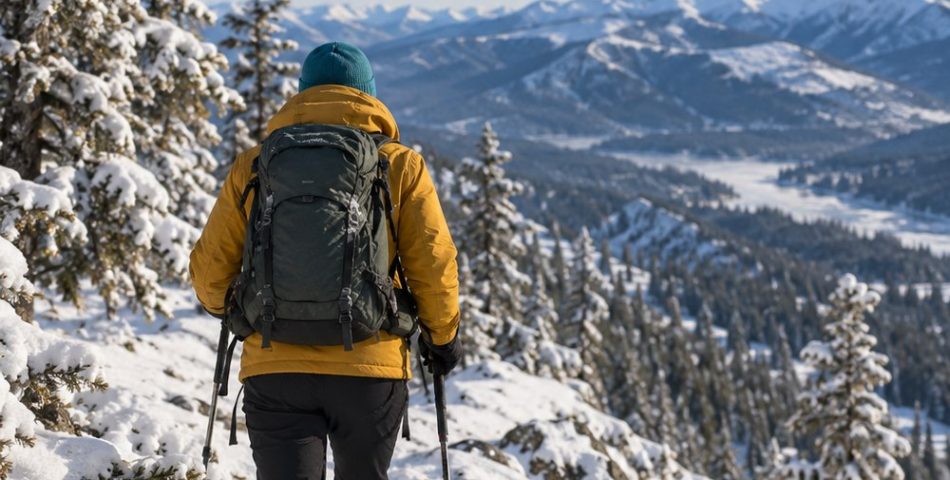
Every winter trailhead parking lot has the same scene. Someone climbs out of a warm car, zips a puffy jacket to the chin, pulls on a thick hat and starts uphill looking ready for the Arctic. Ten minutes later they’re stopped on the side of the trail, red in the face, wrestling the jacket off and stuffing it into a pack that was never meant to hold it.
They dressed for standing still, and hiking is the opposite. The climb turns you into a small furnace, and the sweat from those first ten minutes is what makes you cold an hour later at the summit.
Good winter hiking outfits solve that with layers you add and remove on the move, not with one heroic coat. Below: what to wear in each temperature band from 55 F down to 0 F, seven outfits for women and men, and what belongs on your feet and in your pack.
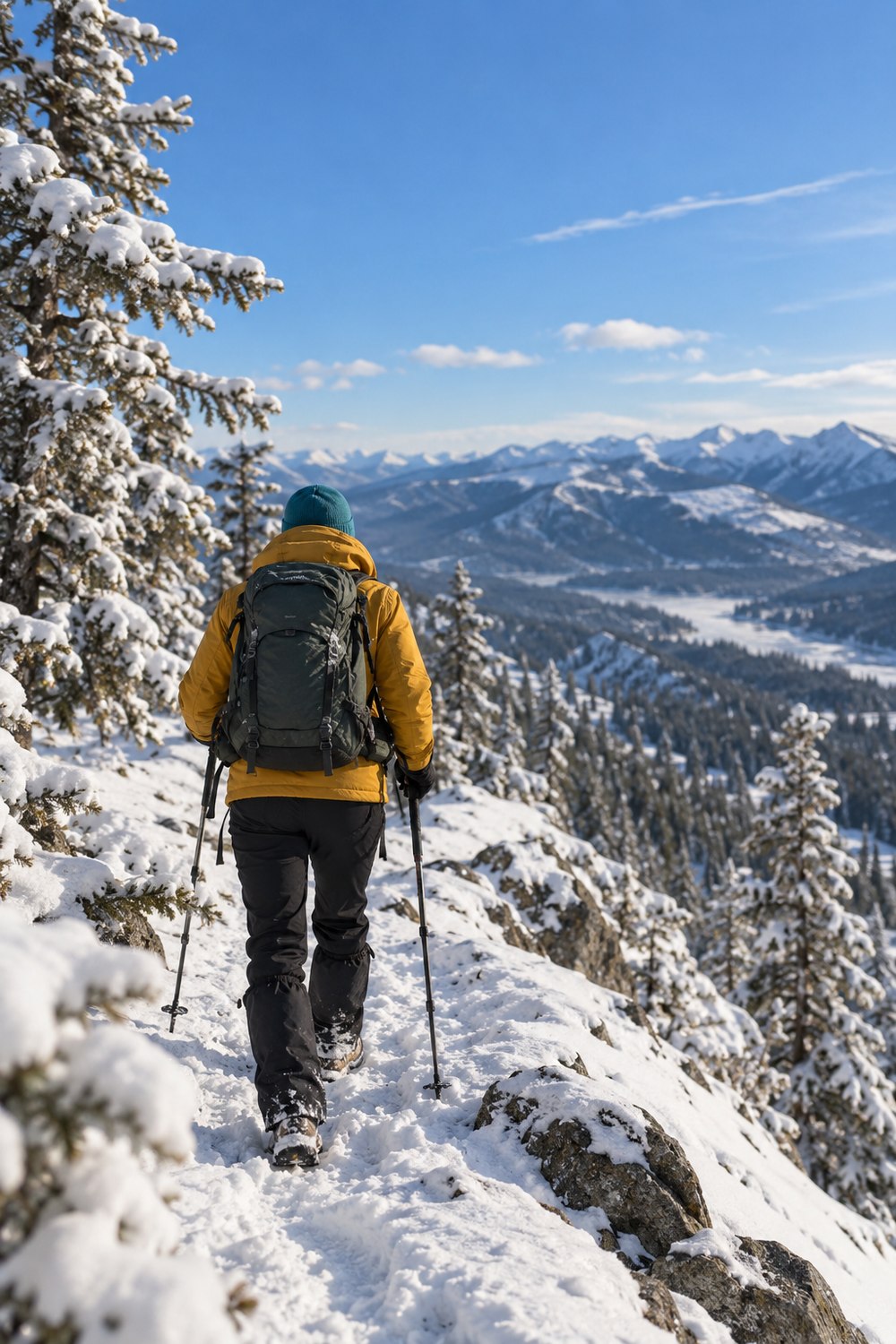
The layering system, by temperature
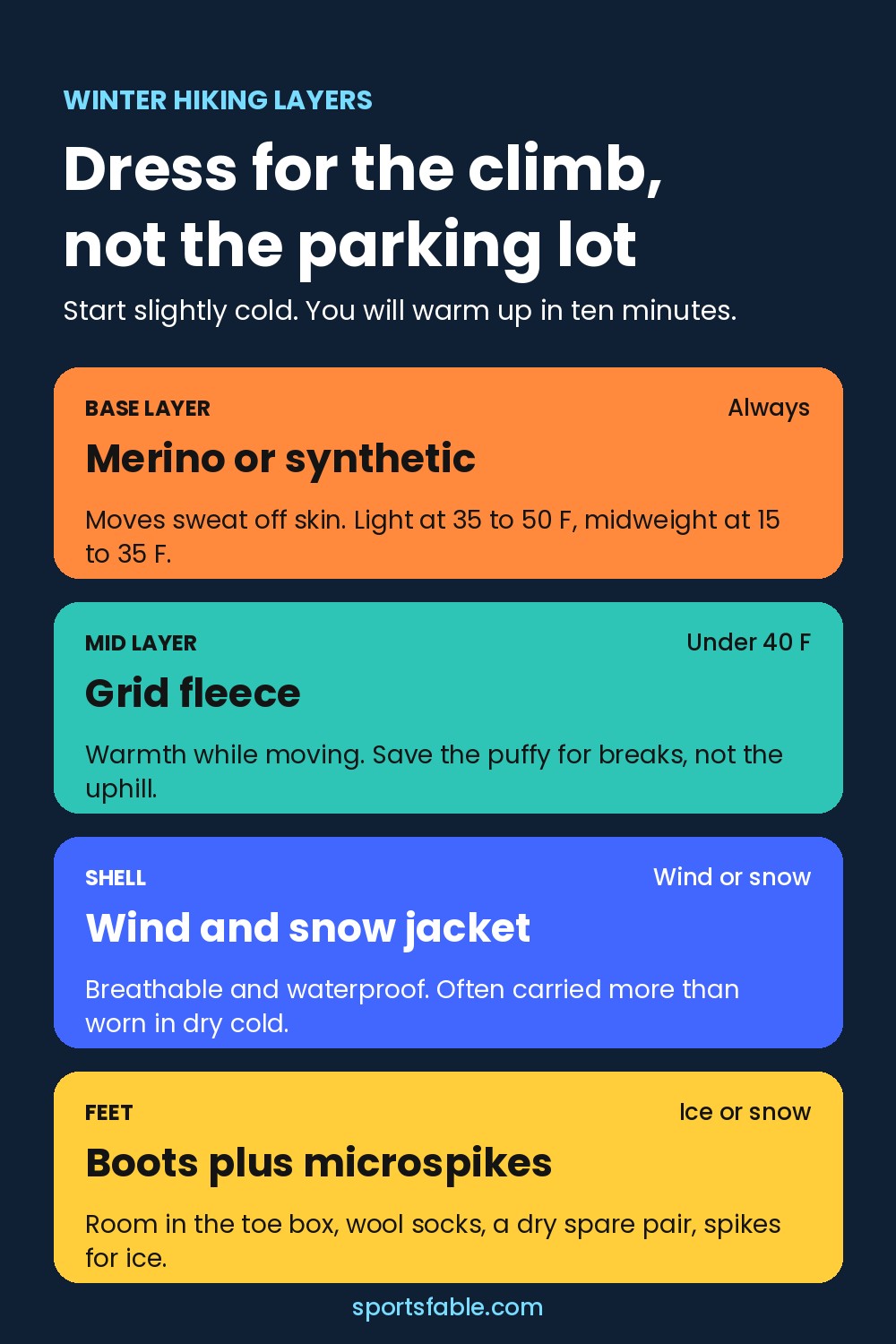
The cost first: the best winter hiking outfits mean owning four pieces instead of one jacket, and stopping to adjust them more than you’d like. The payoff is staying dry across a 30 degree swing. The four parts: a base layer that moves sweat off your skin, a fleece for warmth while moving, a shell for wind and snow, and a puffy you only wear at stops.
Here’s how much of each to wear. Use the forecast “feels like” number, not the air temperature, and drop one band colder if it’s windy or wet.
- 45 to 55 F: lightweight base top, hiking pants or regular leggings, a wind shirt in the pack, a headband and thin gloves. Trail runners are fine on dry ground.
- 30 to 45 F: lightweight base, a grid fleece, fleece-lined leggings or softshell pants, a beanie, liner gloves, a shell carried for ridges. Waterproof boots once there’s snow or mud.
- 15 to 30 F: midweight base top and bottoms, fleece, a windproof shell, softshell pants, a neck gaiter, liner gloves plus insulated gloves, a puffy for stops, insulated boots and microspikes if it’s icy.
- 0 to 15 F: heavyweight base, fleece, a synthetic insulated jacket worn while moving, a big puffy for breaks, insulated pants, a balaclava, mittens over liners and boots rated for the cold.
- Below 0 F or a wind chill under minus 15 F: pick a short, sheltered route below treeline or reschedule.
Grab the free printable layering chart and pack checklist below and tick it off the night before.
Free printable
Winter Hike Layering Chart and Pack Checklist
A two page printable with what to wear at every temperature from 55 F to below zero, an on-the-move routine, a trip plan and a Ten Essentials pack checklist.
The rule nobody likes: start slightly cold. If you’re comfortable standing in the parking lot, you’re overdressed for the climb. Expect five to ten minutes of chilly hands.
Why cotton is the problem
Cotton soaks up sweat and takes hours to dry, so a damp cotton tee pulls heat out of you at every stop. Jeans are worse once snow soaks them. Swap cotton for synthetic or wool in every layer that touches skin, socks and underwear included. That matters more than any jacket upgrade.
7 winter hiking outfits for women and men
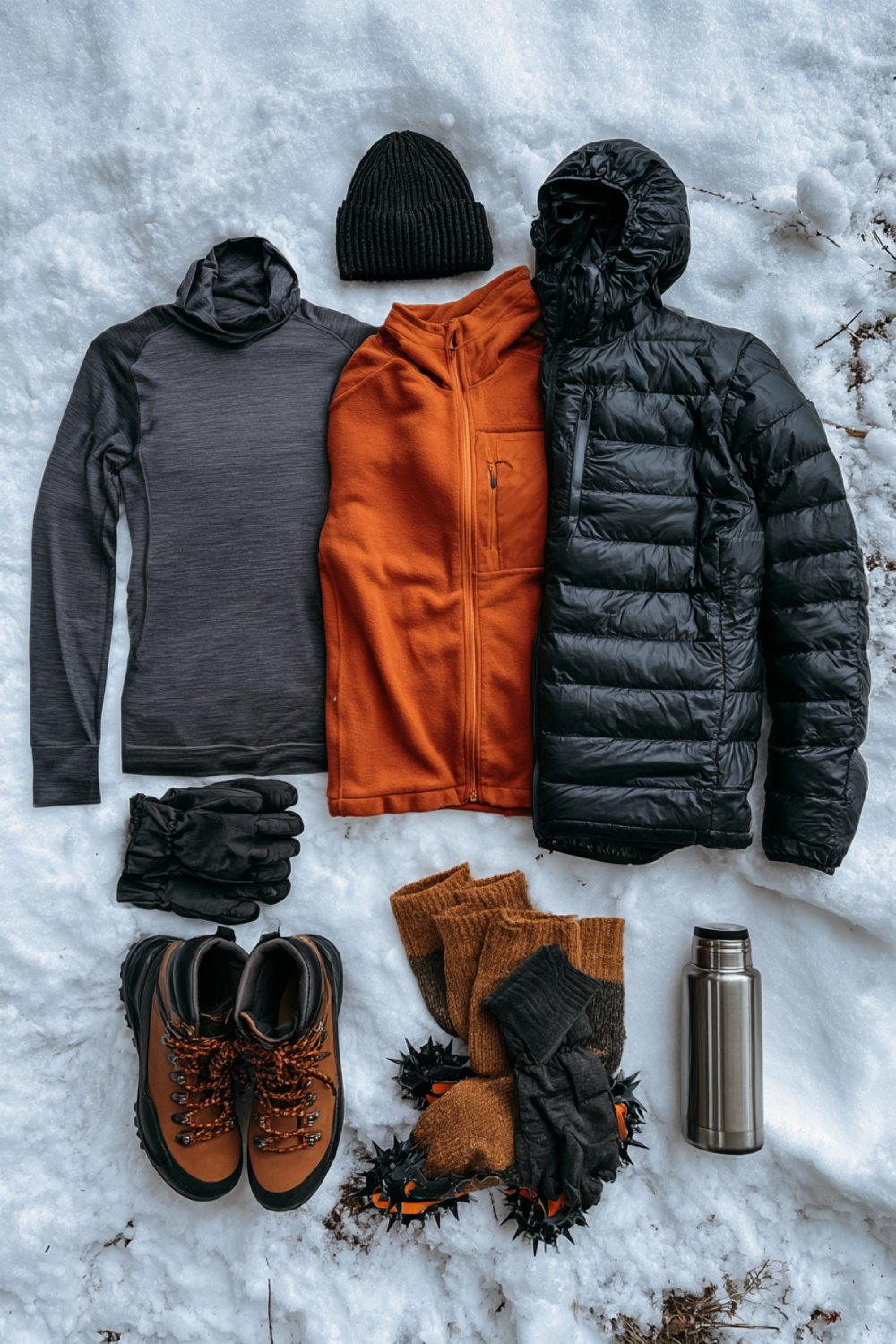
These run from warmest day to coldest, and most pieces overlap.
1. The mild 40s day hike
What to wear: lightweight base layer, a quarter-zip fleece, hiking pants, a wind shell in the pack, a headband, thin gloves and trail runners with wool socks.
Why it works: the quarter-zip vents without stopping. Caveat: you’ll likely be down to the base layer within 20 minutes, so leave pack room for the fleece.
2. The cute cold weather look for women
What to wear: a fitted merino crew in a bold color, a sherpa fleece, high-rise fleece-lined leggings, a cable-knit beanie, warm mittens and waterproof hiking boots with tall wool socks folded over the legging hem.
Why it works: it photographs well and performs between about 25 and 40 F on dry trails. Caveat: sherpa is warm but blocks almost no wind. Carry a shell for ridges, and expect $60 to $120 for the merino layer alone.
3. The men’s cold weather workhorse
What to wear: midweight synthetic base top, grid fleece hoodie, softshell pants, a breathable shell, a beanie, liner plus insulated gloves, and mid-height waterproof boots.
Why it works: softshell pants shrug off light snow and wind while breathing better than rain pants. Caveat: it’s plain. If you want style, spend it on the fleece color.
4. The snow day on a packed trail
What to wear: midweight base top and bottoms, fleece, a waterproof shell, waterproof pants or snow-friendly softshells, knee-high gaiters, insulated waterproof boots and microspikes.
Why it works: once snow gets into your boots or soaks your knees, the day is over. Caveat: gaiters look fussy and add five minutes at the car. Wear them anyway.
5. The women’s snow aesthetic
What to wear: cream or oatmeal base layer, a fleece in a muted earth tone, a bright shell (red, cobalt or mustard reads beautifully against snow), dark fleece-lined trail pants, a pom beanie and waterproof boots.
Why it works: it’s the snowy inspo look on layers that function, and the bright shell makes you easier to spot. Caveat: light base layers show every stain.
6. The Colorado high trail kit
What to wear: midweight base layers, fleece, a packable puffy, a windproof hardshell, softshell pants, a balaclava, sunglasses, mittens with liners, insulated boots, microspikes and sunscreen (snow at altitude bounces sun back at you).
Why it works: a Colorado trail can go from sunny and 35 F in the trees to windy and well below zero with wind chill above treeline in under an hour. Caveat: it’s the priciest outfit here, easily $400 to $800 new. Borrow the shell for your first season, or use the one from your snowboarding outfits if it breathes well.
7. The deep cold men’s kit
What to wear: heavyweight base layers, fleece, a synthetic insulated jacket, a big belay-style puffy for breaks, insulated pants, a balaclava, expedition mittens and insulated boots.
Why it works: below about 10 F you lose heat fast at every stop, so the big puffy goes on the moment you pause. Caveat: it’s the bulkiest pack of the year. Pick shorter routes on days like this.
How to stay dry on the move
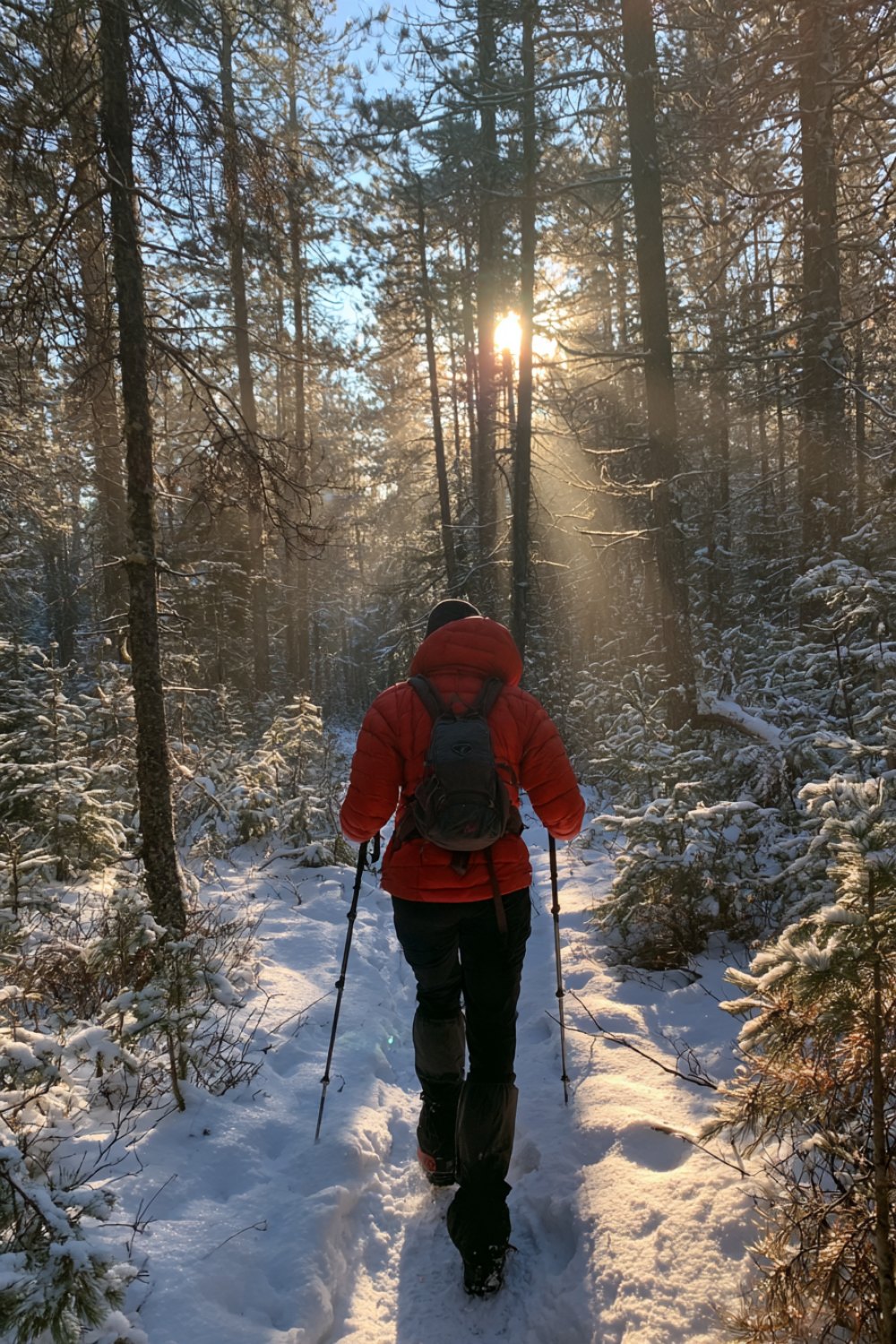
Dressing right is half the job. The other half is adjusting before sweat catches up with you:
- Ten minutes in: stop for 60 seconds and shed whatever is making you damp.
- Before each climb: open zips and pull off your hat. Vent before you sweat, not after.
- Every stop: puffy on within a minute, off just before you walk. Keep breaks to 5 to 10 minutes in deep cold.
- Every hour: eat and drink something. Your body can’t make heat on an empty tank.
- At the summit: swap a damp hat and liner gloves for the dry spares before you start down.
Do leggings work for winter hiking?
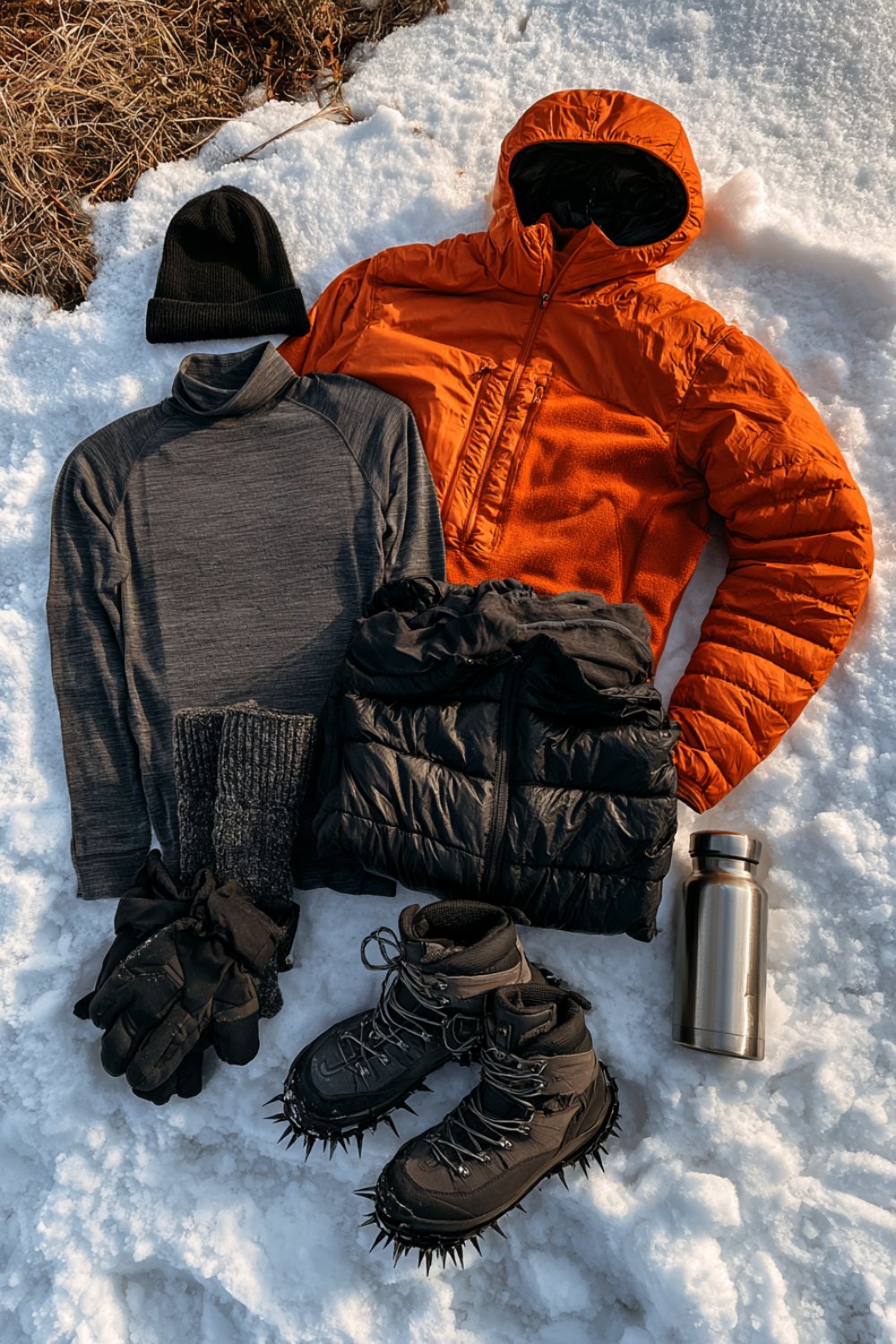
Sometimes. Regular gym leggings feel fine for the first mile and freezing on a windy ridge. Fleece-lined leggings are warm and comfortable on dry trails between roughly 25 and 45 F. Below that, or in wet snow, they soak through, so pull a light wind or rain pant over them. Cotton-blend leggings stay home.
Footwear and traction
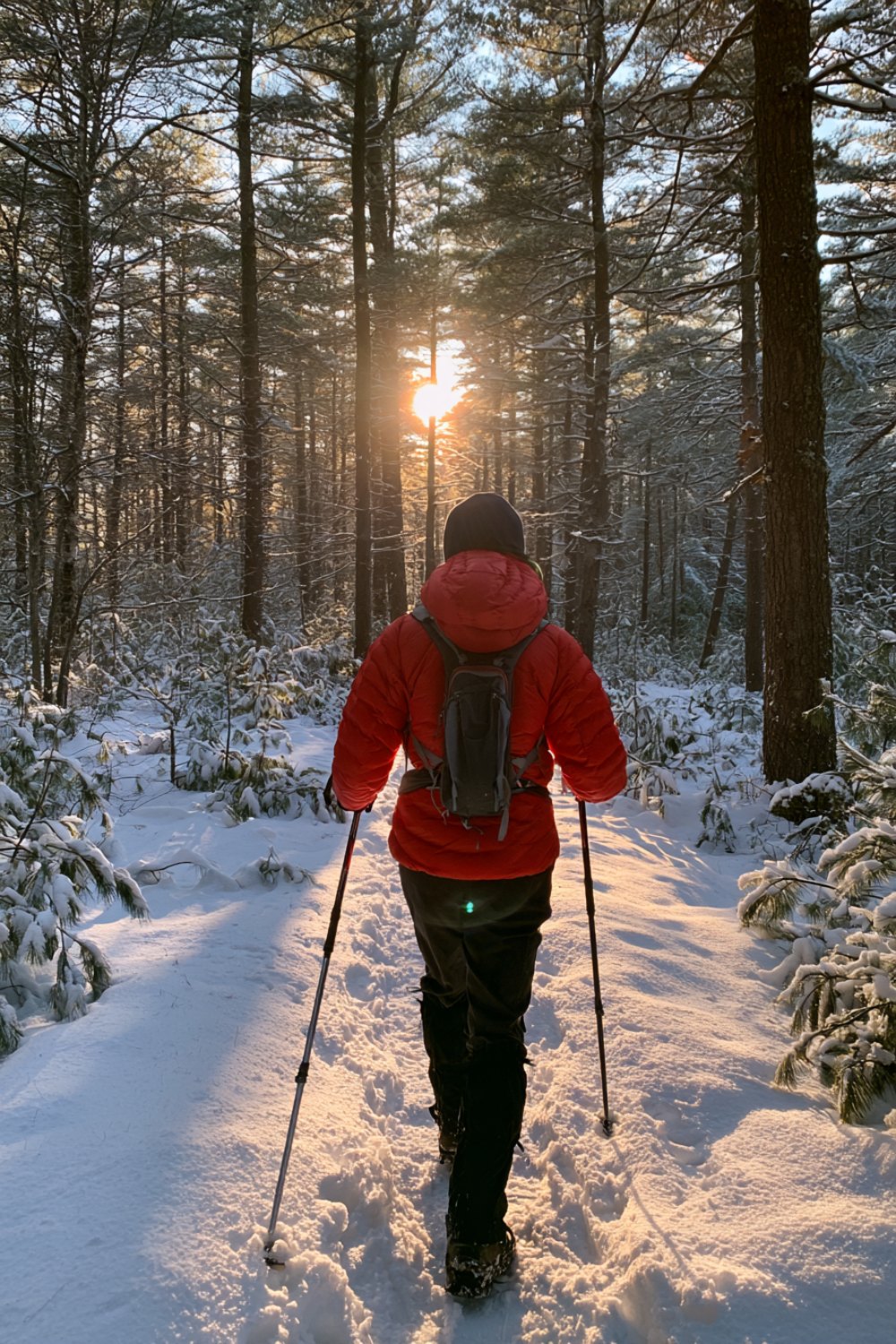
Feet are where winter hiking outfits most often fail. Waterproof boots with toe room are the baseline, because cramped toes get cold. Size up half a size for thick socks, wear wool or synthetic only, and carry a dry spare pair in a zip bag.
For packed snow and ice, slip-on microspikes ($50 to $80) are the single best safety purchase in winter hiking. They go on in 30 seconds and turn an icy descent into a normal walk. Deep, unpacked snow needs snowshoes, and you’ll move about half as fast, so halve your usual distance. For trail shoes on milder days, the fit rules in our guide on how to choose running shoes apply.
Winter hiking outfits and safety: the cold facts
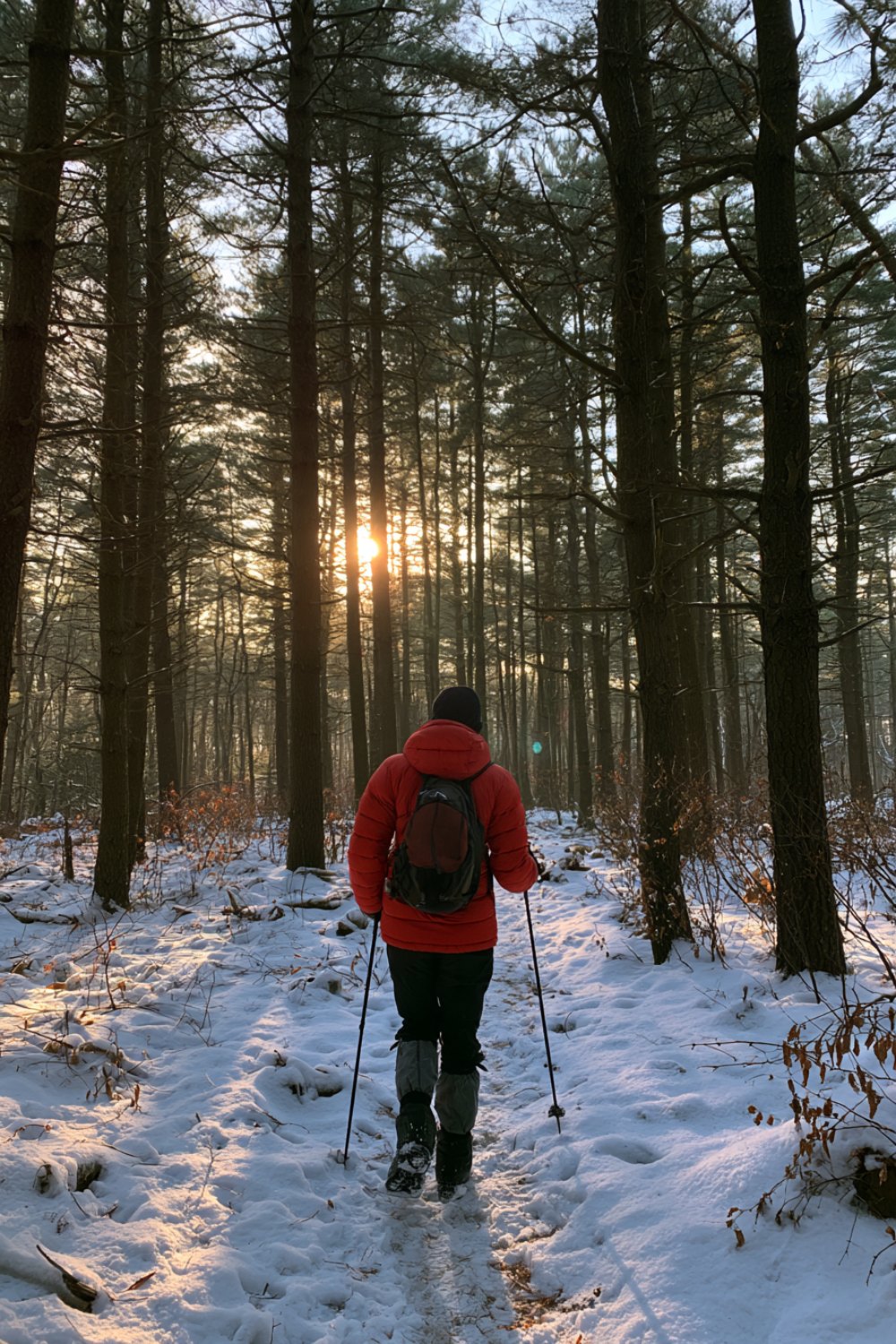
The National Weather Service office in Boulder notes in its wind chill safety guide that wind chill values near minus 25 degrees mean frostbite is possible within 15 minutes, and that hypothermia deaths can happen with temperatures between 30 and 50 degrees. Check the wind chill, not just the air temperature, before you choose your layers.
The CDC’s page on preventing hypothermia lists the warning signs: shivering, exhaustion, confusion, fumbling hands, memory loss, slurred speech and drowsiness. It also notes hypothermia can happen above 40 F if you’re chilled by rain, sweat or cold water. If someone in your group starts slurring or stumbling, turn around, get them warm and dry, and call for help if they don’t improve.
Winter days are short, so plan to be back at the car an hour before sunset and tell someone your route and return time.
What goes in the pack
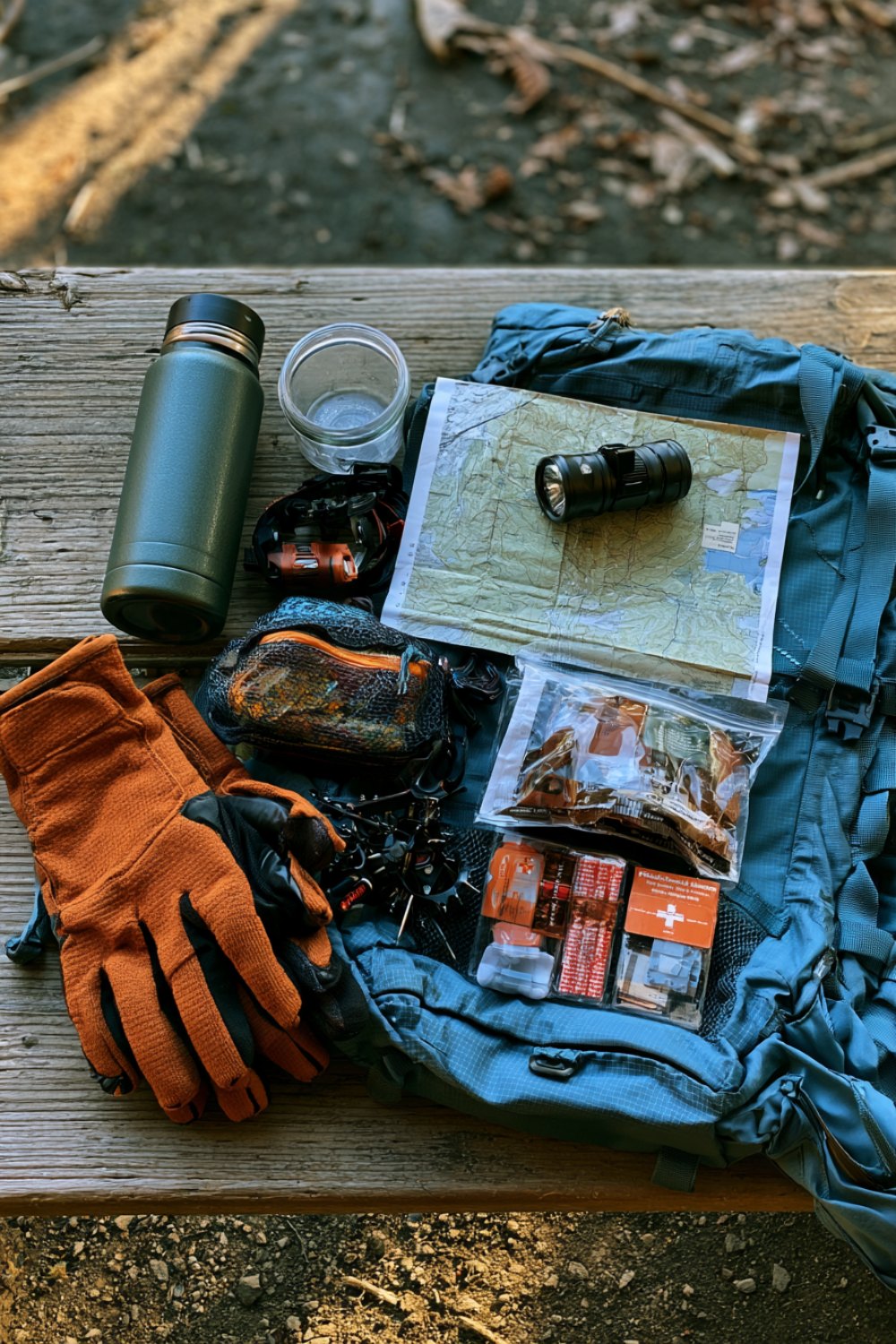
Start with the National Park Service’s Ten Essentials, then add the winter extras.
- Navigation: a downloaded map plus a paper map, with your phone kept warm in an inside pocket
- Sun protection: sunglasses, sunscreen, lip balm
- Extra clothing: insulated jacket, shell, spare gloves, spare socks and a dry hat
- Headlamp with fresh batteries
- First aid kit, plus a few chemical hand warmers
- Fire: lighter and fire starter in a zip bag
- Repair kit: duct tape and a small knife or multi-tool
- Extra food you can eat with gloves on
- Water in an insulated bottle (or stored upside down so the lid doesn’t freeze), plus a warm drink in a thermos
- Emergency shelter: a space blanket or bivy
- Winter extras: microspikes, gaiters, and snowshoes for deep snow
Pack the puffy on top. If it’s buried, you’ll skip putting it on.
Keep building the look
Borrow ideas from our cold weather running outfits for fast-moving days, our ski trip outfits if the hike is part of a mountain weekend, and our apres ski outfits for the warm-up after. For a snowy date close to town, try our ice skating outfits, and loosen stiff hips afterward with this stretching routine.
Questions people ask
What should women wear for cold weather hiking?
Between 20 and 45 F, a merino or synthetic base layer, a fleece, fleece-lined leggings or softshell pants, and a shell in the pack cover most days. Add a puffy for breaks and waterproof boots with wool socks.
What do men wear hiking in cold weather?
The same three layers: base, fleece and shell, with softshell pants or base layer bottoms under hiking pants. A packable puffy for stops is the piece most people forget, and it matters most below 30 F.
How do I hike in snow without getting wet?
Waterproof boots, gaiters and water-resistant pants keep snow out. Vent before you sweat, because sweat soaks you from the inside, and swap to dry gloves and a dry hat at the top.
How can a winter hiking outfit still look cute?
Put the personality in a colorful shell, a patterned beanie, tall socks over leggings or a fun fleece. A bright jacket against snow is both the best photo and the safest choice.
What should I wear hiking in Colorado in winter?
Plan for big swings: base layers, fleece, puffy, a windproof shell, sunglasses, sunscreen and microspikes. Check the wind chill forecast for the highest point of your route, not the trailhead, and be ready to turn around early.
Are fleece-lined leggings warm enough for winter hiking?
On dry trails down to about 25 F, usually yes. In wind or wet snow, add a shell pant over them. Thin, unlined leggings are only good above about 45 F.
Images in this article are AI-generated illustrations and original graphics created by SportsFable. They show outfit ideas, not real people, teams or events. The printable is an original SportsFable resource.
Related Post