


The hardest part of a winter run happens before you leave the house. You stand by the door in a jacket that feels perfect, step outside, and it still feels perfect. Ten minutes later you’re carrying the jacket, your back is soaked, and the wind off the river turns that sweat ice cold.
Almost everyone gets winter running clothes wrong the same way: they dress for the temperature at the front door, not for the temperature their body will be at the two-mile mark. Running makes a lot of heat. The trick is to start the run a little cold and let your body do the rest.
This guide gives you a cold weather running outfit for every temperature band, from crisp autumn mornings to properly bitter January days, plus the layering system behind it, what changes for women and men, and how to stay visible when the sun sets at 4:30.

The rule that fixes most winter runs
Physical therapist and running specialist Lauren Loberg puts it simply in HealthPartners’ guide to running in the cold: dress as if it’s 15 to 20 degrees warmer outside than it really is. If it’s 30°F, dress for roughly 45 to 50°F. You should feel a little chilly for the first five to ten minutes. If you feel cozy standing still, you’re overdressed.
Two adjustments to that rule:
- Wind counts. Use the “feels like” or wind chill number, not the thermometer reading, especially on exposed routes.
- Pace counts. An easy recovery jog or a long run with walk breaks makes less heat than a tempo session. Add a layer for slow days and take one off for fast ones.
The three-layer system
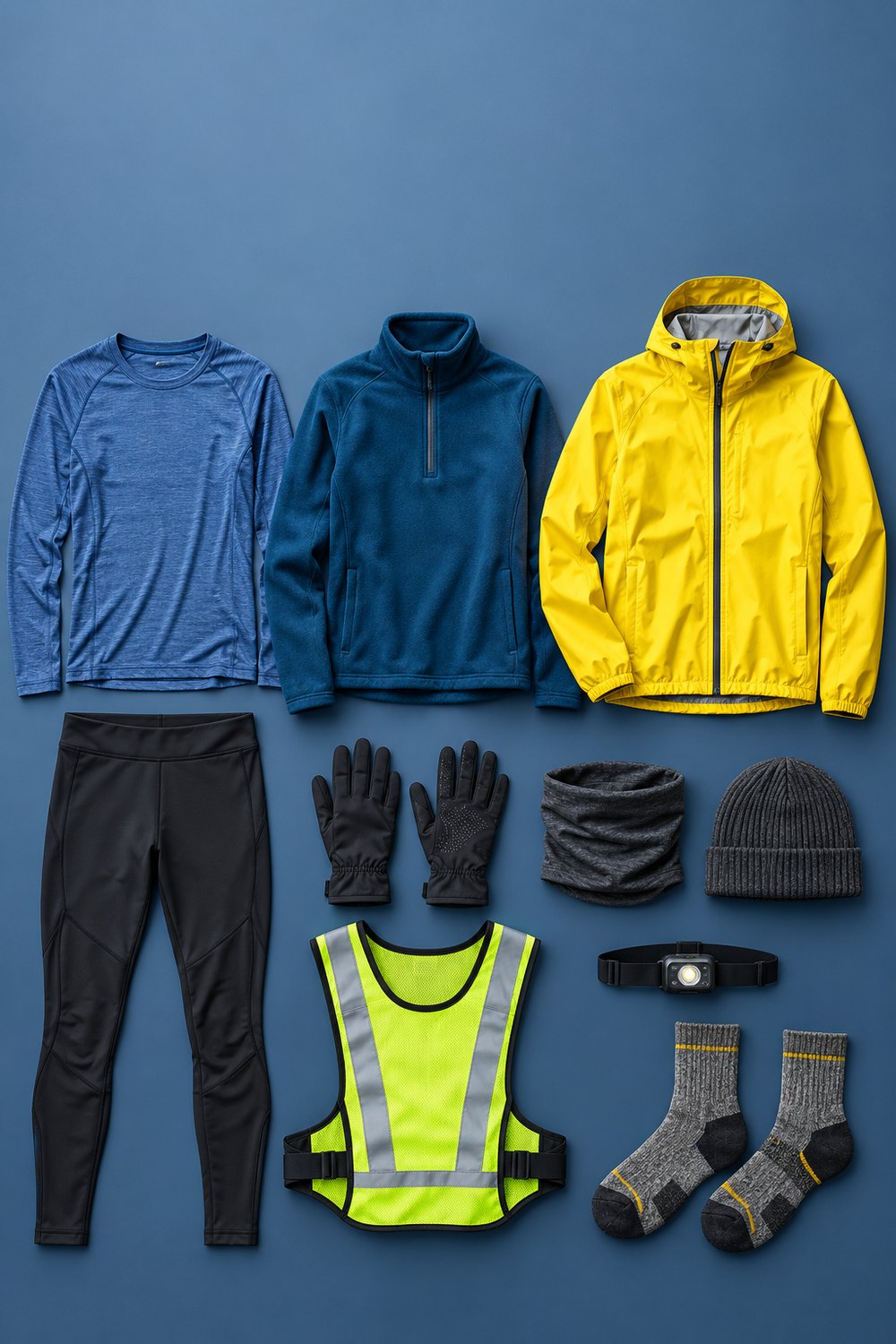
Every outfit in this guide is built from the same three pieces, worn in different combinations:
- Base layer: a close-fitting, moisture-wicking top that moves sweat away from your skin. Synthetic or merino wool. Never cotton, which holds water and chills you once you slow down.
- Mid layer: insulation. A fleece half-zip, a brushed thermal top or a light vest. This is the piece you add or skip depending on the day.
- Outer layer: a light wind- and water-resistant shell. It blocks the wind without trapping heat like a ski jacket would.
On your legs, running tights do most of the work. Thermal or fleece-lined tights cover most winter days, and very few runners ever need a second layer on their legs. Legs make a lot of heat. Your hands, ears and neck are where the cold actually gets in.
What to wear running at every temperature
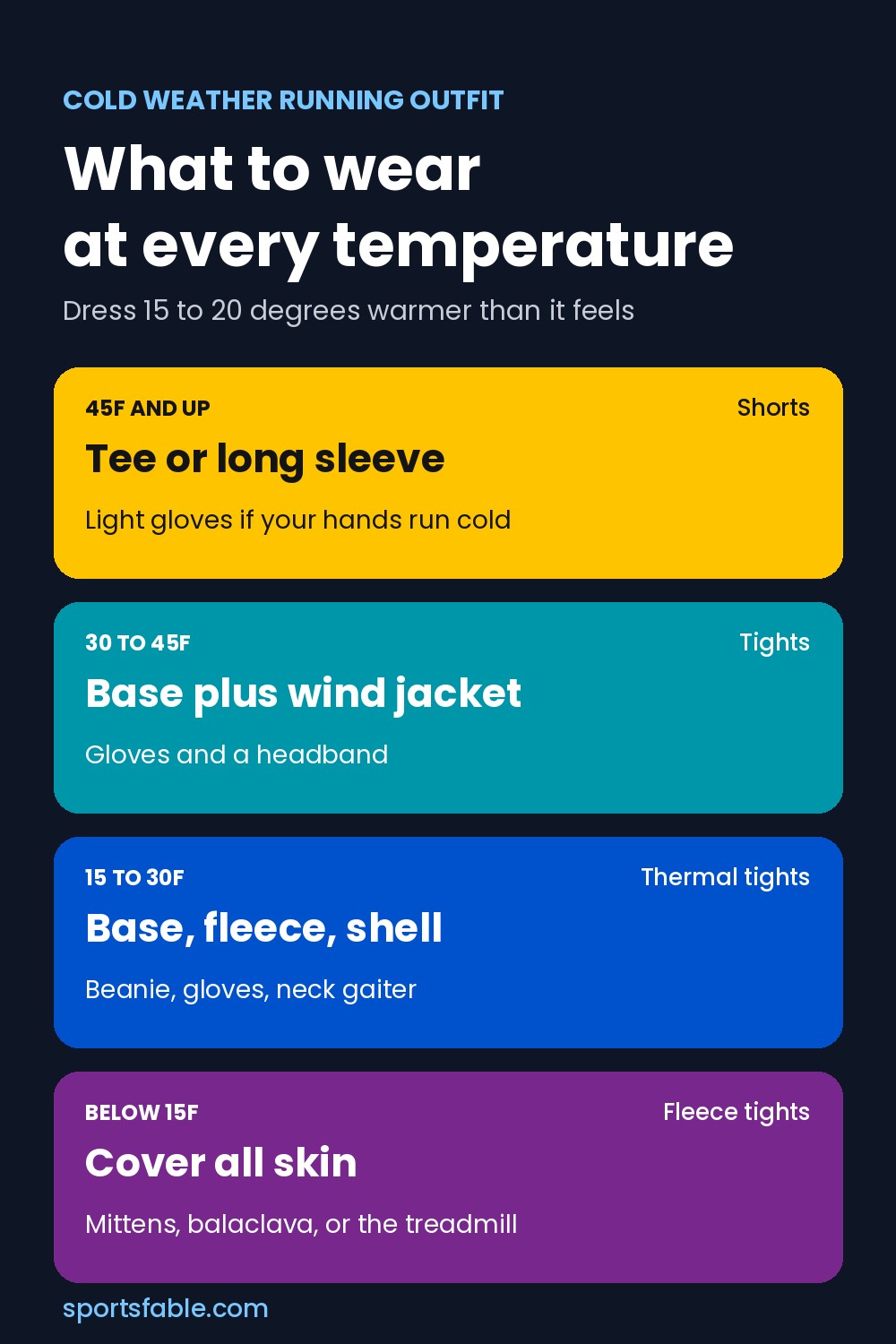
Use this as a starting point and adjust for wind, sun and how warm you tend to run. It assumes a steady, easy pace.
| Feels like | Top | Bottom | Extras |
|---|---|---|---|
| 50°F and up | T-shirt or tank | Shorts | None |
| 40 to 50°F | Long sleeve, or tee plus light vest | Shorts or capris | Light gloves (optional) |
| 30 to 40°F | Long-sleeve base plus light wind jacket | Tights, or shorts over tights | Gloves, headband |
| 20 to 30°F | Base plus fleece mid layer plus shell | Thermal tights | Gloves, beanie, neck gaiter |
| 10 to 20°F | Thermal base plus mid layer plus windproof shell | Fleece-lined tights | Mittens, beanie, gaiter over chin, wool socks |
| Below 10°F | Full three layers, nothing exposed | Fleece-lined tights, windproof pants if needed | Mittens, balaclava, consider the treadmill |
Save the quick version below for your phone.
Cold weather running outfits for women
The “cute” and “aesthetic” searches for this topic are huge on Pinterest, and there’s nothing wrong with wanting to like what you wear. A few combinations that are both warm and good-looking:
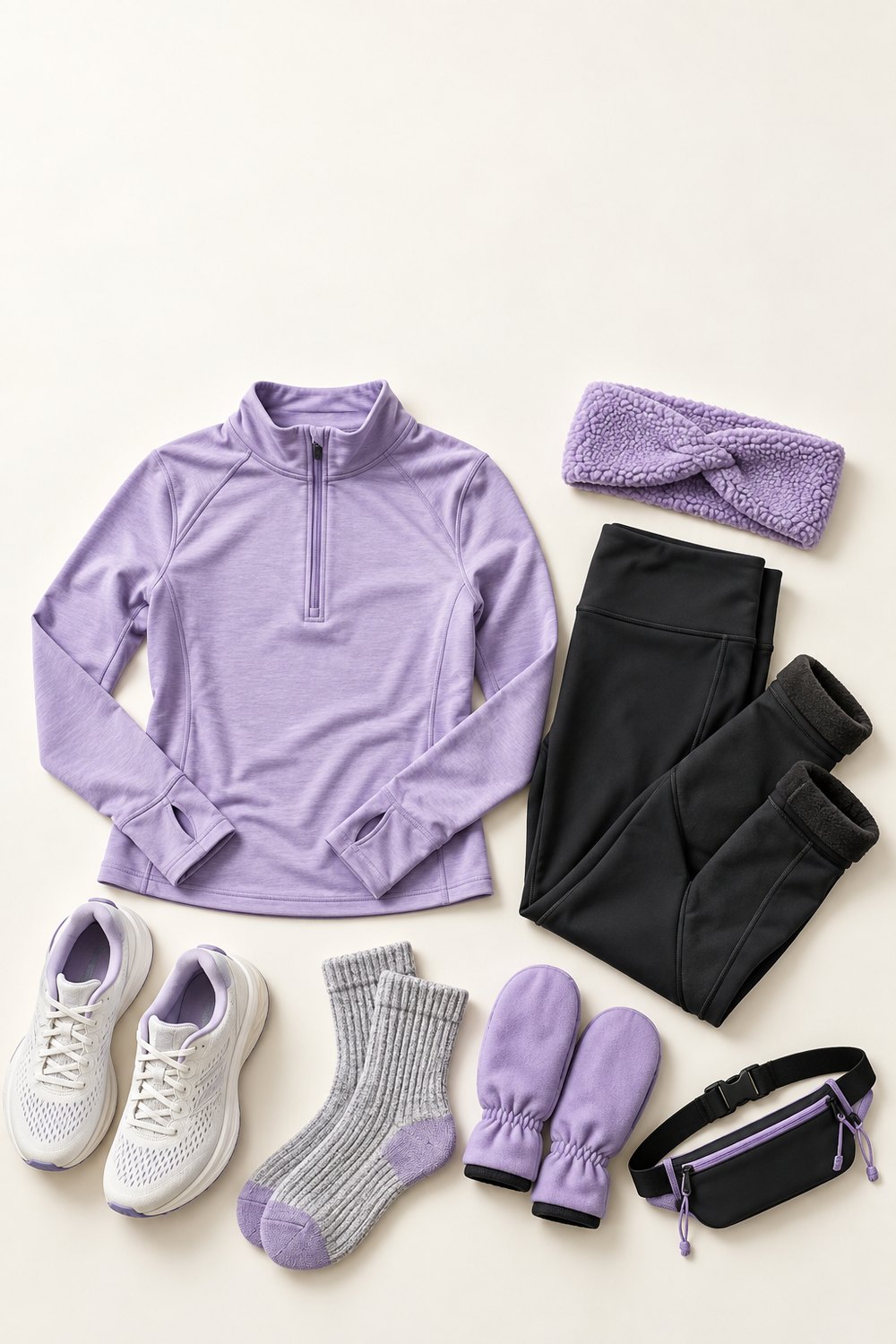
- The classic: a brightly colored quarter-zip, black fleece-lined leggings with a high waist, an ear-warmer headband for a ponytail, and mittens in a matching color.
- The crisp-morning look: long-sleeve base, light vest, and running shorts over tights. This is the 35 to 45°F sweet spot.
- The coldest days: thermal base, fleece mid layer, a fitted wind shell and a neck gaiter you can pull over your chin.
Two things worth checking on women’s gear: high-waisted tights with a wide waistband stay put better under layers, and a quarter-zip lets you vent heat without taking anything off.
Cold weather running outfits for men
Most men overdress on the legs and underdress on the hands. A reliable setup for 20 to 35°F: a long-sleeve technical base, a light wind jacket, running tights with shorts over them if you prefer, a beanie, gloves and a neck gaiter. Below 20°F, add a fleece mid layer and switch to mittens.
If tights aren’t for you, look for tapered thermal running pants that don’t flap at the ankle. Anything loose catches the wind.

Hands, head, feet: the small pieces that matter most
The National Weather Service’s cold weather advice says mittens keep hands warmer than gloves, and that’s doubly true for runners, whose hands go numb long before the rest of them. A few more specifics:
- Head: a thin beanie or headband traps a lot of heat. You can tuck it into a pocket when you warm up.
- Neck: a gaiter is the most flexible piece of winter gear. It works as a scarf, an ear cover or a face cover.
- Feet: wool or wool-blend running socks stay warm when damp. In slush, a shoe with a water-resistant upper helps. Our guide on how to choose running shoes covers fit, which matters even more with thicker socks.
Wind chill, frostbite and when to stay inside
Wind is what makes a cold run dangerous. As the National Weather Service’s wind chill chart explains, a 0°F day with a 15 mph wind has a wind chill of minus 19°F, and at that level exposed skin can freeze in about 30 minutes. On days like that, cover your face, run shorter loops close to home, or move the session indoors.
A smart habit for any windy day: start your run into the wind and finish with it at your back. That way you’re not running into a cold headwind while you’re sweaty and tired.
Running in the dark
Winter means running before sunrise or after sunset for most people with a job. The same HealthPartners guide recommends bright colors and reflective gear, plus a headlamp or handheld light for icy patches. In practice:
- Wear a reflective vest, and add reflective bands on your wrists or ankles. Moving reflectors tend to catch a driver’s eye.
- A headlamp helps you see ice and curbs. A small blinking light helps drivers see you.
- Run facing traffic where there’s no sidewalk, and assume drivers can’t see you even when you can see them.

Your winter running checklist
- Check the “feels like” temperature, then dress 15 to 20 degrees warmer
- Moisture-wicking base layer, never cotton
- Mid layer for days below about 30°F
- Light wind shell
- Thermal or fleece-lined tights
- Gloves or mittens, beanie or headband, neck gaiter
- Wool running socks
- Reflective vest and a light for dark runs
- Dry clothes ready to change into as soon as you stop
Keep building your winter routine
Running through the winter is easier with a plan. Our strength training for runners guide gives you two short sessions that keep you strong and steady through the cold months, and if you’re training for a spring race, the half marathon training plan for lifters fits running around the gym. Heading to a game instead of a run? The layering logic carries straight over to our cold weather game day outfits.
This guide is general information for healthy adults, not medical advice. If you have a heart or breathing condition, check with your doctor before running in very cold weather.
Questions people ask
What should women wear running in cold weather?
A moisture-wicking base layer, a quarter-zip or fleece mid layer below about 30°F, a light wind shell, fleece-lined high-waisted tights, an ear-warmer headband, mittens and wool socks.
What should men wear running in the cold?
A long-sleeve technical top, a wind jacket, running tights (with shorts over them if you like), a beanie, gloves and a neck gaiter. Add a fleece layer and mittens below 20°F.
Is there a cold weather running outfit chart?
Yes, the temperature table and graphic above work as one. Start with the “feels like” number and dress 15 to 20 degrees warmer than it.
Can I run in shorts in the cold?
Many runners wear shorts down to about 40°F, or shorts over tights below that. Legs produce a lot of heat, but bare skin in strong wind gets cold quickly.
How do I make a winter running outfit look cute?
Pick one bright color for your top or jacket and match it to your mittens or headband. Keep tights black and let the color do the work.
Is it safe to run when it’s below freezing?
For most healthy adults, yes, with the right layers. Watch the wind chill, cover exposed skin on very cold days, and choose the treadmill when it gets into frostbite territory.
Images in this article are AI-generated illustrations and original graphics created by SportsFable. They show running outfit ideas, not real people, teams or events.
Related Post