
The dog knows before you do. Leash on the hook, shoes by the mat, and you’re standing at the front door in December with the porch light already on, even though dinner is still an hour away. You zip the jacket, unzip it, and wonder if one more layer is smart or just nerves.
Winter isn’t only about temperature. It’s snow on the sidewalk, ice hiding under it, wind coming off the water, and a sky that goes dark before most people leave work. A good winter running outfit has to handle all of that at once, and still look like something you’d want to be seen in.
If you want the layer-by-layer temperature breakdown, our cold weather running outfits guide covers that in detail. This one is about the winter specifics: seven looks people actually save, how to be seen at 5 p.m., what grips on ice, and when to skip it and use the treadmill.

7 winter running outfit ideas for snow, wind and dark evenings
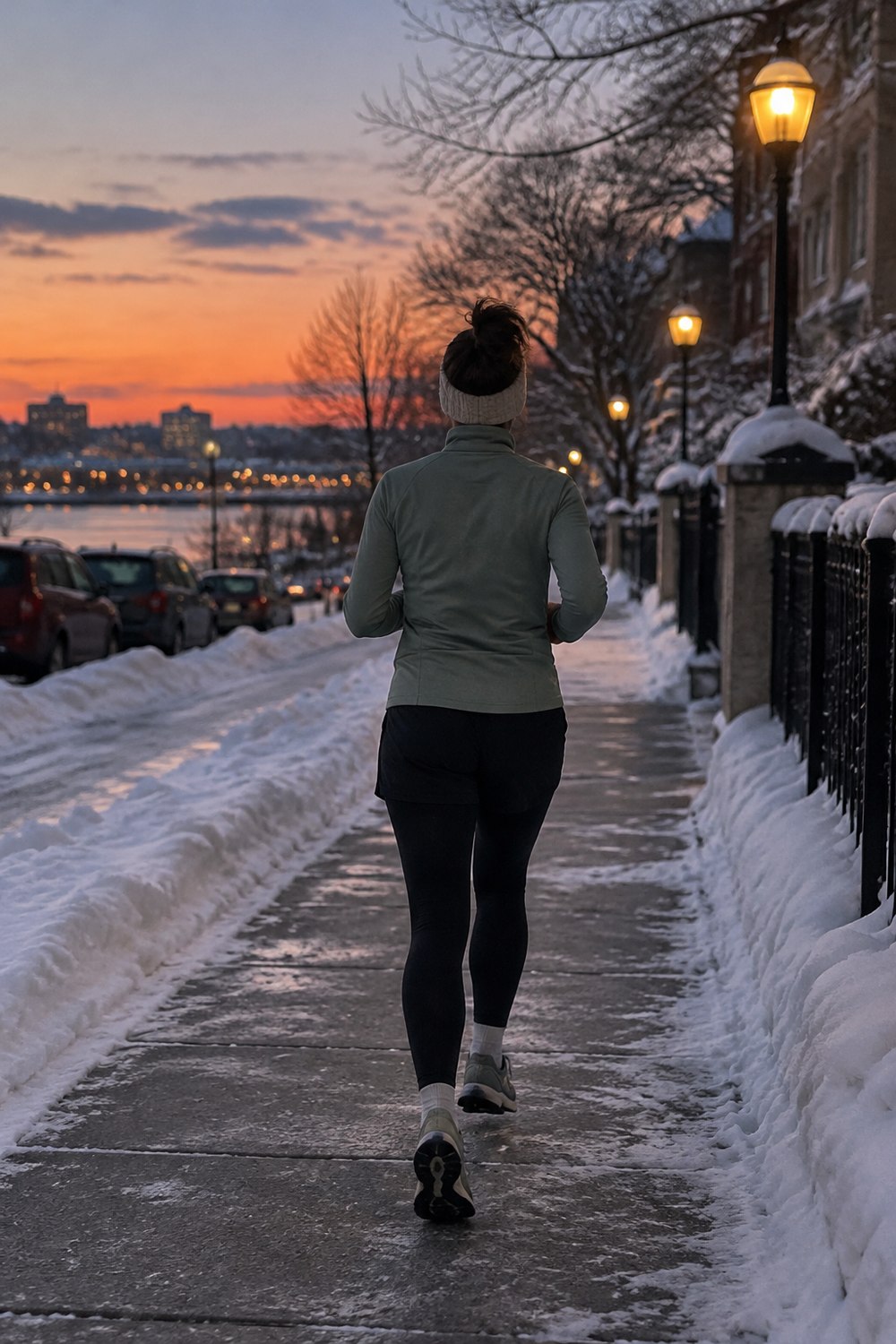
Quick rule: dress as if it’s 15 to 20 degrees warmer than feels-like. If you’re comfortable standing on the porch, you’re overdressed.
1. The everyday women’s winter look
Fleece-lined high-rise tights, a fitted thermal half-zip, a light wind vest, a ponytail-hole beanie and touchscreen gloves. It works from about 20 to 35 F because the vest blocks wind at your core while your arms vent. The trade-off: lined tights cost $45 to $90 and run warm above 40 F, so they’re a winter-only buy.
2. The cold weather men’s kit
Thermal tights with a windproof front panel (or wind-front briefs underneath below 20 F), a merino or synthetic base, a softshell jacket, a neck gaiter and mittens. Men’s running tights often skip wind protection where it matters most, and nobody tells you that until mile two. Expect $120 to $200 for the full set; the briefs are the cheapest upgrade with the biggest payoff.
3. The aesthetic matching set
This is the inspo-board favorite: a brushed fleece quarter-zip and matching joggers or tights in oatmeal, sage or dusty blue, plus a cream knit headband and white socks pulled up. It’s genuinely warm for easy runs at 30 F and above. The catch: soft pastel sets look great in daylight and almost vanish at dusk, so add a reflective vest or bands after sunset.
4. The snowy trail outfit
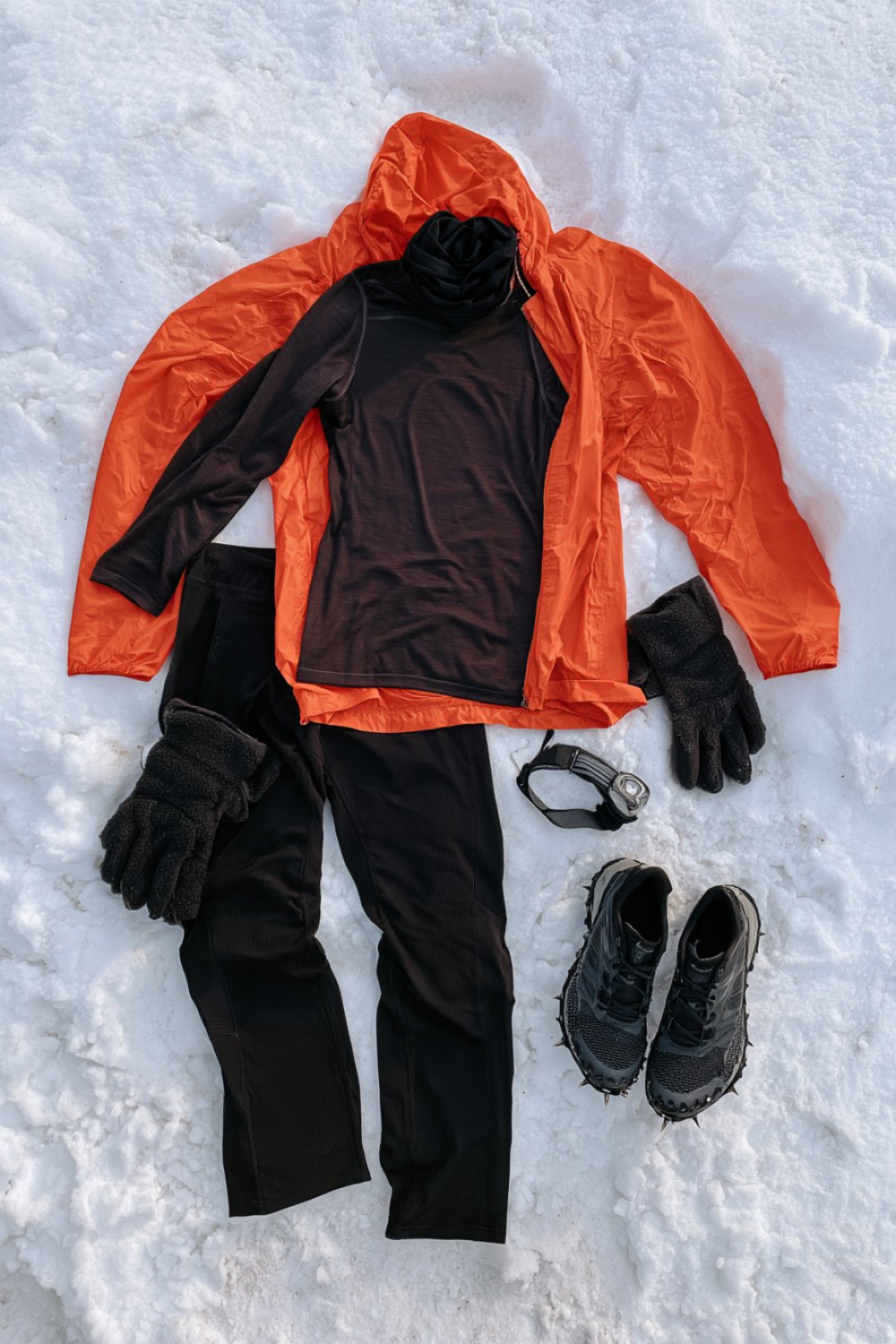
Water-resistant trail shoes, wool socks, low gaiters over the ankles, lined tights, a base layer and a hooded shell. Snow melting into socks ends runs faster than cold air. Running in deep snow can cost you a minute or more per mile, so plan by time, not distance.
5. The dark-evening high-visibility look
A fluorescent yellow or orange jacket, reflective bands on both wrists and ankles, a headlamp or chest light, and a small blinking red light on your back. It won’t win the aesthetic board, and that’s fine.
6. The windy lakefront or city run
A windproof shell with a high collar, a balaclava you can pull down, wind mittens over liner gloves, and lined tights. Start your run into the wind and finish with it at your back, so the sweaty second half doesn’t chill you.
7. Shorts over tights
Running shorts layered over thermal tights is a real winter look, not just a style choice. The shorts add a second layer over your hips, a pocket for keys, and cover tights that go see-through when stretched. It works best from about 15 to 35 F. The trade-off is bulk at the waistband, so pick shorts with a thin, flat liner.
Sweatpants vs tights: the honest answer
Sweatpants are fine for a slow 20-minute jog above 30 F,. But cotton fleece soaks up sweat and snow, gets heavy, and flaps against your legs in wind. Synthetic tapered joggers give the same look without the weight. Below 25 F or in wet snow, tights win.
Hands, face and ears: the temperatures that matter
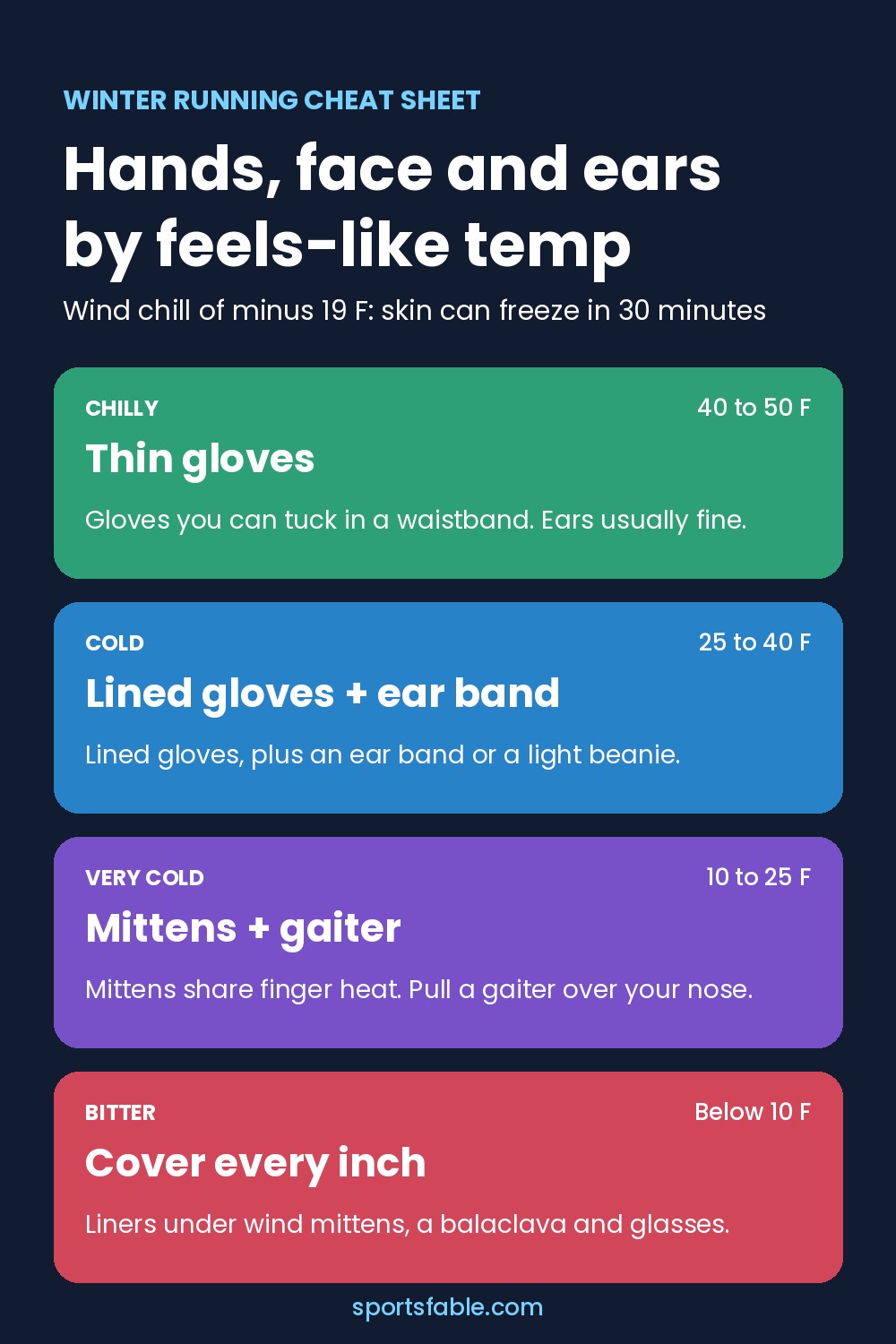
Your core warms up fast; fingers, ears and cheeks don’t. Use the feels-like temperature, which includes wind chill, not the number on your thermostat app.
- 40 to 50 F: thin gloves you can tuck in a waistband. Ears usually fine.
- 25 to 40 F: lined gloves and an ear band or light beanie.
- 10 to 25 F: mittens (fingers share heat), a full beanie and a gaiter you can pull over your nose.
- Below 10 F: liner gloves under wind mittens, a balaclava and glasses. Cover every patch of skin you can.
Here’s the number worth remembering. The National Weather Service wind chill chart shows that at 0 F with a 15 mph wind, the wind chill is minus 19 F, and exposed skin can freeze in 30 minutes. Wind chill only applies at or below 50 F with wind above 3 mph, which describes most winter evenings. Nobody tells you this: running creates its own wind, so your face feels colder than the forecast. If skin turns numb, white or waxy, head inside and warm up gradually, and talk to your doctor if it doesn’t recover.
Running in the dark: visibility rules that work
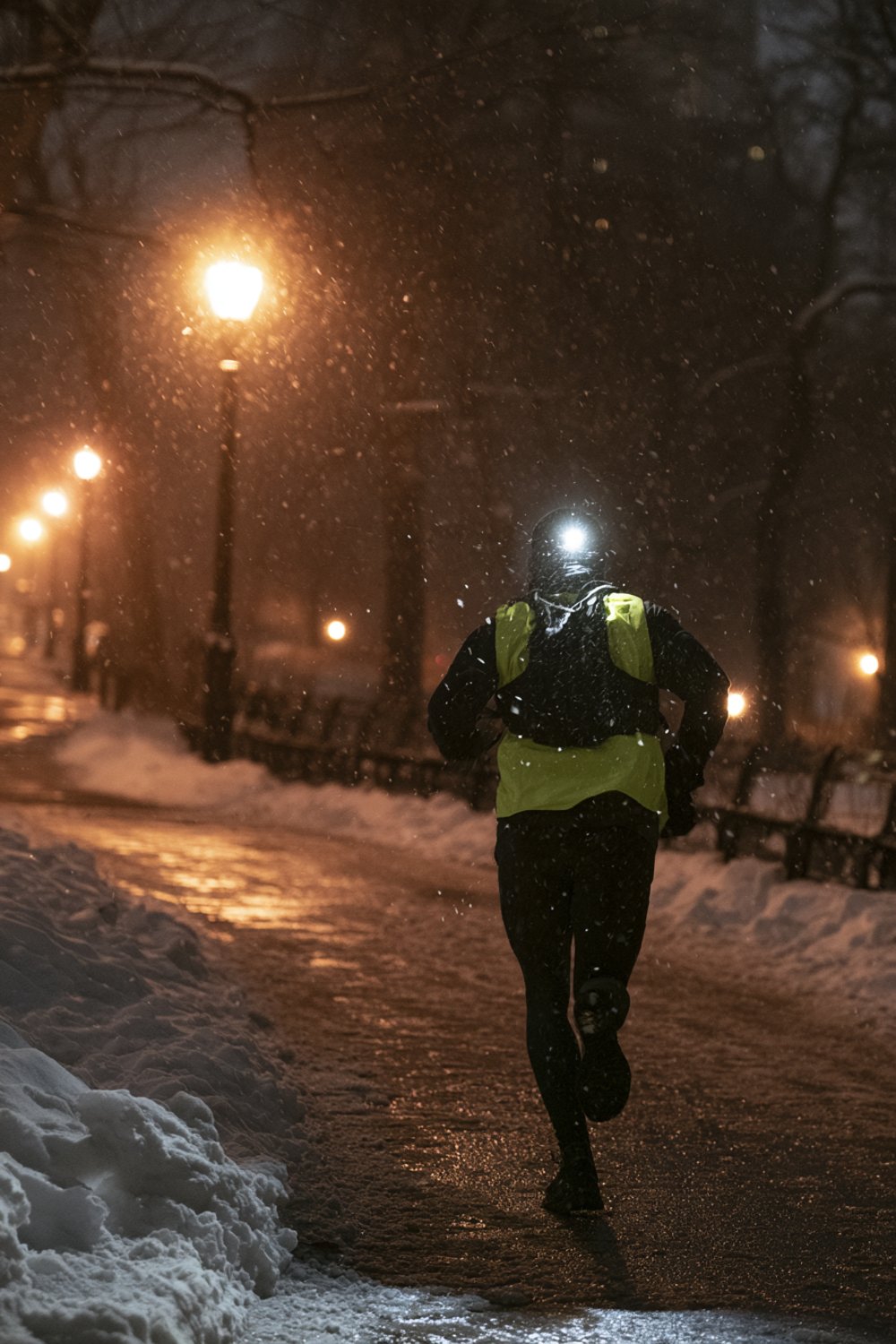
In December, the sun sets before 5 p.m. in many U.S. cities, so most after-work runs happen in the dark. The Federal Highway Administration’s nighttime visibility guidance says a pedestrian in dark clothing is first seen about 55 feet away, while a driver at 60 mph needs more than 260 feet to stop. Even white clothing isn’t visible until a driver is well within 200 feet.
The part most runners get wrong is where the reflective gear goes. NHTSA’s research summary on pedestrian conspicuity notes that people are detected more readily when reflective elements sit on moving body parts like wrists and ankles.
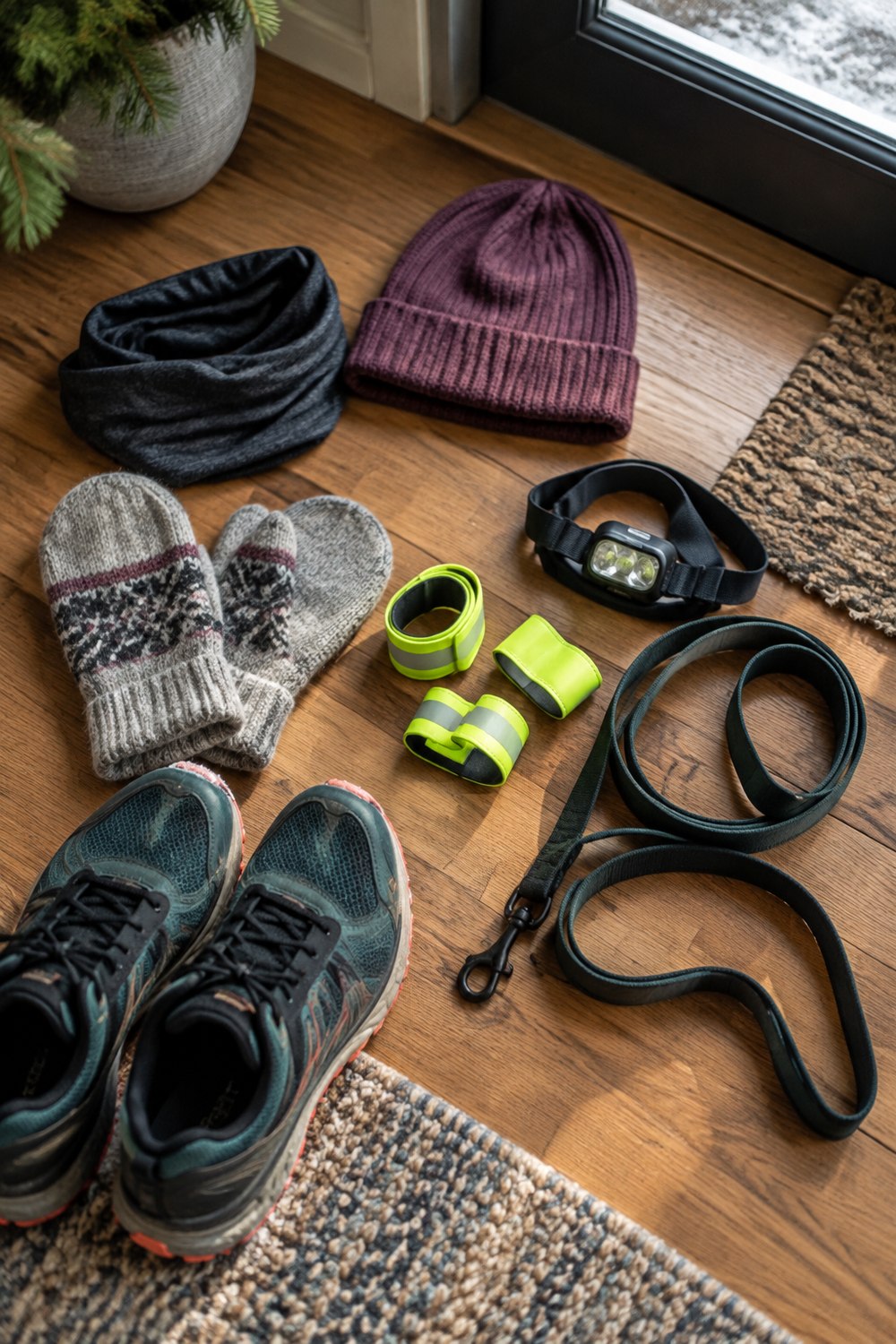
- Reflective bands on both ankles and both wrists ($8 to $20 a set).
- A front light (headlamp or chest light) so you can see ice and be seen.
- A blinking red light on your back or waistband.
- Run facing traffic when there’s no sidewalk, and never assume a driver sees you.
Snow and ice traction: spikes vs studded shoes
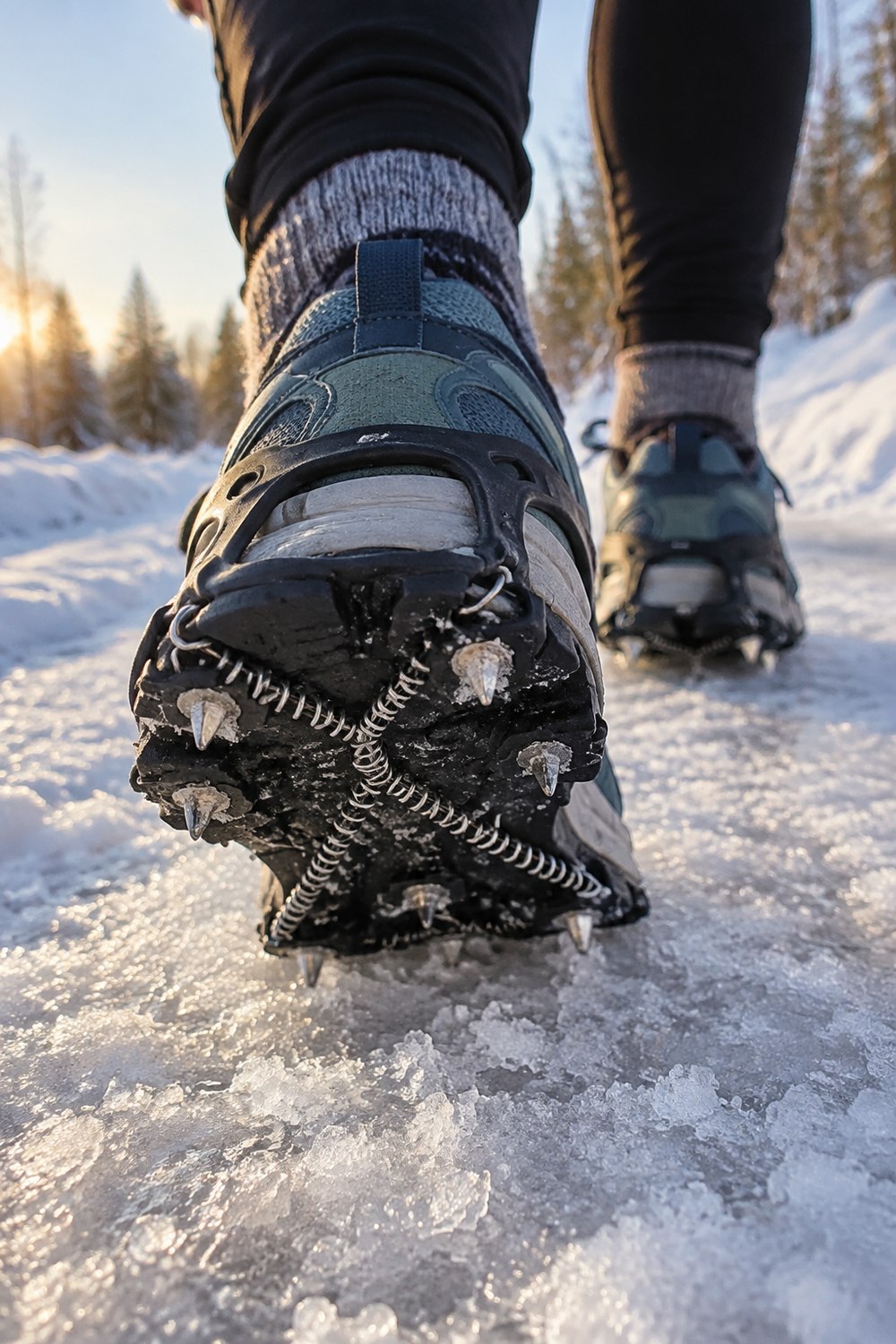
Regular shoes handle fresh snow fine. Packed snow and ice are where people fall.
- Slip-on traction devices ($20 to $60): rubber frames with coils or small spikes that stretch over any shoe. Best if ice is patchy or you only need grip a few days a month. Downside: they can roll or slide off at speed.
- Trail-style microspikes ($40 to $80): chains and short spikes. Best for icy trails and packed snow, but loud and slippery on bare pavement.
- Screw-in shoe studs ($15 to $30 a kit): turn an old pair of trainers into dedicated ice shoes. Cheap and stable, but they wear down on dry roads.
- Studded winter running shoes ($140 to $200): worth it if you run on icy roads most of the winter. Overkill for two snow days a year.
The thing nobody tells you: metal spikes on dry concrete are worse than no spikes, because they skate. Carry them in a jacket pocket and put them on where the ice starts. On ice, shorten your stride and land with your feet under your hips.
What not to wear on a winter run
- Cotton anything: a cotton tee or socks hold sweat, then chill you the moment you slow down.
- Too many layers: if you’re sweating hard by the first mile, you’ll be damp and cold by the end. Start a little cold.
- Tight shoes with thick socks: squeezed toes get less blood flow and feel colder. Size up a half size for winter socks if needed.
- New gear on race day: holiday gift tights and new shoes belong on a short test run first.
- All black after dark: it’s the classic winter aesthetic, and the hardest outfit for drivers to see.
Holiday fun runs deserve their own note: wear the festive piece (light-up sweater, antler headband, elf hat) over your normal running layers, not instead of them, and test it for 10 minutes first. If you’re planning a fall race too, our turkey trot outfits guide has costume ideas that run well.
Treadmill or outside? A simple decision rule

Always choosing outside risks a fall or a frostnipped cheek; always choosing the treadmill leaves you unready for real roads in spring. Use this rule:
- Go outside if the feels-like temperature is above about 0 F, you have traction for the footing, and you’ll be visible.
- Choose the treadmill if wind chill is near minus 15 F or colder, there’s freezing rain or glare ice, or your route is unlit with no shoulder.
- Split it for hard workouts: do intervals on the treadmill and easy miles outside.
Switching back outside after weeks indoors feels harder than it should: wind, cold air and uneven footing can slow you by 10 to 30 seconds per mile at the same effort, so run by feel and check the running pace chart only after a week or two outside.
Your winter pre-run checklist
- Check the feels-like temperature, wind and sunset time.
- Dress 15 to 20 degrees warmer than feels-like, and feel slightly cold at the door.
- Gloves or mittens, ear cover and gaiter matched to the temperature.
- Front light, rear light and reflective bands on wrists and ankles.
- Traction in your pocket if the route has ice.
- Phone charged and warm (inside pocket), someone knows your route.
- Start into the wind, finish with it behind you.
Print the free Winter Running Outfit Planner below and stick it by the door; it turns any winter running outfit into a tested one. Page 1 shows what to wear by feels-like temperature for women and men, with snow, wind and dark adjustments. Page 2 is a run log for what you wore and how it felt.
Free printable
Winter Running Outfit Planner
A free 2-page printable: what to wear by feels-like temperature for women and men with checkboxes, snow, wind and dark adjustments, a go-or-treadmill rule, plus a winter run log (too warm, too cold, just right) and a full gear checklist.
Keep building your winter running kit
Need new shoes before the snow? Read how to choose running shoes. Shopping for someone who runs through December? Try our gifts for runners. Stuck inside on an icy night? Try these treadmill workouts. Building toward spring? Start the 5K training plan, and for weekend snow days off the road, see our winter hiking outfits.
Questions people ask
Is it okay to run in shorts in winter?
Bare legs in shorts are reasonable down to about 40 F feels-like for most runners. Below that, wear shorts over tights so your thighs stay warm.
Can I run in sweatpants in the cold?
Yes, for short, easy runs on dry days above about 30 F. Cotton sweatpants get heavy once they’re damp from sweat or snow, so choose synthetic running joggers with tapered ankles if you love the look.
What should men wear for cold weather running?
Below 20 F, wear lined tights with wind-front briefs, a base layer, a windproof jacket, mittens, a beanie and a gaiter.
What are cute cold weather running outfits for women?
A matching fleece set in a soft color, a knit headband, a cropped puffer vest over a fitted half-zip, or a bright windbreaker over black tights all photograph well. For dark evenings, pick a cute set in a bright shade and add reflective bands.
How cold is too cold to run outside?
There isn’t one number, but wind chill is the one to watch. At a wind chill of minus 19 F, the National Weather Service says exposed skin can freeze in 30 minutes. Near that range, choose the treadmill or keep it short with every bit of skin covered.
Where can I find winter running outfit inspo that actually works?
Save looks that show the full outfit in real conditions, like snow, wind or dusk, not just studio photos. Then test each idea and note the result in a run log.
Do I need special shoes for outdoor winter running?
Not for fresh snow or wet roads. For packed snow or ice, add slip-on traction or screw-in studs.
Images in this article are AI-generated illustrations and original graphics created by SportsFable. They show outfit ideas, not real people, teams or events. The printable is an original SportsFable resource.
Related Post