
Four hours on the highway, one stop for gas, and now you’re finally in the driveway. You swing your legs out of the car, push up off the door frame, and your hips simply refuse to finish the job. For three or four steps you walk like a folding chair that only opened halfway.
That stuck feeling isn’t age and it isn’t a mystery. Your hips spent the whole drive bent at roughly 90 degrees, and the tissues around them adapted to that shape. A few minutes of hip mobility stretches, done most days, teaches them the other shapes again.
Below: a 10 minute beginner routine with exact holds, versions for bed, standing and running, a 4 week plan, and a free printable PDF.
Quick answer
Warm up for 1 minute, then do hip circles, a half kneeling hip flexor stretch, 90/90 switches, frog rock backs, a figure four and a supported deep squat: 10 minutes total. Hold static stretches about 30 seconds, move slowly, and aim for tension, never pain. Do it at least 3 days a week and expect to notice a difference in 3 to 4 weeks.

Why hips get tight (and what mobility actually means)
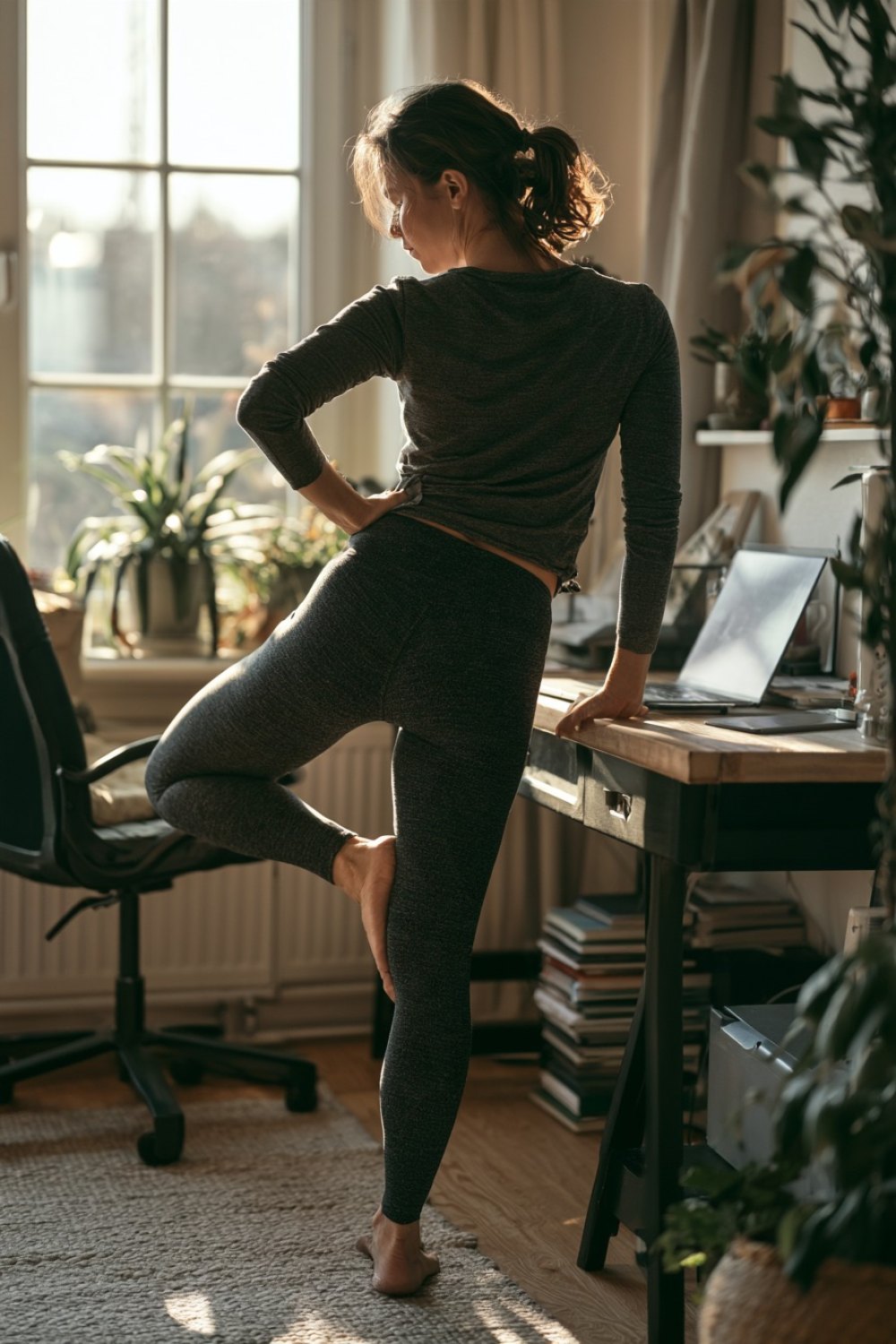
Your hip is a ball and socket that moves in six directions, and a normal day uses about two. You sit, you walk, and the other four directions quietly get rusty.
Flexibility is how far a muscle lets you go when something pulls you there. Mobility is how far you can move the joint yourself, with control. That’s why this routine mixes holds with active moves like 90/90 switches: you want range you can use when you climb out of the car.
Long sitting is the usual culprit. Harvard Health’s guide to the importance of stretching lists the hip flexors among the key areas to stretch, and notes it takes weeks to months of regular work to become more flexible.
Decision rule: if you sit more than 6 hours a day, do the routine daily. If you’re on your feet most of the day, 3 times a week is enough.
Nobody tells you this: “tight hips” often means weak hips. A muscle that can’t control the end of its range guards it by stiffening, which is why active moves matter as much as long holds.
A 10 minute beginner hip mobility routine

Do these seven moves in order on a mat or carpet. The Mayo Clinic stretching guide recommends warming up first, holding stretches about 30 seconds, no bouncing, and aiming for tension rather than pain, so the timings follow that.
- March and swing (1 minute). Setup: stand by a wall. Cue: 30 seconds of high knee marching, then 10 easy leg swings per side. Feel: warmth. Mistake: skipping it on cold mornings.
- Hip circles on all fours (1:30). Setup: hands under shoulders, knees under hips. Cue: lift one knee and draw the biggest slow circle you can, 5 forward and 5 back per side. Feel: a gentle grind easing into smooth motion. Mistake: twisting the low back instead of the hip.
- Half kneeling hip flexor stretch (2 minutes). Setup: one knee on a folded towel, front shin vertical. Cue: squeeze the glute of the down leg, tuck your tailbone, shift forward 2 to 3 inches. Dose: 2 x 30 seconds per side. Feel: front of the down side hip. Mistake: arching the back and lunging far forward.
- 90/90 switches and hold (2 minutes). Setup: sit with both knees bent to 90 degrees, one leg in front, one to the side, hands behind you. Cue: drop both knees to the other side like windshield wipers, 8 switches, then sit tall over the front shin for 30 seconds per side. Feel: outer hip of the front leg, inner hip of the back leg. Mistake: collapsing the chest.
- Frog rock backs (1 minute). Setup: on all fours, knees wider than hips, ankles in line with knees. Cue: rock back toward your heels, pause 2 seconds, return, 10 reps. Feel: inner thighs. Mistake: going so wide the knees complain.
- Lying figure four (1 minute). Setup: on your back, one ankle across the opposite knee. Cue: pull the bottom thigh toward you, press the top knee gently away. Dose: 30 seconds per side. Feel: glute and back of the hip. Mistake: lifting your head and shoulders.
- Supported deep squat (1:30). Setup: hold a door frame, feet shoulder width, toes out slightly. Cue: sit low between your heels, chest up, shift side to side. Dose: 3 x 20 seconds. Feel: hips and ankles opening. Mistake: heels lifting; put a folded towel under them.
| Move | Time | Easier version |
|---|---|---|
| March and swing | 1:00 | Hold a wall, smaller swings |
| Hip circles | 1:30 | Standing circles, hand on a chair |
| Half kneeling hip flexor | 2:00 | Pillow under the knee |
| 90/90 switches and hold | 2:00 | Hands further back, block under the seat |
| Frog rock backs | 1:00 | Knees only slightly wide |
| Lying figure four | 1:00 | Foot on a wall instead of pulling |
| Supported deep squat | 1:30 | Sit to a low step or block |
Decision rule: if a move hurts in the joint itself (sharp, or pinching in the groin crease), use the easier version or skip it today. Stop if you feel sharp pain, and talk to a doctor or physical therapist if hip pain sticks around.
Common mistake: holding your breath. A slow 4 second exhale during each hold relaxes the muscle more than pushing deeper does.
Want it on paper? The free printable below is a 2 page hip mobility routine PDF with every cue, the bed and standing versions, and a 4 week tracker.
Free printable
10 Minute Hip Mobility Routine (Printable PDF)
A free 2 page printable: the 7 move, 10 minute hip mobility routine with cues, holds and easier versions, then bed, standing and runner versions, a 4 week plan and a 28 day tracker.
Download the free PDFHip stretches you can do in bed

The bed version suits stiff mornings or winding down at night. The trade off: a soft mattress lets your pelvis sink and shift, so the stretch is gentler and less precise.
- Single knee hug. Setup: on your back, one leg straight. Cue: hug the other knee to your chest, let the straight leg stay heavy. Dose: 30 seconds per side. Feel: back of the bent hip, front of the straight one. Mistake: lifting the straight leg.
- Windshield wipers. Setup: on your back, knees bent, feet wider than hips. Cue: let both knees fall slowly to one side, then the other. Dose: 10 per side. Feel: gentle rotation in both hips. Mistake: rushing it into a swing.
- Seated butterfly. Setup: sit against the headboard, soles together, heels 12 to 18 inches away. Cue: sit tall and let the knees drop. Dose: 2 x 30 seconds. Feel: inner thighs. Mistake: pushing the knees down with your hands.
- Lying figure four. As in the main routine, 30 seconds per side, with a pillow under your head.
Decision rule: if you only do one thing, do the knee hug before you stand up. It takes 1 minute and smooths out the first steps of the day.
Nobody tells you this: you’ll have less range first thing in the morning than at night. Don’t chase evening numbers at sunrise.
Standing hip mobility stretches (good for men and desk days)
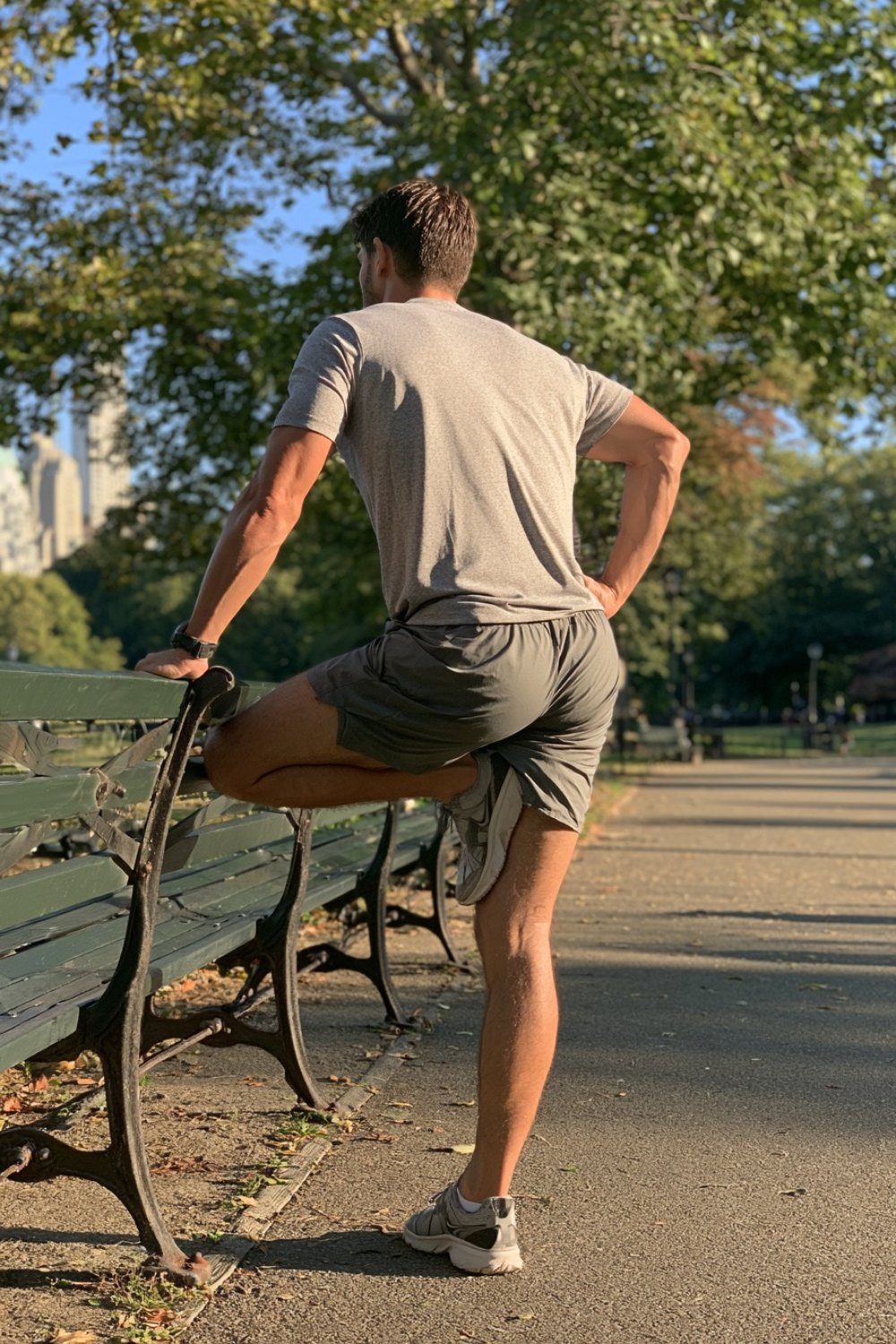
Standing hip mobility stretches are the ones you’ll actually do at work, in a park or at a rest stop. They’re also the easiest start for anyone who finds floor stretches awkward, which includes plenty of men who haven’t sat cross legged since grade school.
- Standing figure four. Setup: hold a bench or desk, cross one ankle over the opposite knee. Cue: sit back as if into a chair. Dose: 30 seconds per side. Feel: outer hip and glute. Mistake: rounding the back to fake depth.
- Split stance hip flexor stretch. Setup: hand on a desk, back leg 2 to 3 feet behind, heel up. Cue: tuck the tailbone, squeeze the back glute, reach that arm overhead. Dose: 30 seconds per side. Feel: front of the back hip. Mistake: leaning forward from the waist.
- Leg swings, two ways. Setup: hand on a wall, on one leg. Cue: 10 swings forward and back, then 10 across and out. Feel: loosening, not stretching. Mistake: kicking high and arching.
- Standing hip circles. Setup: hand on a chair, knee lifted to hip height. Cue: open the knee out to the side, down, and back to center. Dose: 5 each direction per side. Feel: side and front of the hip working. Mistake: tilting the torso to help.
Decision rule: on desk days, set a reminder every 60 to 90 minutes and do moves 1 and 2 (2 minutes). That beats one long session after 8 hours in a chair.
Common mistake: stretching in rigid jeans with no give. They can block the figure four entirely; use a lower bench and a wider stance.
The routine at a glance
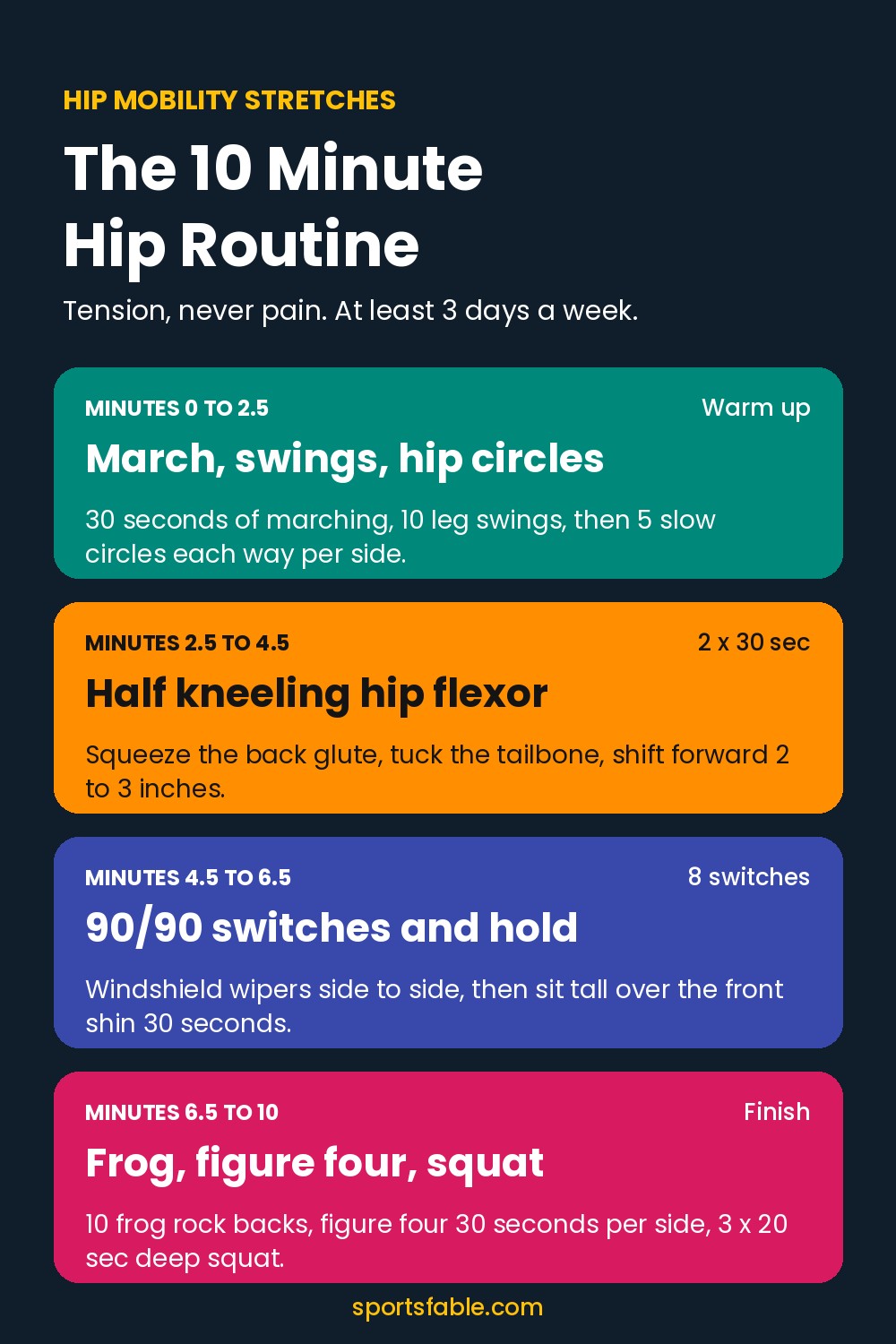
Pin the graphic above so the timings live on your phone. Then use this table to choose which version of the hip mobility stretches fits your day.
| Your situation | Do this | Time | How often |
|---|---|---|---|
| Total beginner | Full routine, easier versions | 10 min | 3 days a week |
| Desk job | Standing figure four and split stance stretch | 2 min | Every 60 to 90 minutes |
| Stiff mornings | Bed routine | 4 to 5 min | Daily on waking |
| Long drive | Leg swings, split stance stretch, standing figure four | 3 min | Every stop |
| Runner | Dynamic set before, low lunge and 90/90 after | 3 plus 4 min | Every run |
| Chasing real flexibility | Full routine, longer holds | 15 min | 5 to 6 days a week |
The American College of Sports Medicine flexibility guidelines suggest stretching at least 2 to 3 days a week, daily being most effective, with static holds of 10 to 30 seconds (30 to 60 seconds can help older adults).
Nobody tells you this: consistency beats duration. Ten minutes on four days does more than forty minutes on one Sunday.
Hip mobility for runners

Running takes your hips through a narrow arc, so runners are often fit and stiff at the same time. Split the work: moving stretches before the run, holds after.
- Before: leg swings (1 minute). 10 forward and back plus 10 side to side per leg, hand on a fence. Mistake: turning them into kicks.
- Before: walking lunge with reach (1 minute). 6 steps per side, reaching the back leg side arm overhead. Feel: front of the back hip opening. Mistake: knee crashing into the ground.
- Before: skips and high knees (1 minute). 2 easy passes of 20 yards.
- After: low lunge (2 minutes). Setup: back knee down, front knee over the ankle. Cue: tuck the tailbone, sink 2 inches. Dose: 2 x 30 seconds per side. Feel: front of the back hip. Mistake: front knee drifting inward.
- After: 90/90 hold (2 minutes). 30 seconds per side, twice, sitting tall.
Decision rule: before speed work or a race, skip long static holds. Mayo Clinic notes that stretching right before intense efforts like sprinting may reduce performance, so stick to the dynamic set.
Nobody tells you this: the best time for the full routine is the evening of an easy day, not straight after a long run when tired legs get sloppy. On a couch to 5K schedule, slot it into the rest days.
Gear that helps, and how to progress over 4 weeks
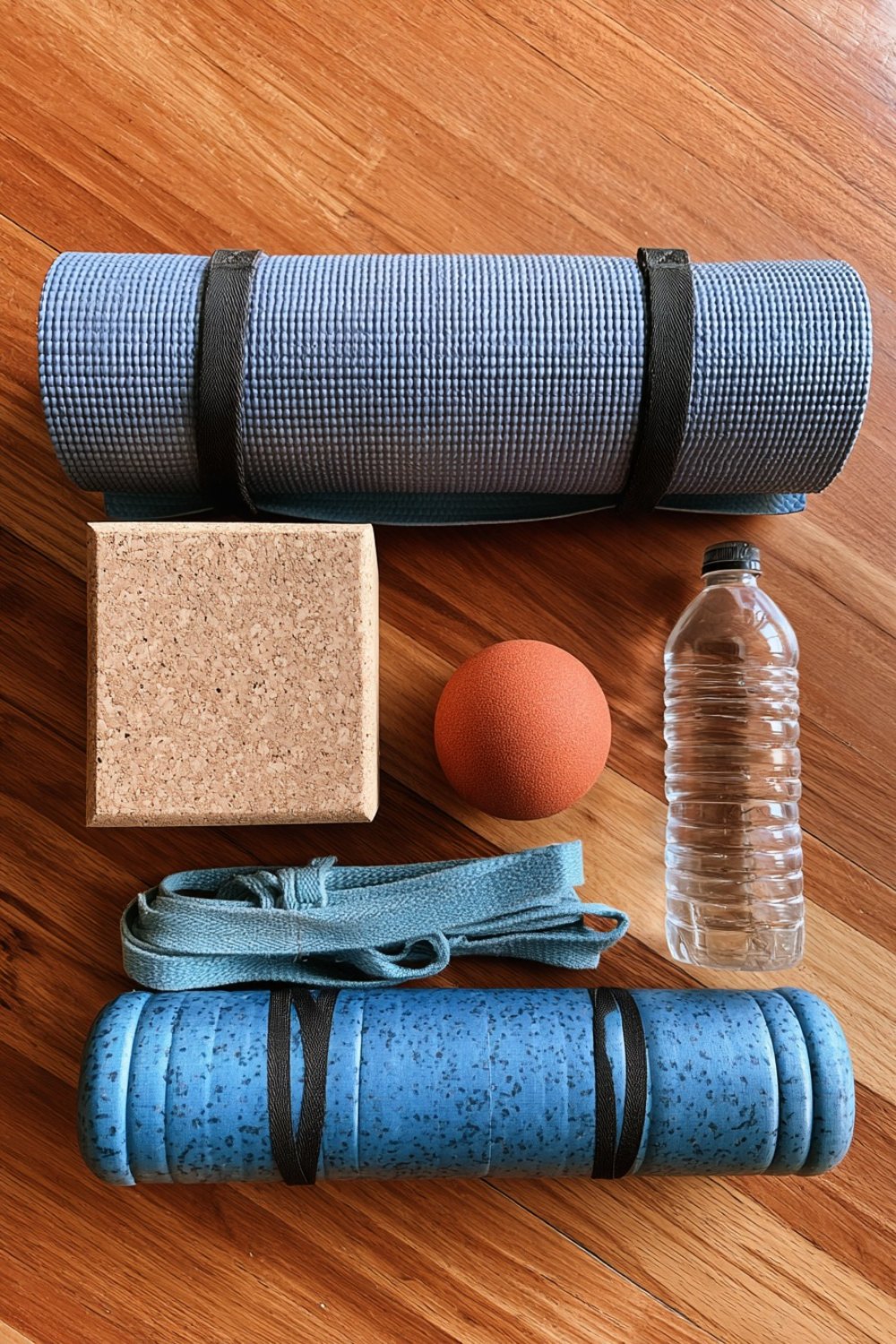
You need nothing but a floor, but a few cheap tools make the easier versions possible.
- Mat, 4 to 6 mm ($20 to $40): cushions the knees. Thicker than 8 mm feels wobbly in the squat.
- Cork or foam block ($10 to $20): sit on it in the 90/90 or butterfly so your back stays tall.
- Strap, 6 to 8 feet ($8 to $15): loops around the foot for the figure four if you can’t reach.
- Foam roller and massage ball ($15 to $35): 60 seconds on the outer thigh and glute before stretching. Roll muscle, never the bony point of the hip.
| Week | Sessions | Holds | Progression |
|---|---|---|---|
| 1 | 3 | 20 to 30 seconds | Easier versions, learn the cues |
| 2 | 4 | 30 seconds | Standard versions, 10 switches in the 90/90 |
| 3 | 4 to 5 | 30 to 45 seconds | Lower squat, drop the block if your back stays tall |
| 4 | 5 | 45 to 60 seconds on the tightest spot | Hands free 90/90 switches, retest |
Decision rule: move up a week only if the current one felt easy on at least two sessions. Repeating a week is progress, not failure.
Nobody tells you this: range changes too slowly to feel, but not to see. Photograph your 90/90 and deep squat on day 1 and day 28, and log sessions on a printable workout tracker or the one in the PDF.
Keep building the routine
Pair your hips with a full body daily stretching routine, or move on to the splits stretching routine once the 90/90 feels easy. Build the strength that protects those hips with the 30 day plank challenge, and for mat days our yoga outfits guide covers what won’t ride up in a deep squat.
Questions people ask
What are the best hip mobility stretches for beginners?
The half kneeling hip flexor stretch, the 90/90, the lying figure four and a supported deep squat cover the main directions your hip moves. Start with the easier versions and 20 to 30 second holds, then add frog rock backs.
How long does it take to improve hip flexibility?
Most people feel easier movement within 2 to 3 weeks of stretching 3 or more days a week. Measurable range usually takes 4 to 8 weeks, and it fades if you stop.
How do you do the 90/90 stretch correctly?
Bend your front knee to 90 degrees in front of you and your back knee to 90 degrees out to the side. Sit tall over the front shin before you lean forward at all. If you can’t sit upright, put a block under your seat.
Are hip mobility stretches safe during pregnancy?
Talk to your doctor or midwife before starting any new routine while pregnant. ACOG’s updated guidance on exercise in pregnancy says exercise benefits most pregnant women but recommends a clinical evaluation before beginning a program.
Is there a hip mobility routine PDF I can print?
Yes. The free download in the beginner routine section is a 2 page PDF with every move, cue and hold time, plus the bed and standing versions and a 4 week tracker.
Why do so many men have tight hips?
Many men lift, run or sit at a desk for years without ever training hip rotation, so that range quietly shrinks. Start with the standing stretches, then add the 90/90 with a block under the seat.
Should I stretch my hips every day?
You can, as long as you stay in the tension zone and skip anything that pinches. Daily gives the fastest results; 3 days a week maintains what you have. Stop if you feel sharp pain, and see a doctor or physical therapist if it lasts more than a few days.
Images in this article are AI-generated illustrations and original graphics created by SportsFable. They show training scenes, not real people, teams or events. The printable is an original SportsFable resource.
Related Post