
The first time you drop a dumbbell on a bare concrete floor, you hear it in your teeth. The second time, you notice the chip in the concrete. The third time, someone upstairs asks what on earth you’re doing down there.
Flooring is the least exciting part of building a home gym, and the part people regret skipping most. It protects your floor, your equipment, your joints and, in a basement or apartment, your relationship with everyone else in the building.
This guide compares every common home gym flooring option side by side: rubber tiles, horse stall mats, rolled rubber, foam puzzle mats, turf, vinyl and epoxy. You’ll get what each one is good for, what it costs roughly, how thick it should be, and which to choose for a garage, a basement or a room with carpet.
First, decide what the floor has to handle
The right flooring depends on your heaviest, loudest activity, not your average one.
- Bodyweight, yoga and light dumbbells: almost anything works, including foam mats.
- Heavy dumbbells and kettlebells: you need dense rubber, ideally 3/8 inch or thicker.
- Barbell lifting and deadlifts: 3/4-inch rubber at minimum, and a platform if you drop weights.
- Cardio machines: a firm, level surface (rubber or a machine mat) so the machine doesn’t rock.
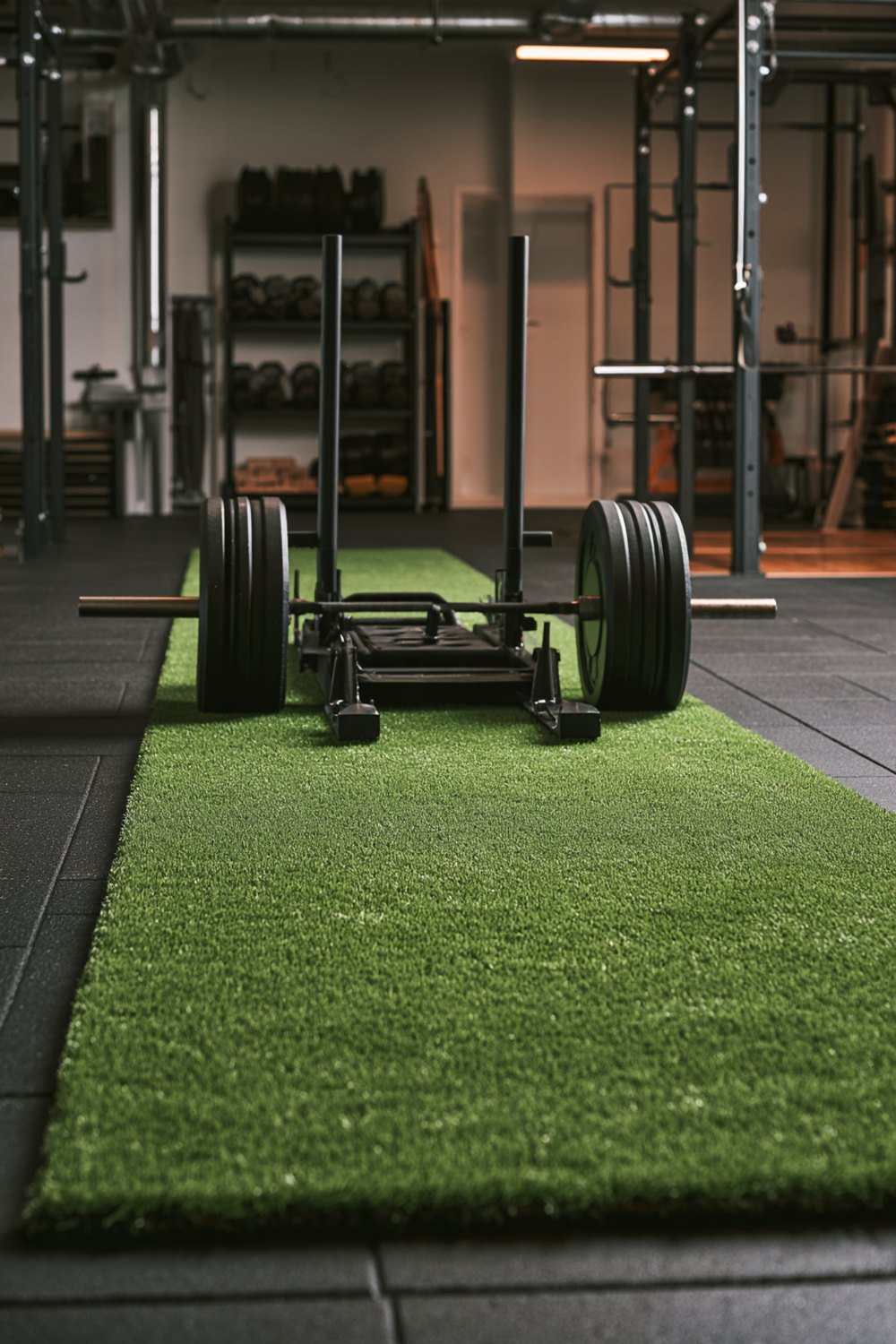
- Sled pushes and carries: artificial turf.
Home gym flooring options compared
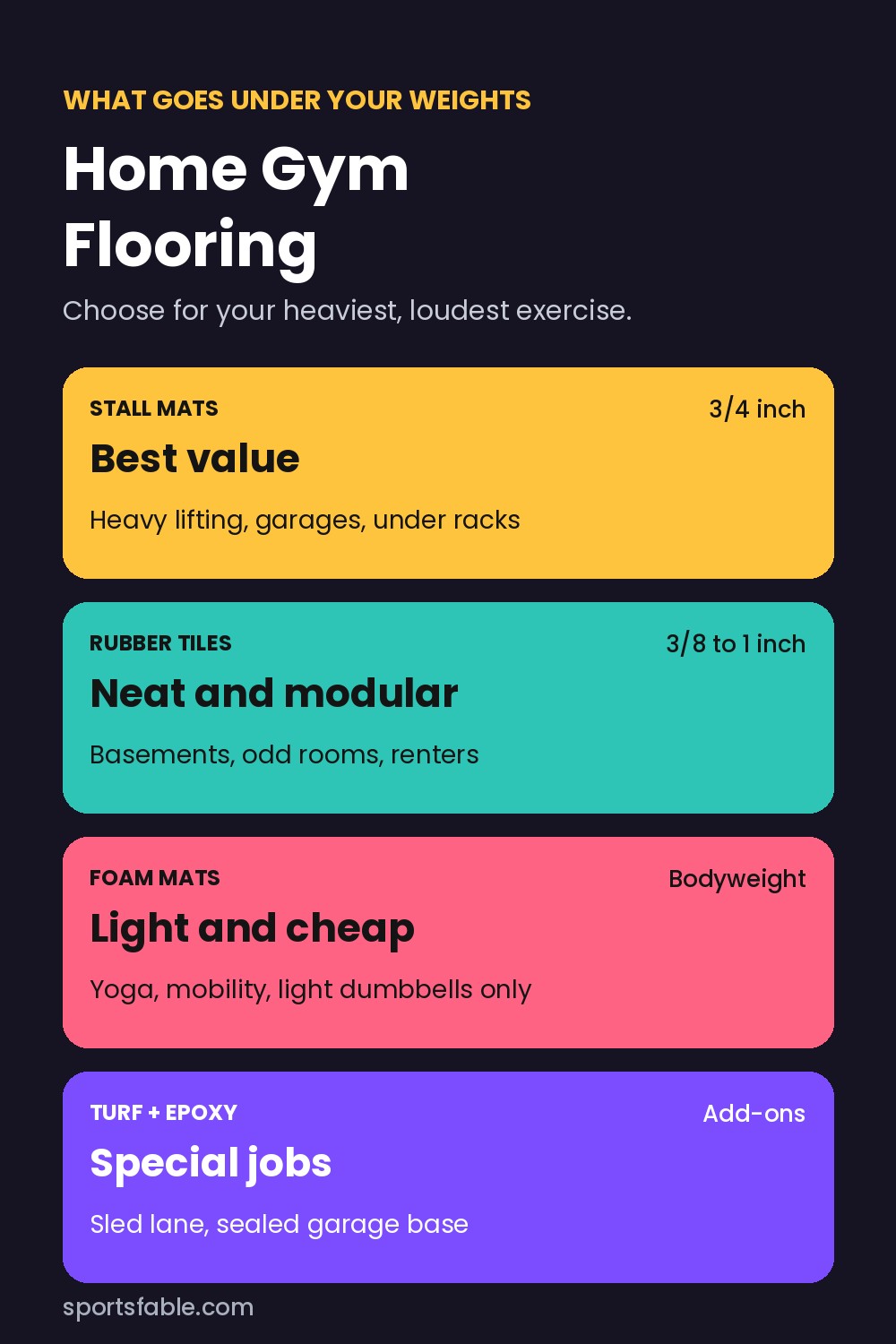
Horse stall mats
The budget favorite for serious lifters. A standard mat is 4 by 6 feet, 3/4 inch thick, weighs about 100 pounds and costs less than $60 at farm supply stores, according to Garage Gym Reviews. That works out to under $2.50 per square foot.
- Best for: garages, basements, under a power rack.
- Downsides: heavy to move, edges don’t interlock, and there’s a strong rubber smell for the first few weeks.
Interlocking rubber tiles
Usually 2 by 2 or 3 by 3 feet, in thicknesses from about 3/8 to 1 inch. They click together like a puzzle and look more finished than stall mats.
- Best for: rooms where looks matter, odd-shaped spaces, renters (no glue).
- Downsides: more expensive per square foot than stall mats, and thin tiles won’t protect against dropped barbells.
Rolled rubber flooring
Long rolls, often 4 feet wide, cut to length. Fewer seams than tiles and a clean commercial look.
- Best for: large, rectangular rooms you want to cover wall to wall.
- Downsides: rolls are very heavy and awkward to cut and install alone.
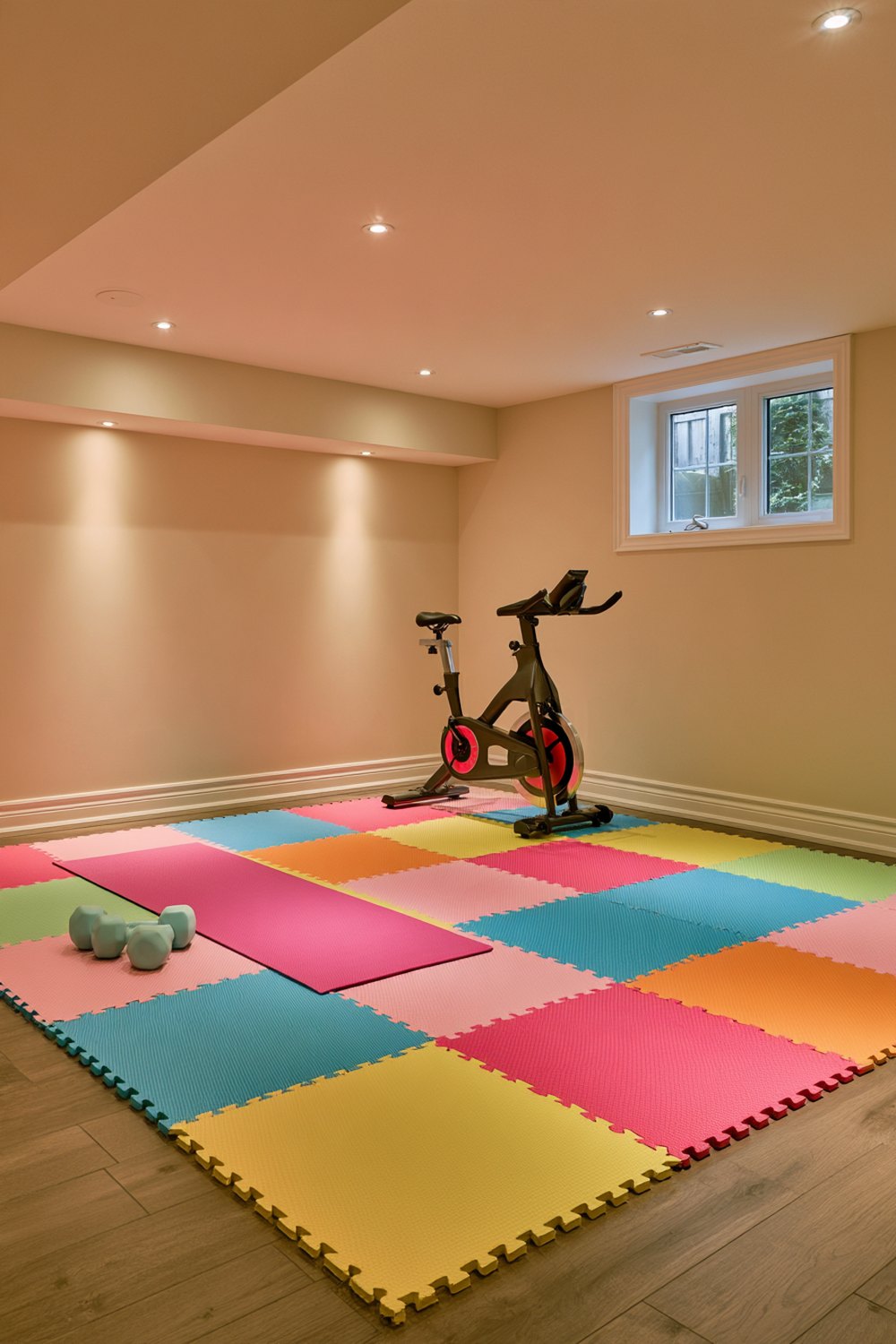
Foam puzzle mats (EVA foam)
Light, cheap, colorful and easy to install. Great for bodyweight work, stretching and kids’ play areas.
- Best for: yoga, mobility, light dumbbells, basements over carpet or tile.
- Downsides: heavy weights dent them, and they can shift under lunges. Not for barbells.
Artificial turf
A strip of gym turf turns any long space into a sled and carry lane.
- Best for: sled pushes, bear crawls, farmers carries, agility drills.
- Downsides: not ideal under heavy weights on its own. Usually laid on top of rubber or alongside it.
Vinyl and luxury vinyl plank
The “luxury” home gym look: wood-effect planks that are easy to clean.
- Best for: finished rooms with cardio machines and light dumbbells.
- Downsides: scratches and dents under heavy weights. Add rubber where you lift.
Epoxy-coated concrete
Epoxy seals concrete, looks sharp and makes the floor easy to sweep. Plan the timing: a two-part kit like Rust-Oleum EpoxyShield is ready for foot traffic after 24 hours and vehicles after about three days, according to its product listing.
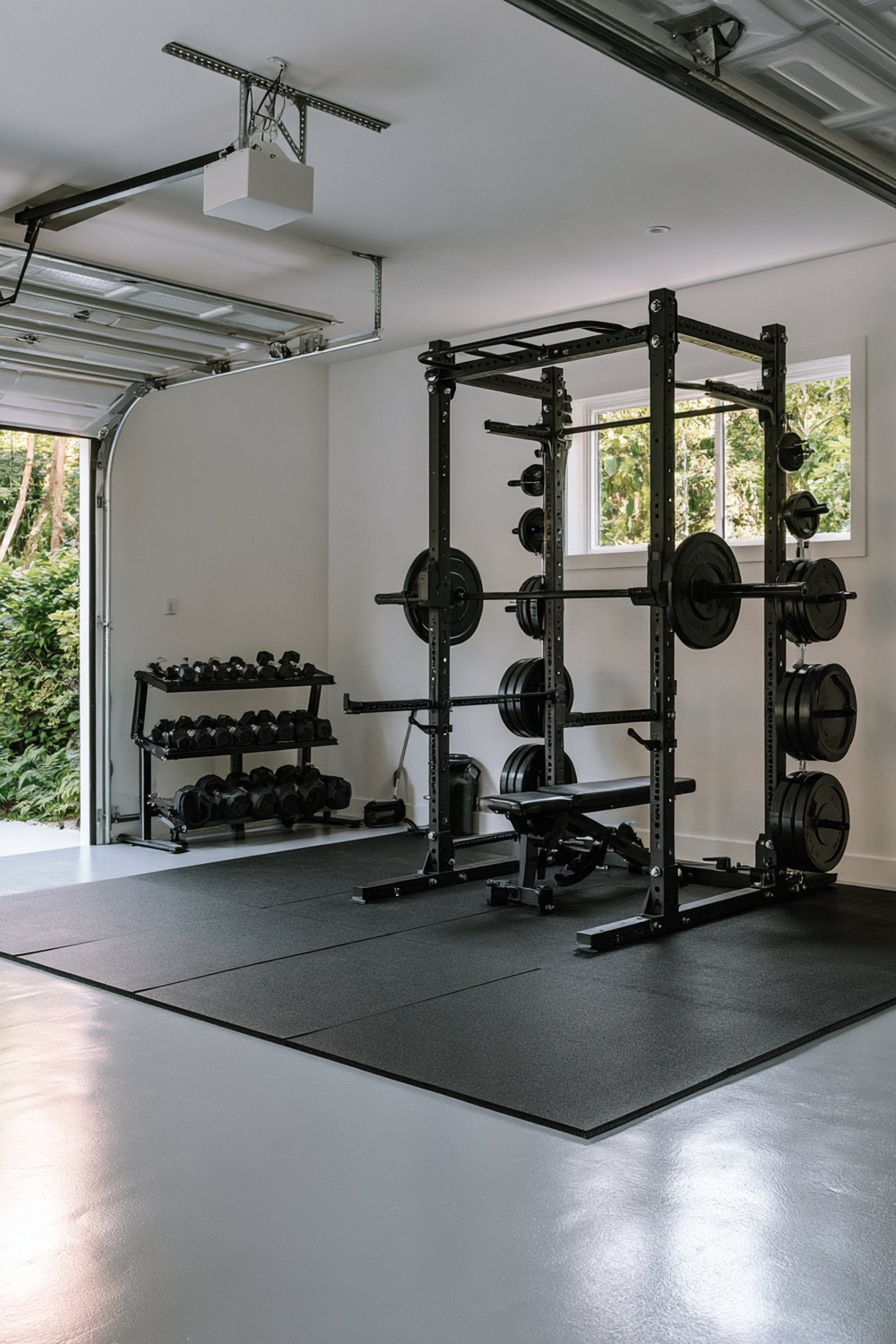
- Best for: garages, as a base layer.
- Downsides: it’s still hard concrete. Epoxy alone won’t protect dropped weights, so add rubber in the lifting zone.
Which flooring for which room?
Garage
Stall mats or 3/4-inch rubber tiles in the lifting area, optionally over epoxy. Add a turf lane if there’s space. See our garage gym ideas for layouts.
Basement
Interlocking rubber tiles work well because they handle a slightly uneven floor and some moisture. If the basement is damp, lift the edges now and then to check underneath. Foam is fine for a yoga or mobility corner.
Over carpet
Put a rigid layer down first, such as 3/4-inch plywood, then rubber on top. Rubber directly on thick carpet shifts and can feel unstable under heavy lifts.
Apartments and upper floors
Prioritize thickness and impact absorption. Use the thickest rubber you can, and never drop weights. A platform with extra layers under it reduces noise further.
Build a simple deadlift platform
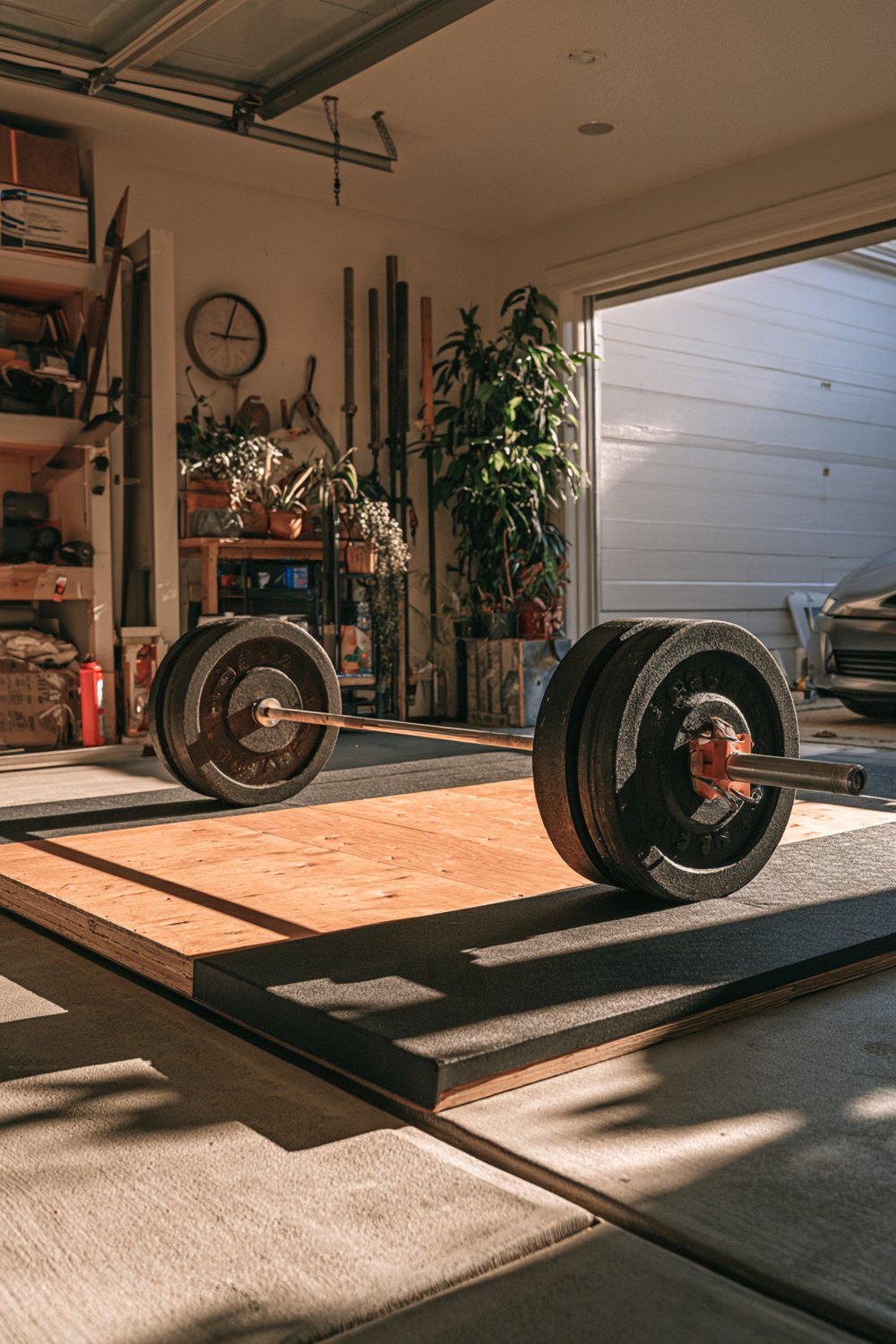
If you deadlift heavy, a platform protects the floor better than any single mat.
- Base: two layers of 3/4-inch plywood, 8 by 8 feet, laid in opposite directions and screwed together.
- Top center: one sheet of smooth plywood (where you stand).
- Top sides: two strips of 3/4-inch stall mat, each about 2 by 8 feet (where the plates land).
- Optional: a rubber border so the edges don’t catch toes.
How to install stall mats without hurting yourself
Stall mats are the best value, but at around 100 pounds each they’re awkward to handle. A few tricks make it a one-afternoon job:
- Get a second person, or “walk” each mat by rolling it loosely and unrolling it in place.
- Lay them out in the driveway first so the smell starts fading before they come inside. Wipe them with mild soapy water.
- Start in a corner and work outward, pushing each mat tight against the last.
- Cut with a fresh utility knife and a straight edge, scoring several times rather than forcing one deep cut.
- Expect slight gaps over time. A few strips of double-sided carpet tape underneath stop them creeping.
Common flooring mistakes
- Buying foam for a lifting gym. It looks fine on day one and is dented by week two.
- Covering only under the rack. Dumbbells and kettlebells get dropped everywhere. Floor the whole area you train in.
- Ignoring moisture. In basements and garages, trapped damp under rubber can smell and damage the floor. Check underneath a few times a year.
- Skipping a level check. Rubber follows the floor beneath it. Big dips make benches and machines wobble.
How thick should home gym flooring be?
- 3/8 inch: cardio machines, light dumbbells, bodyweight.
- 1/2 inch: general training with moderate dumbbells and kettlebells.
- 3/4 inch: barbell training and heavier dumbbells. The best all-round choice.
- 1 inch or a platform: heavy deadlifts, dropped weights, upper floors.
Your flooring checklist
- Plan around your heaviest, loudest activity.
- Measure the room and add 10% for cuts.
- Check the floor is level and dry first.
- Air new rubber out in a ventilated space before moving it inside.
- Use rubber wherever weights touch the floor, even over epoxy or vinyl.
- Add turf only if you’ll push a sled or do carries.
Keep building
Working with a spare room? Try our small home gym ideas. Already set up? Run the 7-day home workout plan or the 12-week workout plan on your new floor.
Questions people ask
What is the best flooring for a home gym?
For most people lifting weights, 3/4-inch rubber, either stall mats (cheapest) or interlocking tiles (neater). Foam is only for bodyweight work.
Can I put gym flooring over carpet?
Yes, but lay rigid plywood first and rubber on top. Rubber directly on thick carpet shifts and feels unstable.
Is epoxy good for a home gym floor?
It’s a great base in a garage, but it’s still hard. Add rubber anywhere you lift or drop weights.
What flooring works in a basement gym?
Interlocking rubber tiles handle uneven floors and some moisture. Check under them occasionally if your basement is damp.
Are horse stall mats good for a home gym?
They’re the best value for heavy lifting. Expect them to be heavy to move and to smell for a few weeks.
What are some home gym flooring ideas that look good?
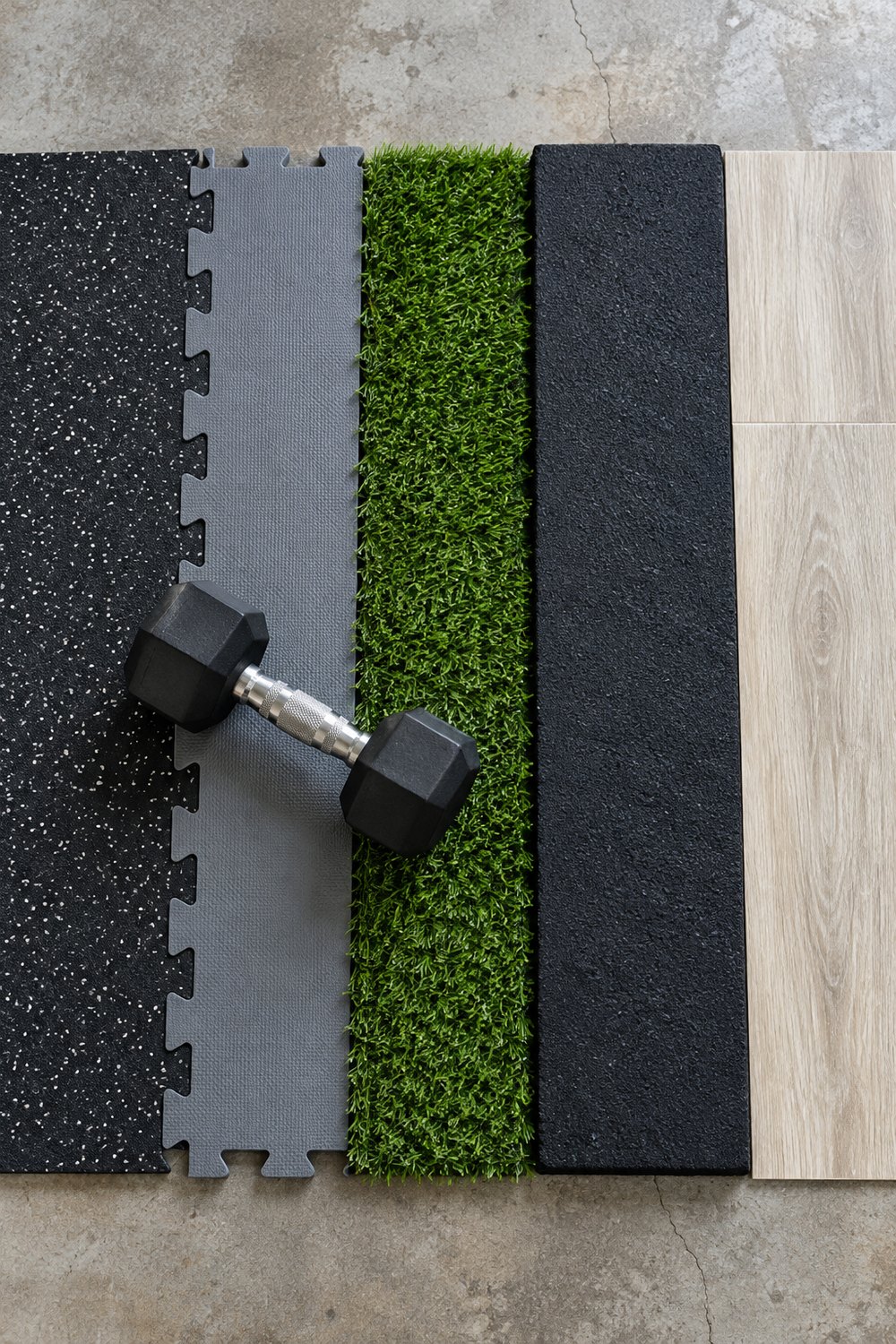
Black rubber tiles with a turf strip, wood-effect vinyl with rubber in the lifting zone, or epoxy with a contrasting rubber platform. Plan the layout first so the zones look deliberate.
Images in this article are AI-generated illustrations and original graphics created by SportsFable. They show home gym ideas, not real people or events.
Related Post