
Most garage gyms start the same way: a pair of dumbbells on a concrete floor, wedged between the recycling bins and a bike nobody rides. It works for a month. Then the floor eats a dumbbell handle, the winter cold makes the bar feel like ice, and you start wondering if a gym membership was the smarter move after all.
It usually isn’t. A garage gym that’s planned, even roughly, ends up being the gym you use most, because there’s no drive, no queue for the rack and no excuse.
These garage gym ideas cover every kind of space: a single-car garage, half of a two-car garage with the car still parked, a detached garage and a tiny budget corner. You’ll also find layout rules, flooring, storage, lighting and the aesthetic touches (yes, black walls) that make the room somewhere you actually want to be.
Start with the layout, not the equipment
Measure before you buy anything. Three measurements decide almost everything:
- Ceiling height. Overhead pressing and pull-ups need room. Measure to the lowest point, which is often the garage door track or opener, not the ceiling itself.
- Floor footprint. A standard Olympic barbell is about 7 feet (2.2 m) long. You need clear space on both ends to load plates.
- Door swing and car path. If a car shares the space, mark where its doors open with tape before planning the rack.
The simplest layout rule: put the heavy, permanent stuff (rack, platform) against the back wall, storage on the side walls, and keep the middle clear for movement or the car.
Single-car garage gym ideas
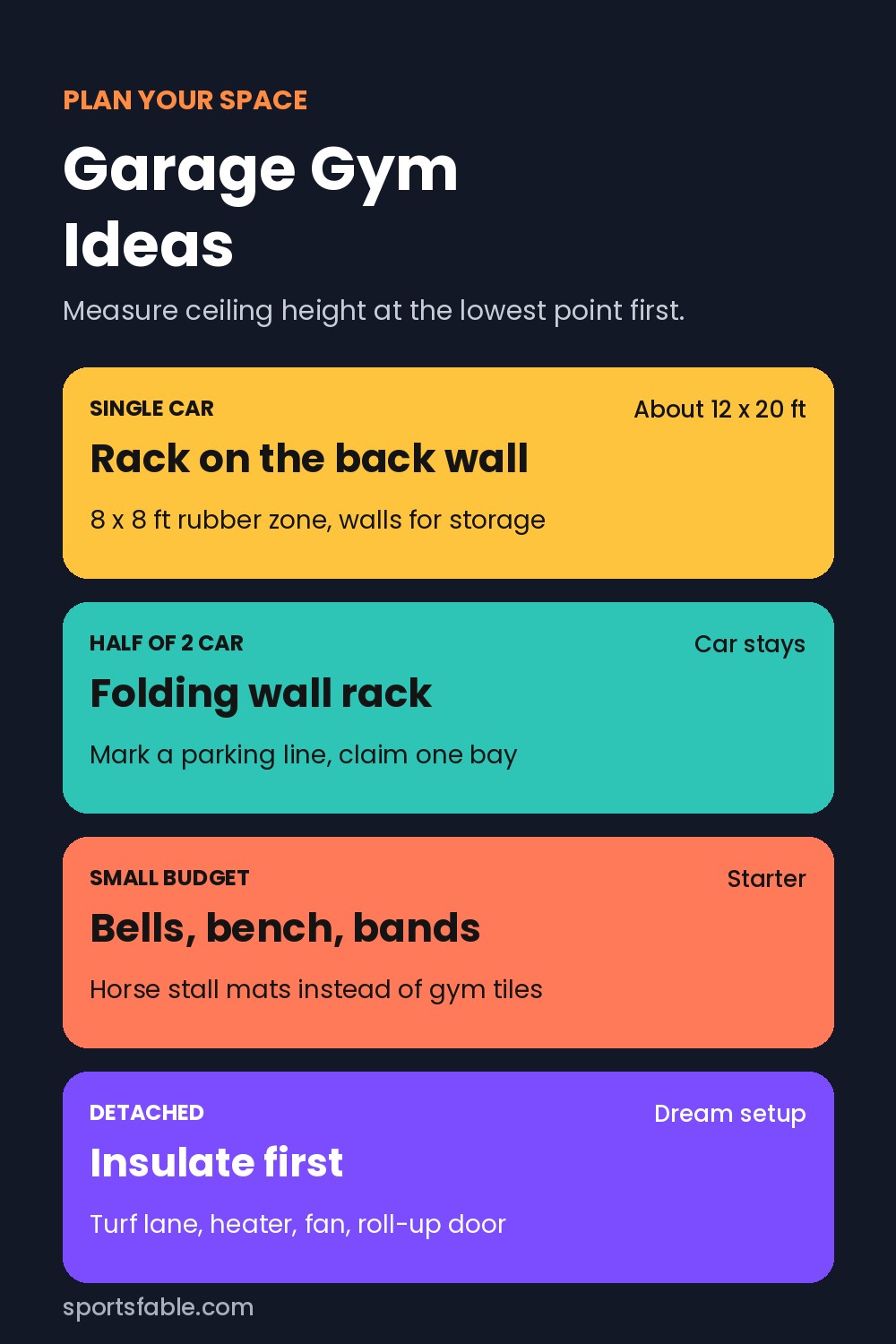
A one-car garage (often around 12 by 20 feet) fits a full gym if you’re disciplined.
- Put a half rack or squat stand on the back wall, facing out.
- Run a strip of rubber flooring from the rack forward, about 8 by 8 feet.
- Mount dumbbells, plates and bands on one side wall to keep the floor clear.
- Use the garage door as your “window”: roll it up on mild days for air and light.
Two-car garage gym ideas (with the car still inside)
Half gym, half parking is the most common setup, and it works better than you’d think.
- Claim one bay. Put the rack against the back wall of that side.
- Choose a folding wall-mounted rack if the car needs that space in winter. It folds flat to a few inches deep.
- Mark a parking line on the floor so the car never creeps into the lifting area.
- For tandem garages (one car behind the other), the back half is your gym. Long and narrow suits a rack plus a rower or a sled lane.
Small DIY garage gym on a budget
You don’t need a full rack to get strong. A cheap, effective starter setup:
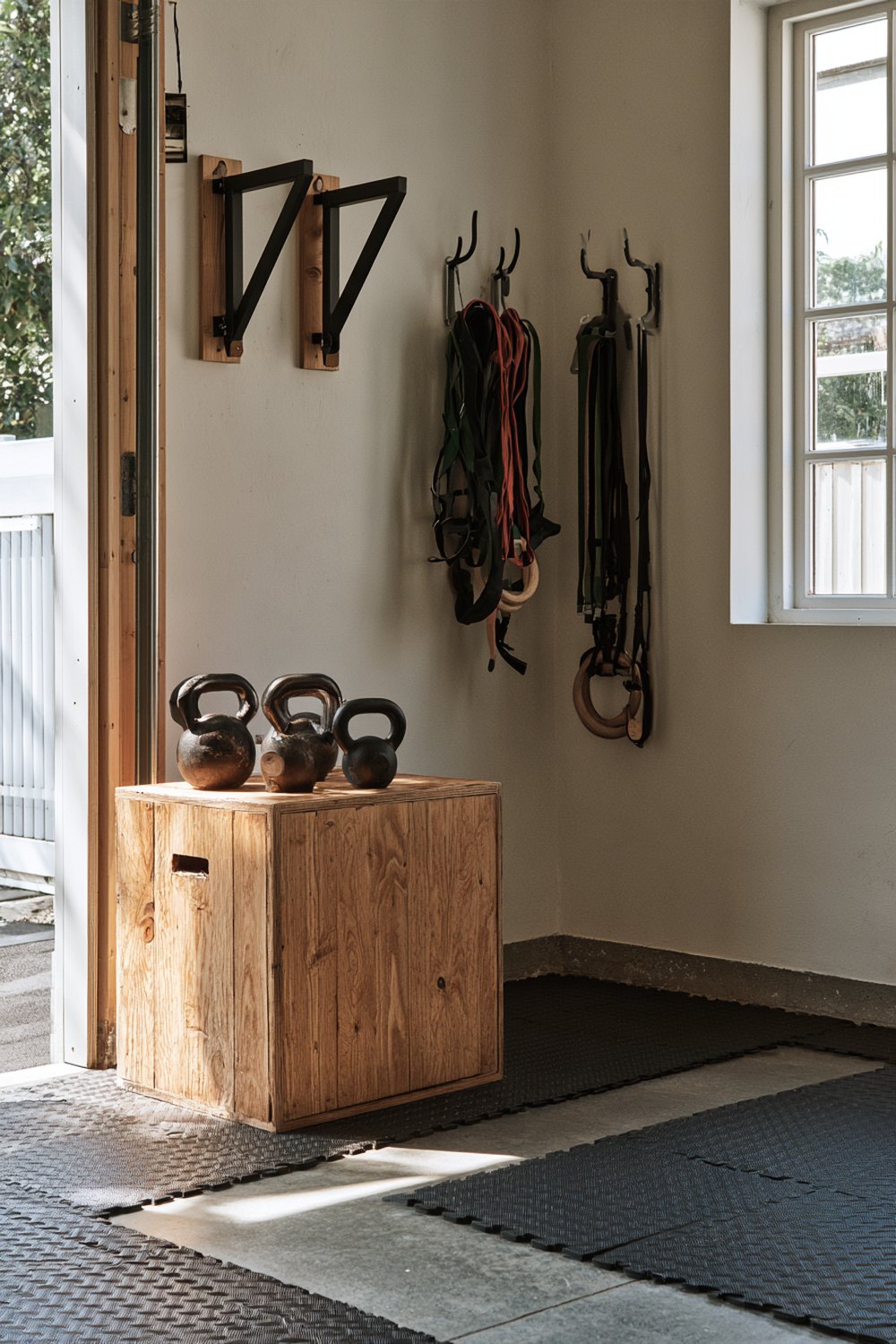
- Two or three kettlebells or one pair of adjustable dumbbells.
- A flat bench (or a sturdy wooden plyo box that doubles as one).
- Resistance bands and a pull-up bar.
- Horse stall mats instead of branded gym flooring. A standard 4 by 6 foot, 3/4-inch stall mat weighs around 100 pounds and costs less than $60 a piece at farm supply stores, according to Garage Gym Reviews. Expect a rubber smell for the first few weeks.
That covers everything you need to meet the CDC’s recommendation of muscle-strengthening activity at least two days a week for all the major muscle groups. Our 7-day home workout plan is a good first program to run in it.
Detached garage gym ideas
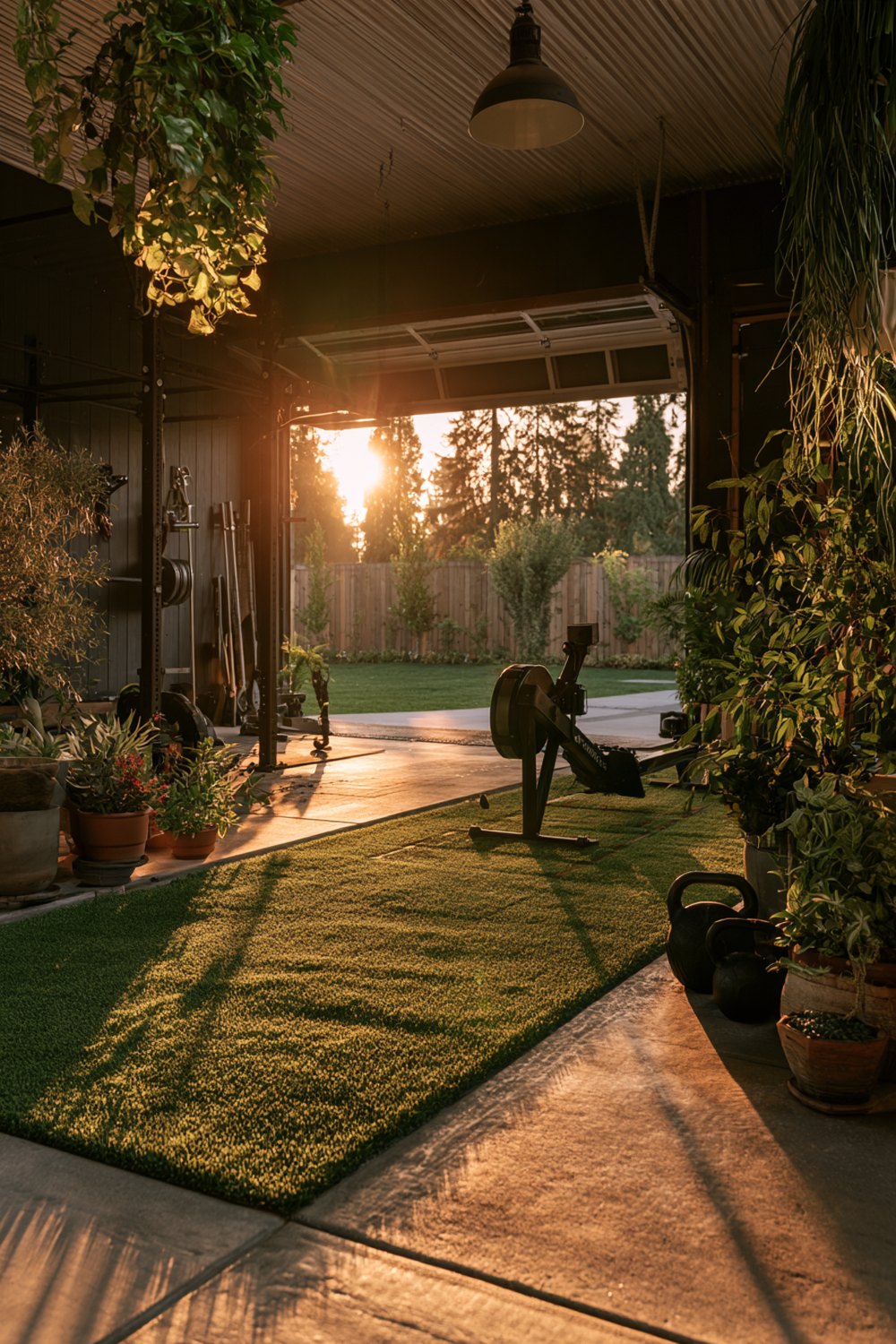
A detached garage is the dream: no car, no shared wall with the house, and more freedom to drop weights.
- Insulate before you equip. A detached garage gets very cold in winter and very hot in summer.
- Add a turf lane for sled pushes and carries if the floor is long enough.
- Install a mini-split or a wall heater rated for garages, plus a fan for summer.
- Roll the door up and train with the driveway as extra space on good days.
Flooring: the one thing worth getting right
Bare concrete is hard on equipment, joints and dropped weights. The main options are rubber tiles, stall mats, foam (for bodyweight work only) and epoxy. If you’re coating the concrete first, plan ahead: a typical two-part epoxy kit such as Rust-Oleum EpoxyShield is ready for foot traffic in 24 hours and vehicles in about three days, according to its product listing. Put rubber on top of the epoxy wherever you lift. Our full guide to home gym flooring compares every option.
Storage ideas that free up the floor
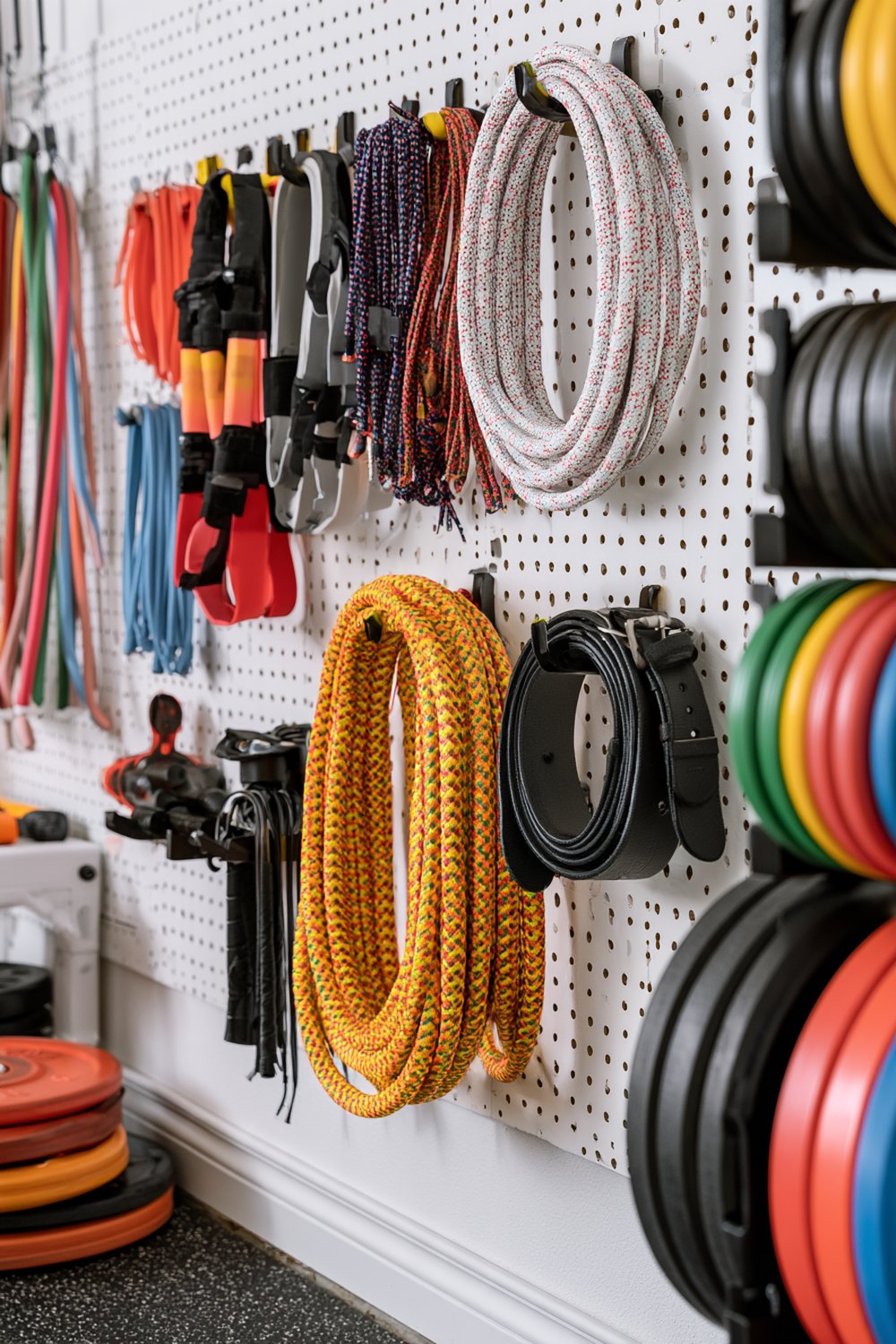
- Pegboard or slat wall for bands, jump ropes, belts and collars.
- Wall-mounted plate storage or a vertical plate tree near the rack.
- A wall-mounted barbell holder (horizontal gun-rack style or vertical).
- A narrow two-tier dumbbell rack instead of a long one.
- Hooks for the bench so it hangs on the wall when the car comes in.
Aesthetic garage gym ideas
The Pinterest favorites, and why they work:
- Black walls. A matte black or charcoal wall makes black equipment look intentional and hides scuffs. Pair it with warm LED strip lighting so it doesn’t feel like a cave.
- Bright white walls. The opposite approach: reflects light, feels bigger and suits smaller garages.
- A wall mirror. Useful for form checks and makes the room feel twice as wide.
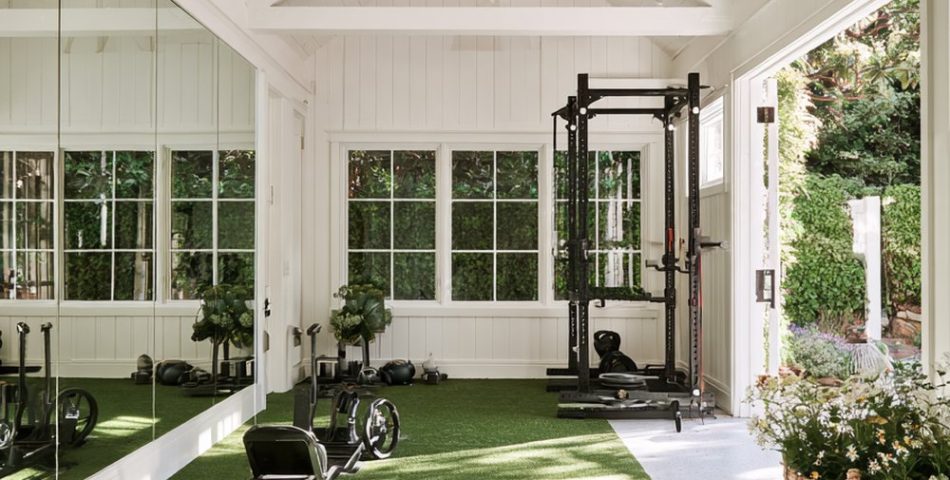
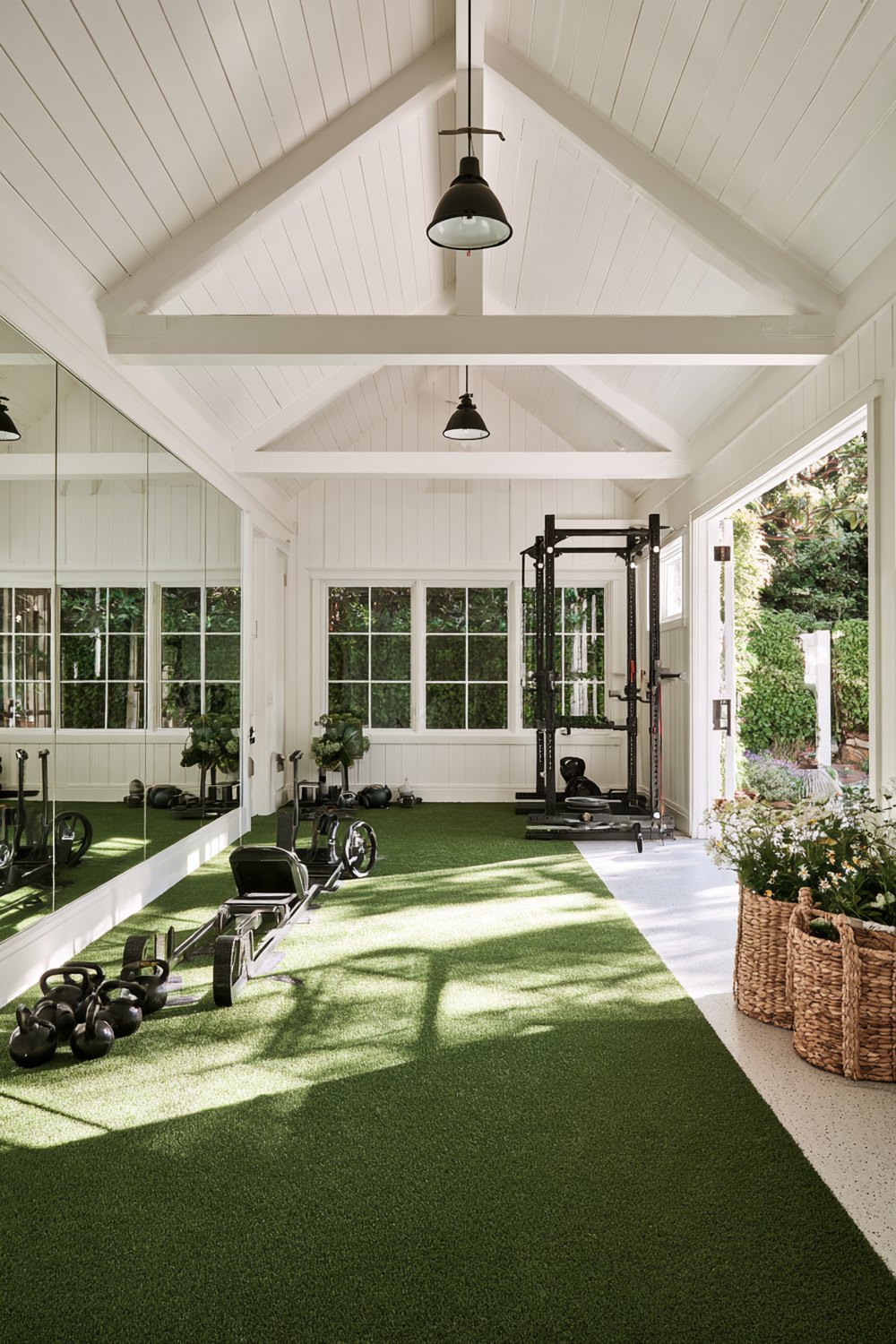
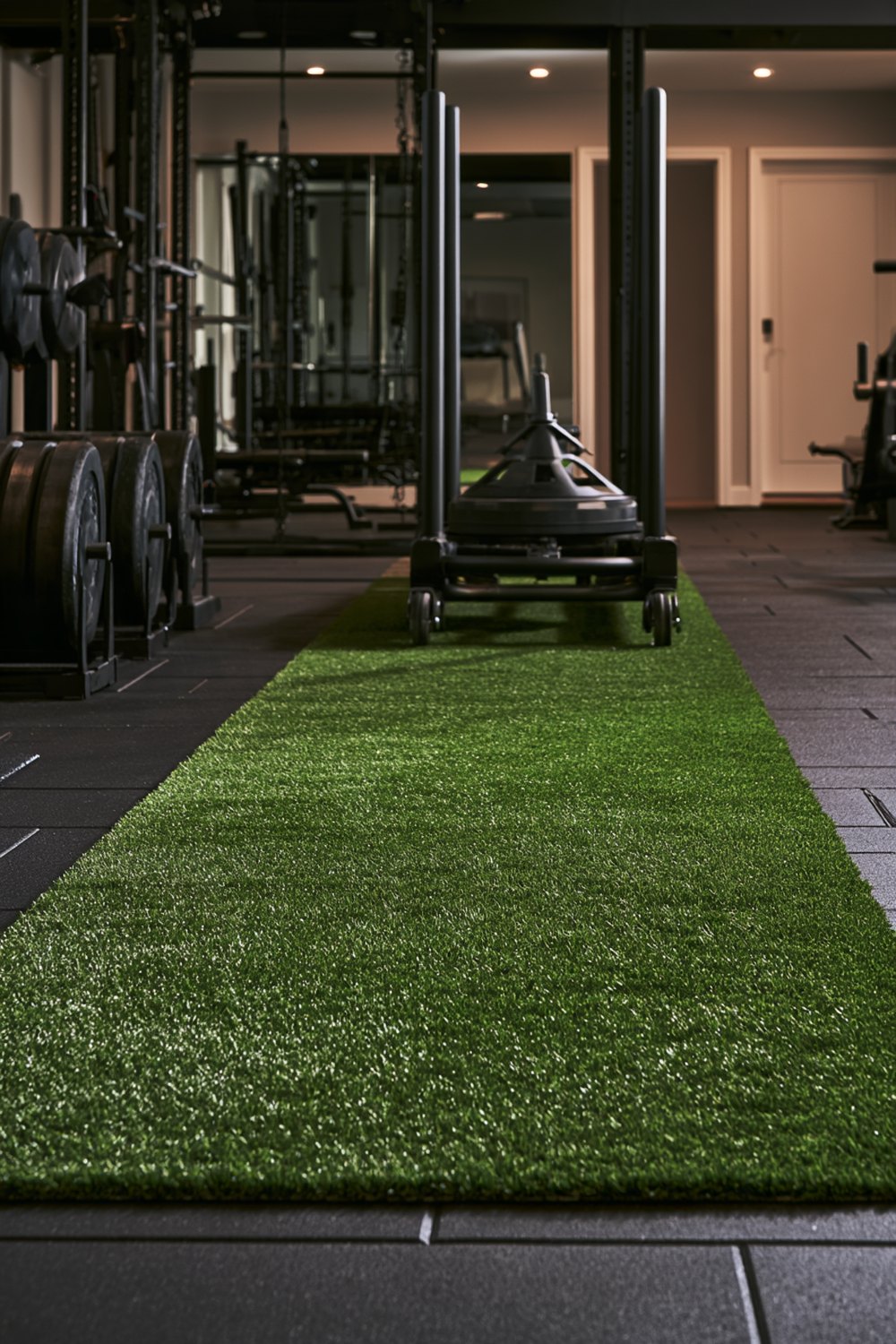
- A turf strip. Looks great in photos and is genuinely useful for sled pushes and carries.
- Plants and a rug-free zone. A few hardy plants by the door soften the room. Keep the lifting area clear.
Lighting, air and temperature
- Replace the single bulb with bright LED shop lights (aim for even light over the rack).
- A wall fan or two makes summer training bearable.
- Store chalk and leather belts off the floor if the garage gets damp.
- In winter, warm up longer and keep the bar indoors if it’s freezing.
A few safety basics
- Bolt racks to the floor or use the manufacturer’s stabilizers before loading heavy weights.
- Use safety arms or spotter straps whenever you squat or bench alone.
- Keep the garage door closed when the car engine is running, and never run a car in a closed garage you train in.
- Store plates low and keep walkways clear of bands and collars.
Your garage gym checklist
- Measure ceiling height at the lowest point, plus floor space.
- Decide what stays permanent and what must fold away.
- Floor the lifting area first, then buy equipment.
- Get as much as possible onto the walls.
- Sort lighting and airflow before you start training there.
- Add equipment slowly, based on the program you actually run.
Keep building
Working with a spare room instead? Our small home gym ideas cover tight indoor spaces. Once the space is ready, follow a structured plan like the 3-day workout split for beginners.
Questions people ask
How do I set up a garage gym in a single-car garage?
Put a half rack against the back wall, floor an 8 by 8 foot lifting area with rubber, and move all storage to the side walls. That leaves room to load a barbell and move freely.
Can I have a garage gym and still park my car?
Yes. Use one bay of a two-car garage, choose a folding wall-mounted rack, and mark a parking line so the car stays out of the lifting area.
What is the cheapest way to build a garage gym?
Kettlebells or adjustable dumbbells, a bench, bands, a pull-up bar and horse stall mats. Buy used equipment where you can.
What color should I paint my garage gym?
Black or charcoal for a moody look that hides scuffs, or white for a brighter, bigger-feeling room. Either works with good lighting.
What layout works for a 2-car garage gym?
Rack on the back wall of one bay, storage on the side wall of that bay, and the second bay for the car or for open floor space.
Do I need special flooring?
For anything heavier than bodyweight work, yes. Rubber tiles or 3/4-inch stall mats protect the concrete, your equipment and your joints.
Images in this article are AI-generated illustrations and original graphics created by SportsFable. They show home gym ideas, not real people or events.
Related Post