
January gyms are full of people doing a little bit of everything. A machine here, a class there, a few curls because the dumbbells were free. By March most of them are gone, and it’s rarely because they were lazy. It’s because they never knew what they were working toward, so they never saw progress.
Twelve weeks is the sweet spot. It’s long enough to see real changes in strength and shape, and short enough that the finish line feels close from day one.
This 12 week workout plan gives you that finish line. It’s a four-day-a-week program split into three phases, with exact exercises, sets and reps, a simple rule for when to add weight, cardio guidance, options for training at home, and a template you can copy into your notes.
How the 12 weeks are built
The plan uses an upper/lower split: two upper-body days and two lower-body days each week. That trains every muscle twice a week, which a 2016 meta-analysis in Sports Medicine found produces better muscle growth than training each muscle once a week.
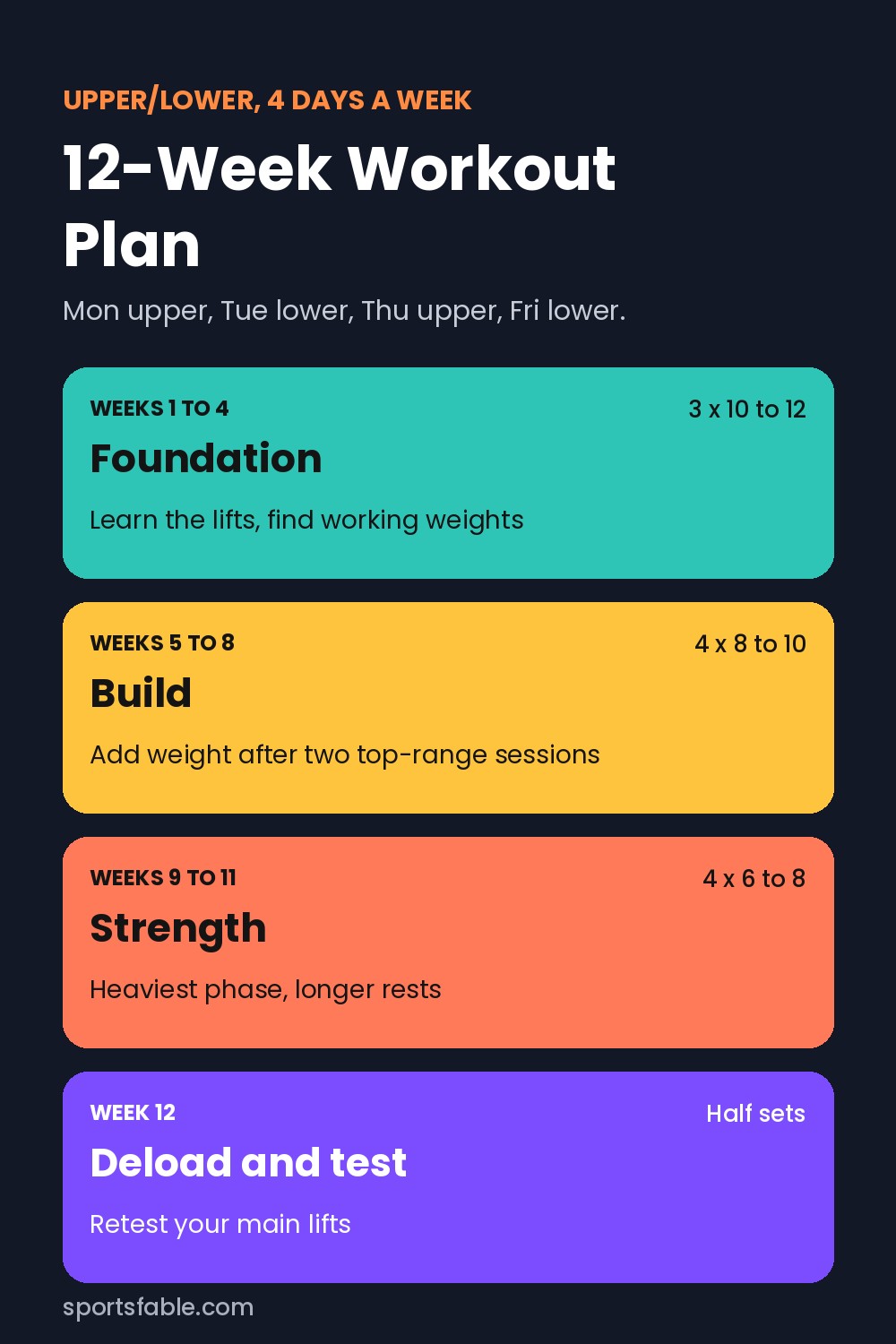
- Weeks 1 to 4, Foundation: learn the lifts, 3 sets of 10 to 12 reps.
- Weeks 5 to 8, Build: heavier weights, 4 sets of 8 to 10 reps.
- Weeks 9 to 11, Strength: heaviest phase, 4 sets of 6 to 8 reps on main lifts.
- Week 12, Deload and test: half the sets, then retest your main lifts.
A typical week: Monday upper, Tuesday lower, Thursday upper, Friday lower. Wednesday and the weekend are for walking, easy cardio or rest.
The workouts
Upper A
- Bench press or dumbbell press
- Bent-over row or chest-supported row
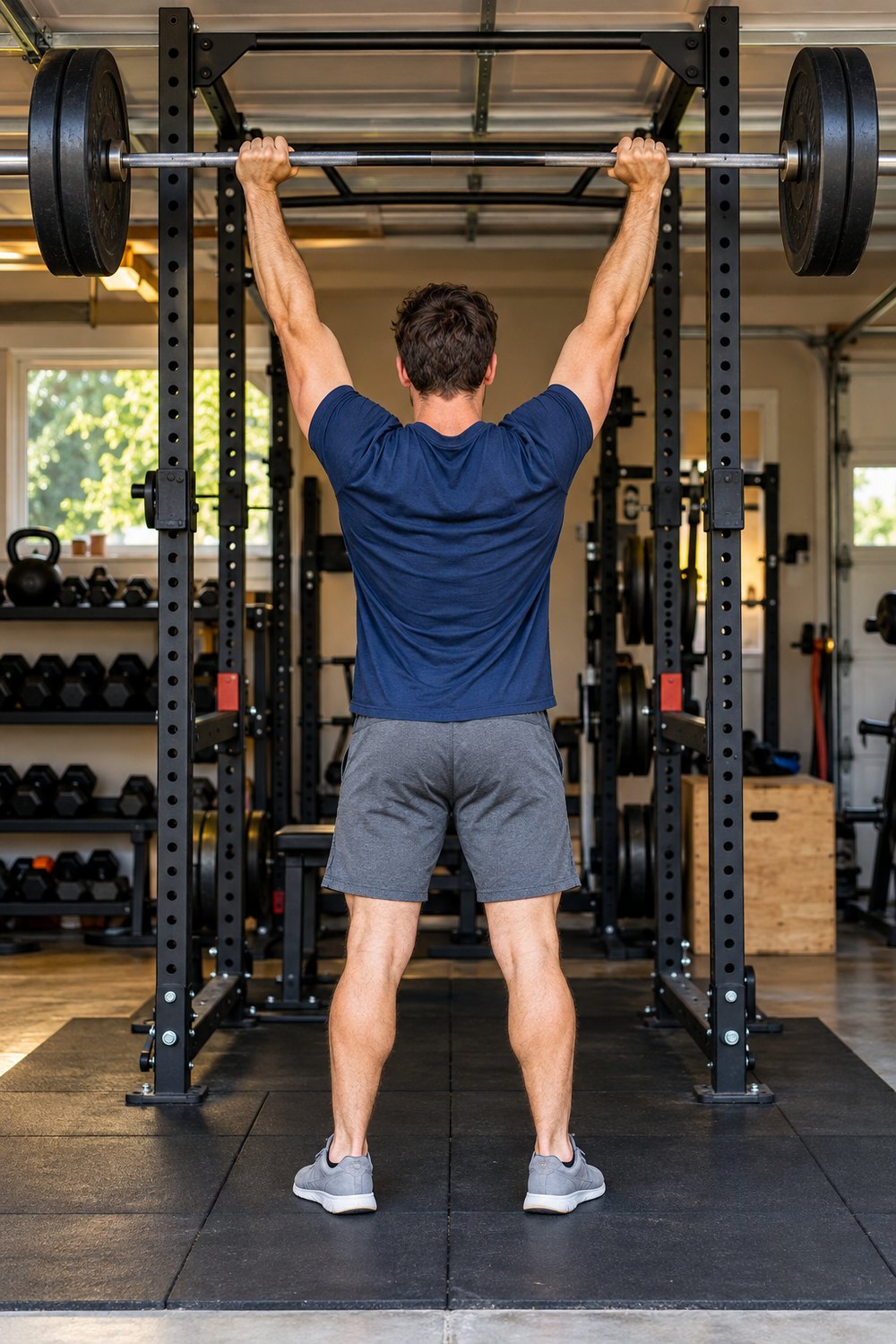
- Seated overhead press
- Lat pulldown
- Dumbbell curls and triceps pushdowns (superset)
Lower A
- Back squat or goblet squat
- Romanian deadlift
- Walking lunges
- Leg curl
- Plank: 3 × 30 to 45 seconds
Upper B
- Incline dumbbell press
- Pull-ups or assisted pull-ups
- Seated cable row
- Lateral raises
- Face pulls
Lower B
- Deadlift or trap bar deadlift
- Leg press or Bulgarian split squat
- Hip thrust
- Calf raises
- Dead bugs: 3 × 10 per side
Use the set and rep scheme for your phase on the first three exercises of each day. Accessory exercises (the last two) stay at 3 sets of 10 to 15 throughout.
What to expect in each phase
Weeks 1 to 4
The weights should feel manageable. Your job is to learn the movements, find your working weights and build the habit of four sessions a week. Expect to feel sore in the first week, then much less.
Weeks 5 to 8
This is where most people see the biggest jump in strength. The lower rep range lets you add weight more often. Prioritize sleep: seven to nine hours makes a noticeable difference to how these weeks feel.
Weeks 9 to 11
The heaviest phase. Rest two to three minutes between sets on the main lifts, and keep the accessory work steady. If a lift stalls for two weeks, drop the weight by 10% and build back up.
Week 12
Cut every workout to half the sets at the same weights. On the last two sessions, work up to a heavy set of five on your main lifts and compare it with week one.
When to add weight
This is the rule that makes the plan work. The American College of Sports Medicine’s progression guidelines recommend increasing the load by about 2 to 10% once you can do one or two reps more than your target on two consecutive sessions.
In practice: when you hit the top of your rep range on every set, two sessions in a row, add the smallest weight jump available (often 2.5 to 5 kg on lower-body barbell lifts and 1 to 2.5 kg on upper-body lifts). Leave one or two reps in reserve on most sets, so you finish each set knowing you could have done a little more.
Cardio during the 12 weeks
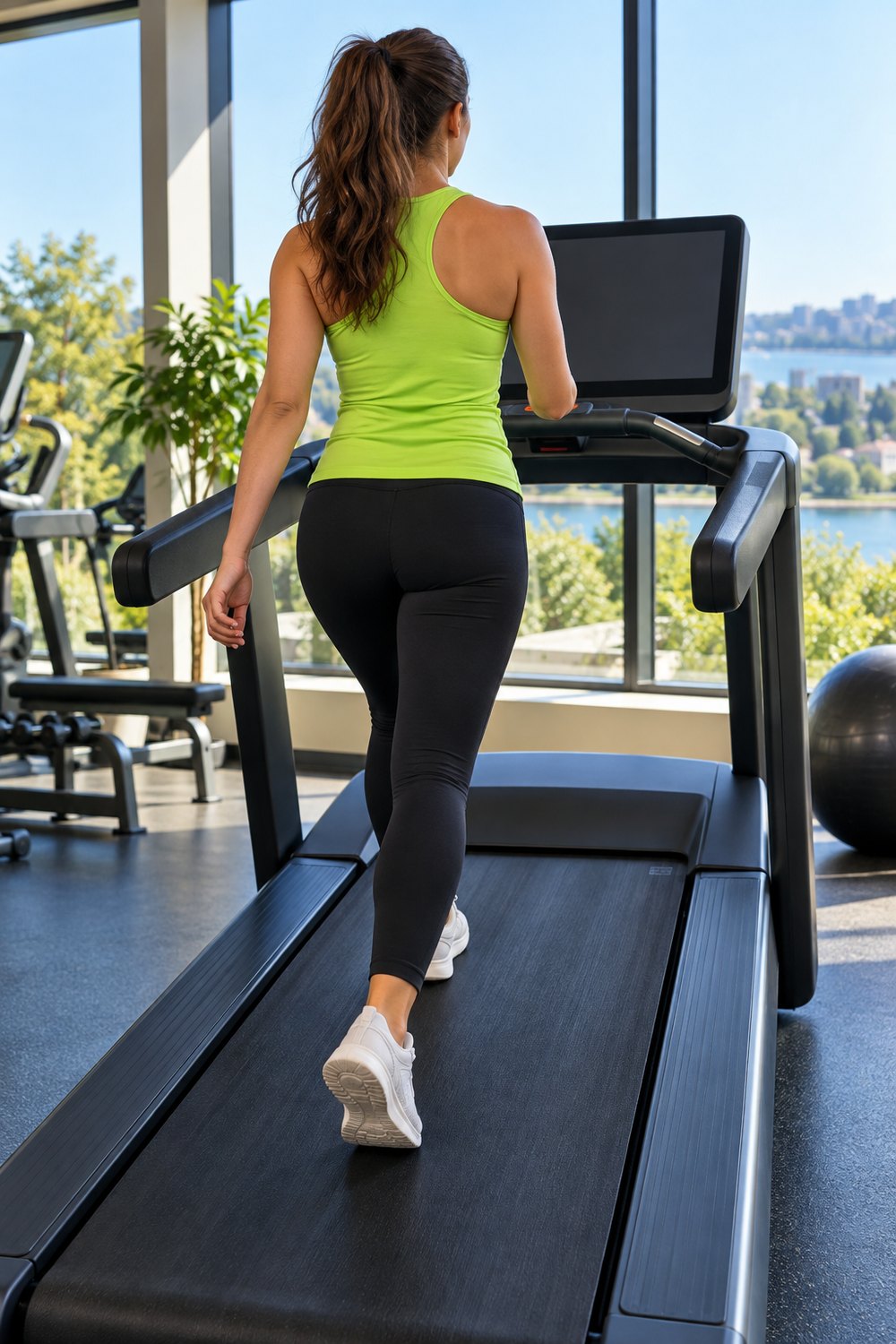
The CDC recommends that adults get 150 minutes of moderate activity a week plus at least two days of muscle-strengthening. The four lifting days cover the strength part. For the cardio:
- Walk 7,000 to 10,000 steps on most days, or
- Do two or three 25 to 40 minute sessions of incline walking, cycling or easy running, ideally on non-lifting days.
- If fat loss is your goal, keep the cardio easy and consistent rather than adding brutal intervals that wreck your leg days.
Doing the plan at home
Have adjustable dumbbells and a bench? You can run the whole program at home:
- Bench press becomes dumbbell press; rows become one-arm dumbbell rows.
- Squats become goblet squats or front-loaded split squats.
- Deadlifts become dumbbell Romanian deadlifts and single-leg RDLs.
- Pulldowns become band pulldowns or pull-ups on a doorway bar.
No equipment at all? Start with our 7-day home workout plan and come back to this one when you’ve added some weights.
Adjusting for women and men
The plan is the same for everyone. Two common tweaks:
- Want more glute development? Add 2 extra sets of hip thrusts on Lower A and swap leg press for Bulgarian split squats on Lower B.
- Want more upper-body size? Add 2 sets of incline press on Upper A and 2 sets of rows on Upper B.
Prefer five or six days a week? Our push pull legs vs bro split guide shows how to run a six-day version instead.
Your 12-week template
Copy this into your notes app:
- Week __ / Phase __
- Day: Upper A / Lower A / Upper B / Lower B
- Exercise: weight × reps, set 1 / set 2 / set 3 / set 4
- Did I hit the top of the rep range? Yes / No (add weight after two yeses)
- Steps or cardio minutes this week:
- Sleep average:
Take progress photos and three measurements (waist, hips, chest or arm) in week 1, week 6 and week 12. The scale alone rarely tells the whole story.
Three habits that decide your results
- Protein at every meal. A palm-sized portion of protein three or four times a day makes it much easier to recover from four sessions a week.
- Sleep before supplements. If you only change one thing outside the gym, make it a consistent bedtime.
- Plan the week on Sunday. Put the four sessions in your calendar like meetings. Missed sessions, not bad programs, are what derail most 12-week plans.
Your 12-week checklist
- Four sessions a week, two upper and two lower.
- Follow the phase rep ranges.
- Add weight after two sessions at the top of the range.
- Keep one or two reps in reserve.
- Walk or do easy cardio on rest days.
- Deload in week 12, then retest.
Keep building
Brand new to the gym? Our beginner gym workout plan is a gentler first month before this one. Want a blank week to plan around work and family? Use the weekly workout plan template.
Questions people ask
Can a woman beginner follow this 12 week workout plan?
Yes. Start in phase one with light weights, focus on form for the first two weeks, and use the glute tweak above if that’s your priority.
Is there a 12 week workout plan for men building muscle?
This is one. For more size, add the extra upper-body sets and eat in a small calorie surplus with plenty of protein.
Can I do this 12 week plan at home?
Yes, with adjustable dumbbells and a bench. Use the home swaps above.
How much can you change in 12 weeks?
Most consistent beginners get noticeably stronger and see visible changes in shape. How much depends on your starting point, nutrition, sleep and how consistently you train.
Do I need a PDF of the plan?
Save the chart image above to Pinterest or your phone. It has the whole 12-week structure on one page.
What should I do after week 12?
Start again at phase two with slightly heavier weights, or switch to a different split for variety. Keep the same progression rule.
Images in this article are AI-generated illustrations and original graphics created by SportsFable. They show training ideas, not real people or events.
Related Post