

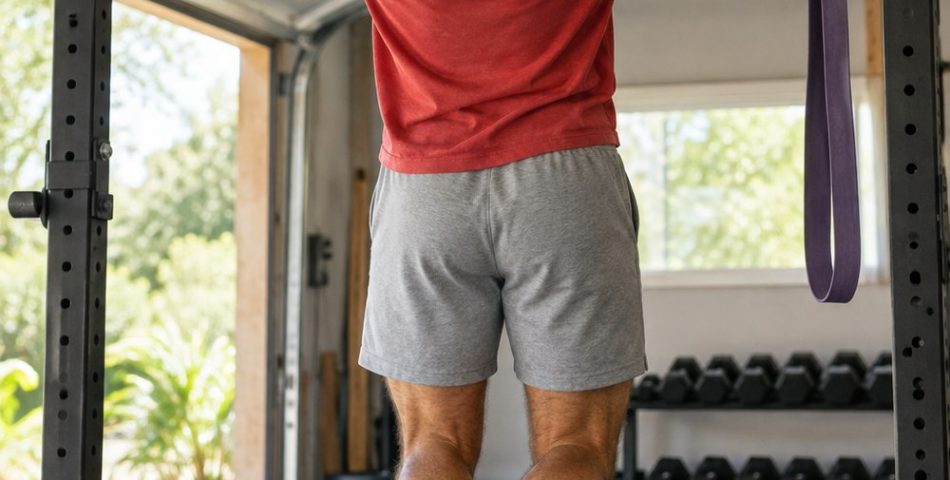
The bar’s wedged into the hallway doorframe, about a hand’s width above your head. You reach up, wrap your fingers over it, lift your feet, and hang. One, two, three… your forearms start burning around six. At nine seconds your grip opens on its own and you land a little harder than you meant to.
Nine seconds of hanging, zero pull-ups. That’s a completely normal starting point, and it’s also the reason most people give up: they keep trying the full movement, keep failing at the bottom, and never build the strength in between.
A proper pull up progression fills that gap. Instead of grinding at a rep you can’t do, you train smaller pieces of it (grip, shoulder blade control, rowing strength, the lowering phase) until they add up to a full rep. Below is a test to find your level, the six progressions that matter, and an 8-week plan at three days a week.
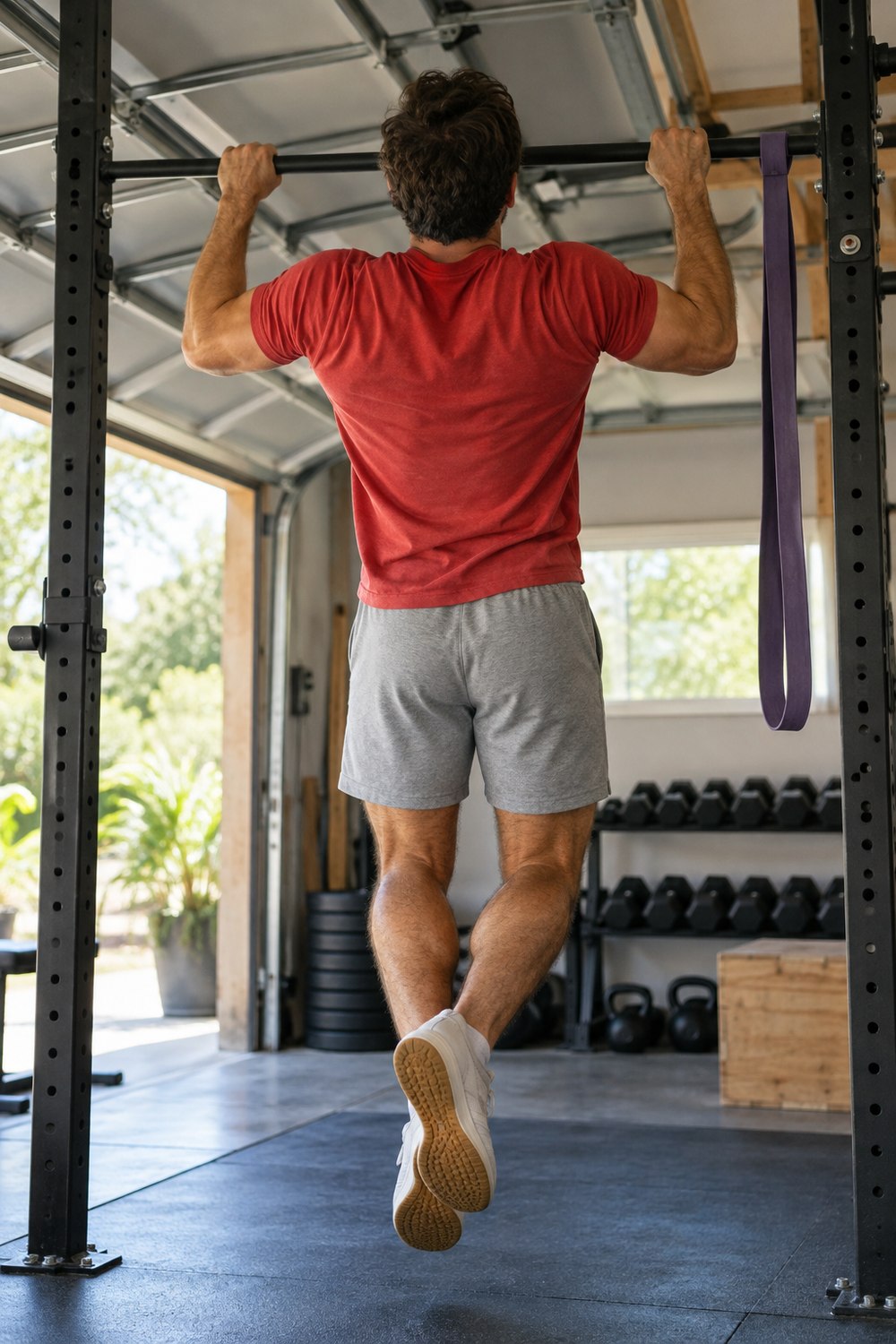
The honest cost of your first pull-up
Let’s be upfront. Going from zero to one strict pull-up usually takes 6 to 12 weeks of consistent work, sometimes longer if you’re starting heavier or with very little upper-body training. The first weeks feel almost too easy, and your hands will get sore before your back does.
The payoff is real, though: once you get the first rep, reps two through five tend to come much faster. If you have a shoulder, elbow or wrist injury, or any health condition that limits exercise, check with a doctor or physical therapist before you start hanging from things.
Test your level first
Do these three tests on a fresh day and write the numbers down. You’ll retest in week 4 and week 8.
- Dead hang: hang from the bar, arms straight, for as long as you can. Under 20 seconds puts you at level 1.
- Inverted row: under a bar or table edge at about waist height, body straight, heels down. Fewer than 8 clean reps puts you at level 2.
- Negative: step up so your chin is over the bar, then lower as slowly as you can. Under 5 seconds puts you at level 3. Over 5 seconds and you’re at level 4, close to your first rep.
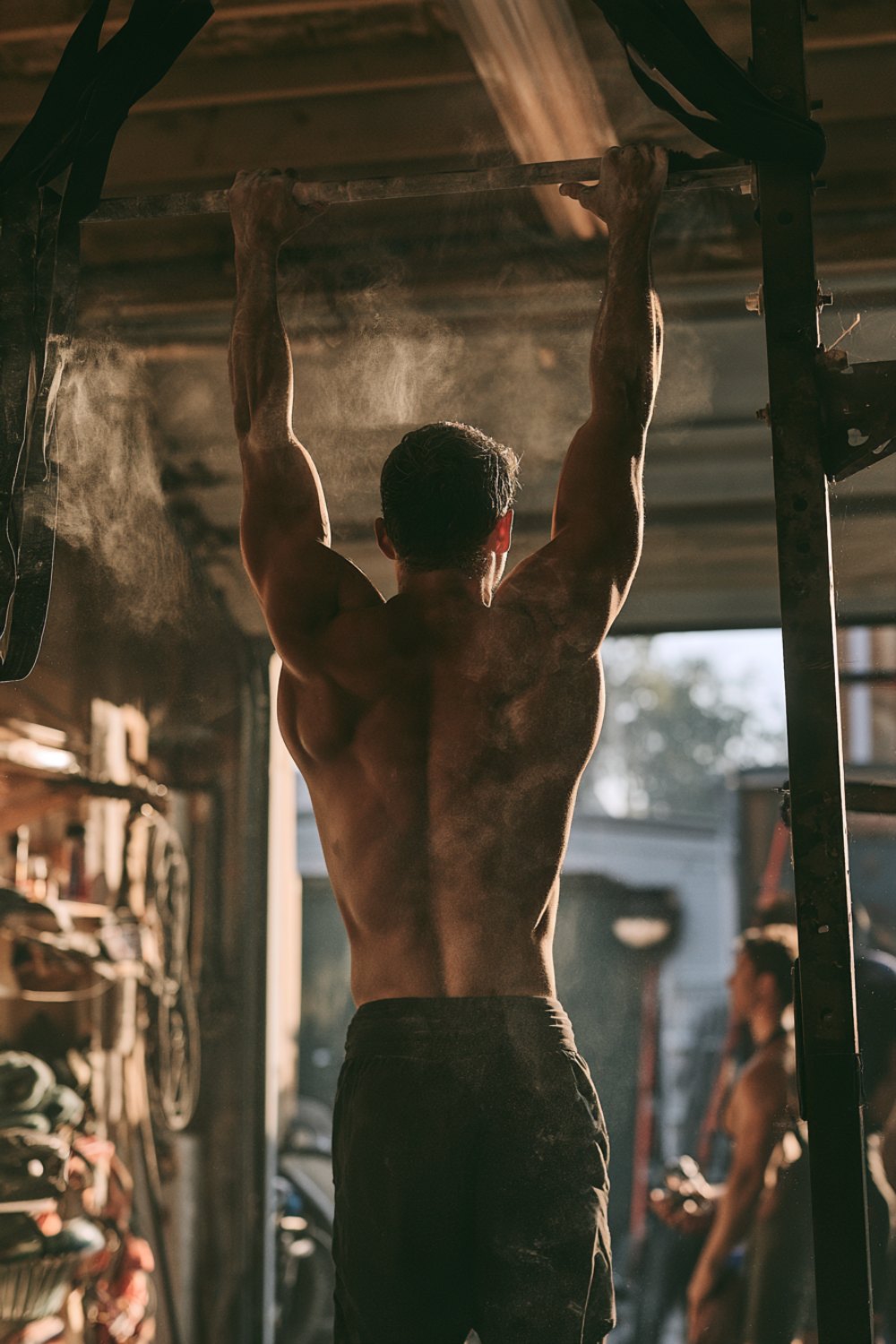
The six exercises in this pull up progression
1. Dead hangs
Grip usually fails first. Hang with a shoulder-width overhand grip and work up to 30 to 45 seconds. Keep your shoulders active.
2. Scapular pulls
From a dead hang, keep your arms straight and pull your shoulder blades down and back so your body rises an inch or two. Lower slowly. It’s the first part of every pull-up.
3. Inverted rows or TRX rows
Rows build pulling strength with only part of your body weight. Use a low bar, a sturdy table edge or suspension straps. The more upright you stand, the easier it gets. Lower the angle as you get stronger.
4. Band-assisted pull-ups
A thick resistance band looped over the bar and under one foot or knee takes some weight off. The band helps most at the bottom, the hardest part, so don’t rely on it alone.
5. Negatives (eccentrics)
Jump or step up to the top position and lower yourself under control for 3 to 8 seconds. You’re stronger lowering than lifting, so negatives let you handle your full body weight long before you can pull it. They’re also the exercise that makes you the most sore, so keep the volume low.
6. Isometric holds
Hold yourself still at the top (chin over bar), then later at the halfway point with elbows at 90 degrees. The middle hold is where most first attempts stall, so it’s worth training directly.
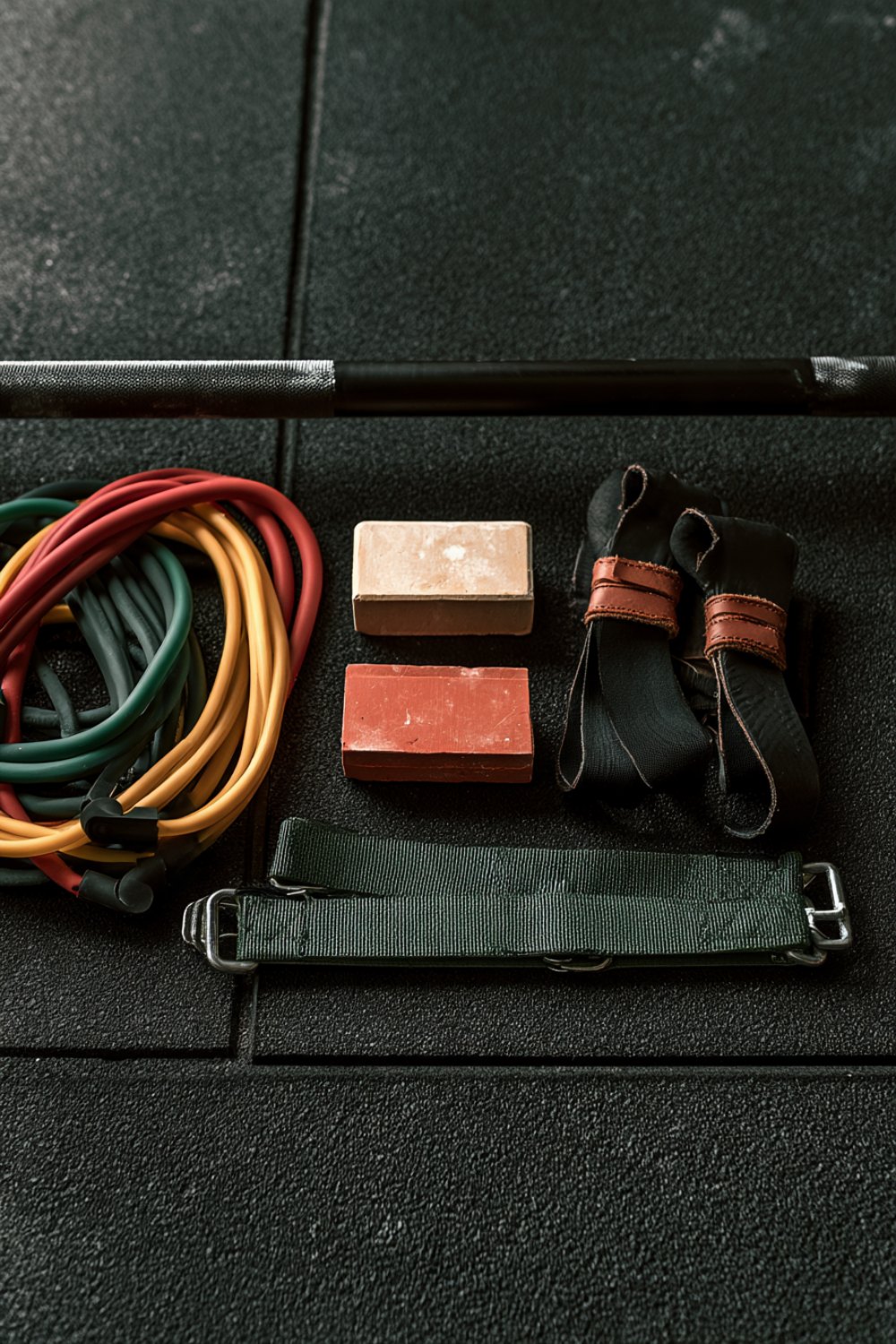
The 8-week pull up progression plan
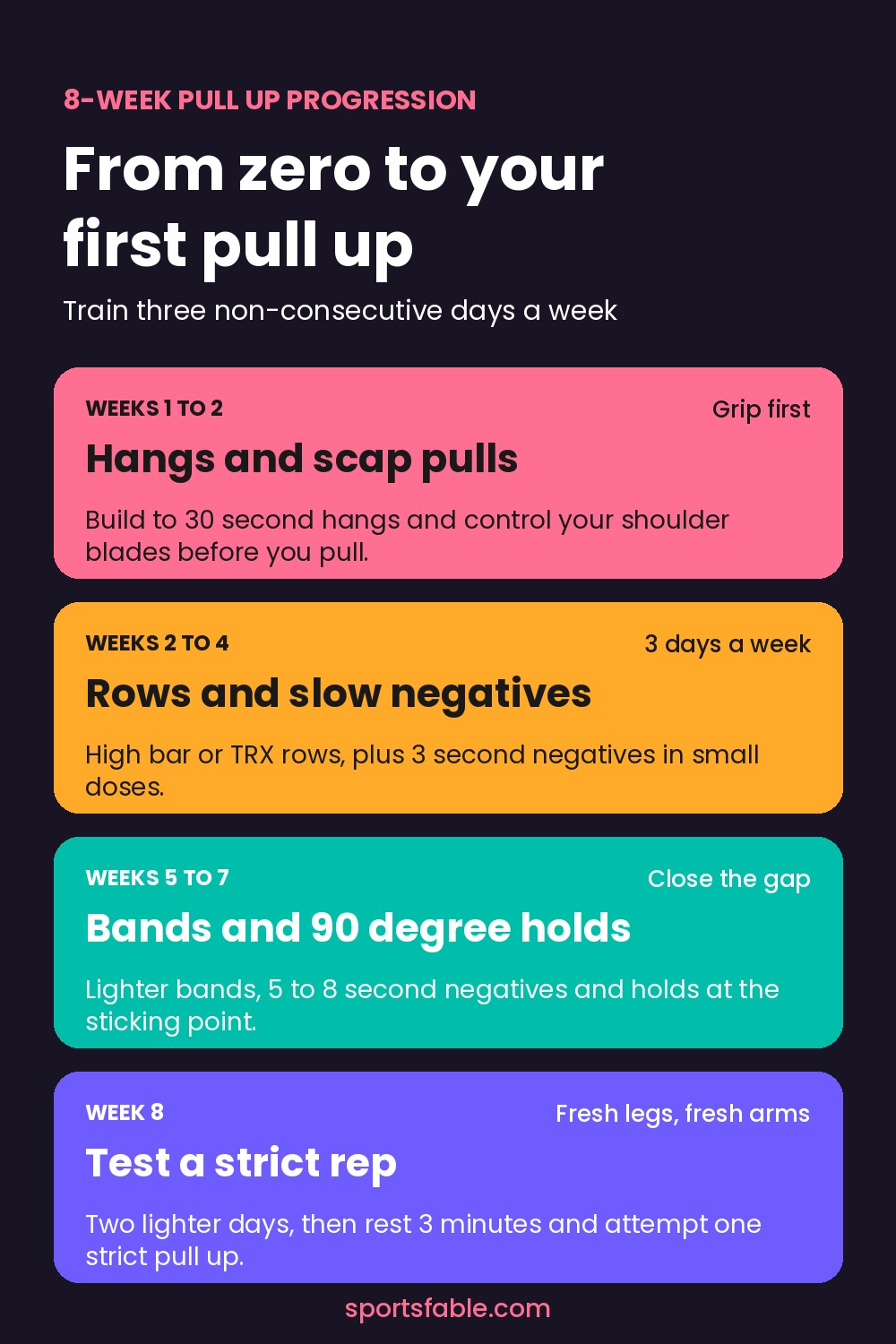
Train three non-consecutive days a week, such as Monday, Wednesday and Friday. Each session takes 25 to 35 minutes. Warm up with 5 minutes of arm circles, band pull-aparts and a few easy rows. If you scored level 3 or 4 on the test, start at week 3.
| Week | Hangs and scap pulls | Rows | Assisted or negatives | Holds |
|---|---|---|---|---|
| 1 | 3 x 15 to 20 sec hang, 3 x 6 scap pulls | 3 x 8, high bar | None yet | 3 x 5 sec top hold (from a box) |
| 2 | 3 x 25 sec hang, 3 x 8 scap pulls | 3 x 10, high bar | 3 x 2 negatives, 3 sec | 3 x 8 sec top hold |
| 3 | 3 x 30 sec hang, 3 x 10 scap pulls | 3 x 8, lower bar | 3 x 5 band-assisted, 3 x 3 negatives | 3 x 10 sec top hold |
| 4 (lighter) | 2 x 30 sec hang | 2 x 10, lower bar | 2 x 3 negatives, then retest | None |
| 5 | 3 x 35 sec hang | 3 x 10, lower bar | 3 x 6 band-assisted, 3 x 3 negatives, 5 sec | 3 x 8 sec at 90 degrees |
| 6 | 3 x 40 sec hang | 3 x 10, feet elevated or straps low | 3 x 5 lighter band, 4 x 3 negatives, 5 sec | 3 x 10 sec at 90 degrees |
| 7 | 3 x 45 sec hang | 3 x 12, low angle | 3 x 4 lighter band, 3 x 2 negatives, 8 sec | 3 x 12 sec at 90 degrees |
| 8 | Mon and Wed: repeat week 7 at half volume | 2 x 8 | Fri: rest 3 min, then attempt one strict pull-up | None |
If a week isn’t clean, repeat it. That’s how a pull up progression is supposed to work. If you get your first rep before week 8, keep going: replace one set of negatives with singles, resting 2 minutes between attempts.
These sessions sit nicely alongside a full-body routine. If you’re new to lifting overall, our beginner gym workout plan shows how to fit pulling work in without doubling up on the same muscles two days in a row.
A note for women
You don’t need a special “women’s” version of this plan. The exercises are the same and they work the same way. What’s often different is the starting point: many women simply haven’t done much overhead pulling before, so they tend to start further back, at level 1 or 2, and need the full eight weeks or a bit more. That’s a training history issue, not a ceiling. Plenty of women get strict pull-ups, and the route there is exactly this progression with patience on the rows and negatives.

Why 30-day pull-up plans rarely work from zero
Here’s what most sites won’t tell you: a 30-day challenge is built for clicks, not for people starting at zero. Four weeks is often enough to build grip and get through the early progressions, but tendons and the small muscles around the shoulder blade adapt slowly. Squeezing a 12-week job into 30 days usually means sore elbows and quitting halfway.
From level 1, a sensible pull up progression takes at least eight weeks.
Grip and doorway bar safety
Doorway bars are cheap (usually $20 to $50) and convenient, but they put a lot of load on a doorframe that wasn’t designed for it. A few rules:
- Check the weight limit on the packaging and stay well under it.
- Only mount on solid wood frames with sound trim. Skip thin trim, metal frames or anything already loose.
- Test it each time: grab the bar and lean your weight in with your feet still on the floor before you hang.
- No kipping, swinging or jumping onto the bar. Leverage-style bars aren’t built for sideways force.
- Inspect handles and brackets for cracks. Replace any bar with damaged parts.
If you’ve got space, a wall-mounted or ceiling-mounted bar, or a power rack, is the sturdier choice. Our garage gym ideas cover a few setups that make room for one without a full rebuild.
What the evidence says
A few points above are backed by published sources. A review indexed on PubMed found that eccentric training can produce greater strength gains than concentric training, mainly when performed at high intensity, which is the logic behind slow negatives. An exercise guide by Snarr and Esco in the Journal of Australian Strength and Conditioning describes the inverted row as a precursor for people who can’t yet do bodyweight pull-ups, with a higher bar or bent knees to make it easier. And doorway bars can fail: the U.S. Consumer Product Safety Commission has issued a recall for a doorway pull-up bar whose handles could crack, posing a fall hazard, which is why inspecting yours matters.
Your pull-up checklist
- Run the three tests and write down your level.
- Mount and safety-check your bar, or find one at a gym or park.
- Book three non-consecutive training days a week.
- Get a thick resistance band and a sturdy row setup.
- Keep negatives slow and low in volume.
- Retest in week 4 and attempt your first strict rep in week 8.
Keep building the plan
Pull-ups get easier when the rest of your training supports them, and our 3-day workout split for beginners slots this progression into a balanced week. If you’re training at home, the 7-day home workout plan pairs well with a doorway bar, and a printable workout tracker makes it easy to watch your hang times and negatives climb week by week.
Also worth a look: a 10-minute stretching routine.
Questions people ask
Is this pull up progression good for beginners?
Yes, it’s built for people starting at zero. Week 1 asks for nothing harder than short hangs, scap pulls and high-bar rows. If even those feel too hard, use a higher bar for rows and shorter hangs until they don’t.
Do women need a different pull-up training program?
No. The same exercises and the same progression work for anyone. Many women start further back because they’ve done less pulling, so it may take the full eight weeks or longer, but the plan is the same.
Can a 30 day pull-up plan work?
It can if you’re already close, at level 3 or 4 on the test. From zero, 30 days is usually too short for grip, shoulders and elbows to catch up. Treat it as the first month of a longer program instead.
Can I use TRX straps for the rows?
Yes, suspension straps are one of the easiest ways to do rows at home, and you can adjust the difficulty just by walking your feet forward or back. Anchor them to something solid and check the straps before each session.
What counts as a strict pull-up?
Start from a full dead hang with straight arms, pull until your chin clears the bar, and lower back to straight arms. No kicking, swinging or kipping. If you used momentum, it’s a good effort, but it’s not a strict rep yet.
Will this workout build my arms?
Your biceps and forearms work hard in rows and hangs, so they’ll get stronger. The bigger change is usually in your upper back and lats. For noticeably bigger arms, add some direct arm work on other days.
Is this a calisthenics plan?
Yes, everything here uses body weight plus a band, so you can do it at home, in a park or at a gym. Once you have several strict reps, try harder variations like paused reps or wider grips.
Images in this article are AI-generated illustrations and original graphics created by SportsFable. They show training scenes, not real people, teams or events.
Related Post