
Most beginner gym plans fail in week three, not week one. Week one is exciting. Week two you’re sore but proud. Then week three arrives with a late meeting, a sick kid or a rainy Tuesday, and a five-day program you were never going to keep up quietly falls apart.
Three days a week is the schedule that survives real life. It leaves four days for work, family, rest and the session you’ll inevitably miss. And done properly, it isn’t a compromise. Three well-built sessions hit every muscle often enough to make steady progress for your first year or more.
This is a complete 3 day workout split for beginners: two full-body workouts you alternate, the exact sets and reps, how to add weight, and swaps for dumbbell-only, machine-only and glute-focused versions.

Why full body beats push, pull, legs on three days
Pinterest is full of 3-day push/pull/legs splits, and they look tidy. The problem is frequency. With PPL on three days, each muscle gets trained once a week. A full-body split trains everything on every session, so each muscle gets worked three times.
That matters. A 2016 meta-analysis led by Brad Schoenfeld, published in Sports Medicine, found that training a muscle group at least twice a week produced more muscle growth than training it once a week. A full-body plan gets you there automatically, even on a week when you only make it twice.
It also lines up with the CDC’s activity guidelines for adults, which call for at least two days a week of muscle-strengthening work covering all the major muscle groups: legs, hips, back, abdomen, chest, shoulders and arms.
The weekly schedule
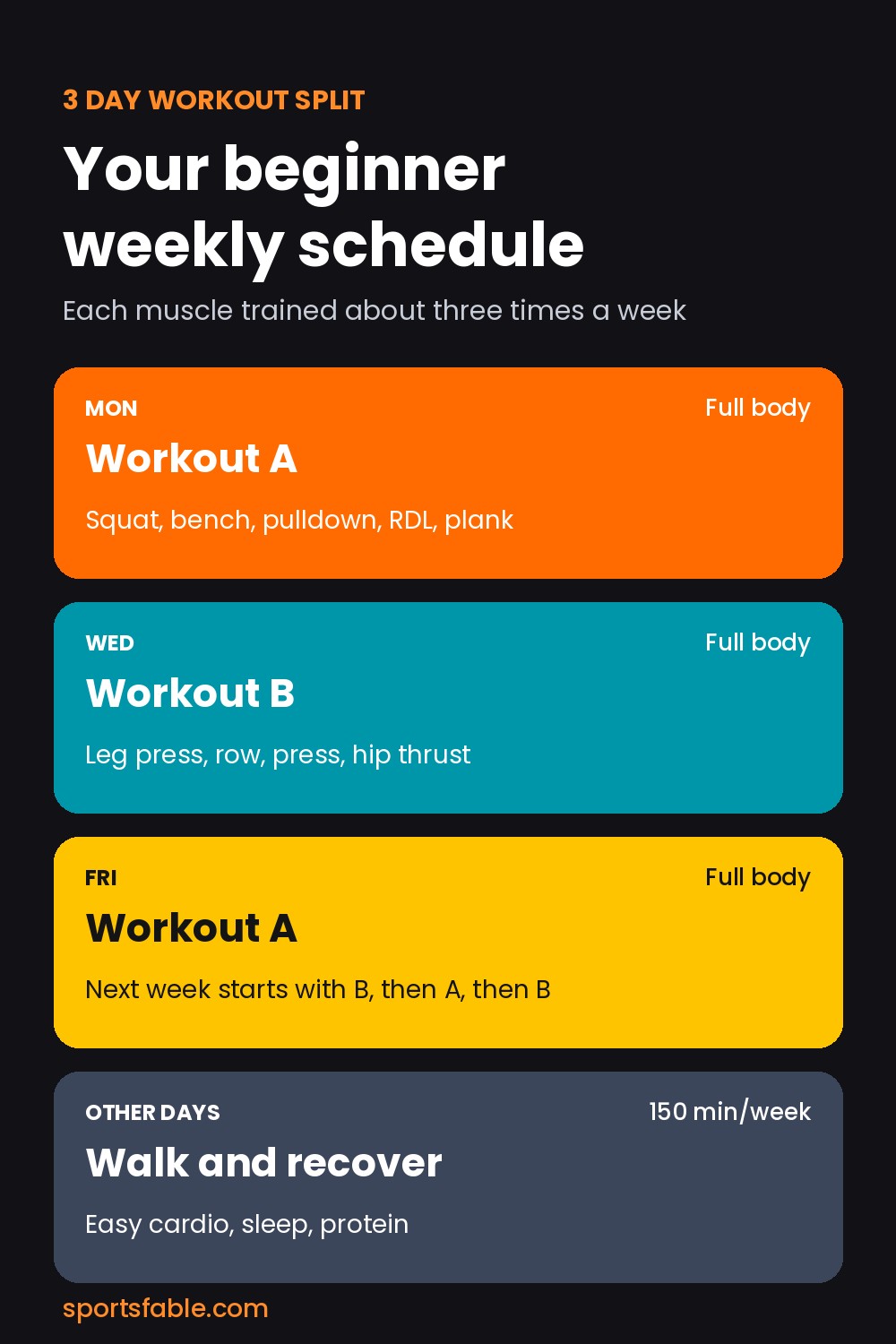
Train on three non-consecutive days and alternate two workouts, A and B:
- Week 1: Monday A, Wednesday B, Friday A
- Week 2: Monday B, Wednesday A, Friday B
Tuesday/Thursday/Saturday works just as well. The rule is a rest day between sessions. If you miss a day, don’t double up. Just do the next workout in the order.
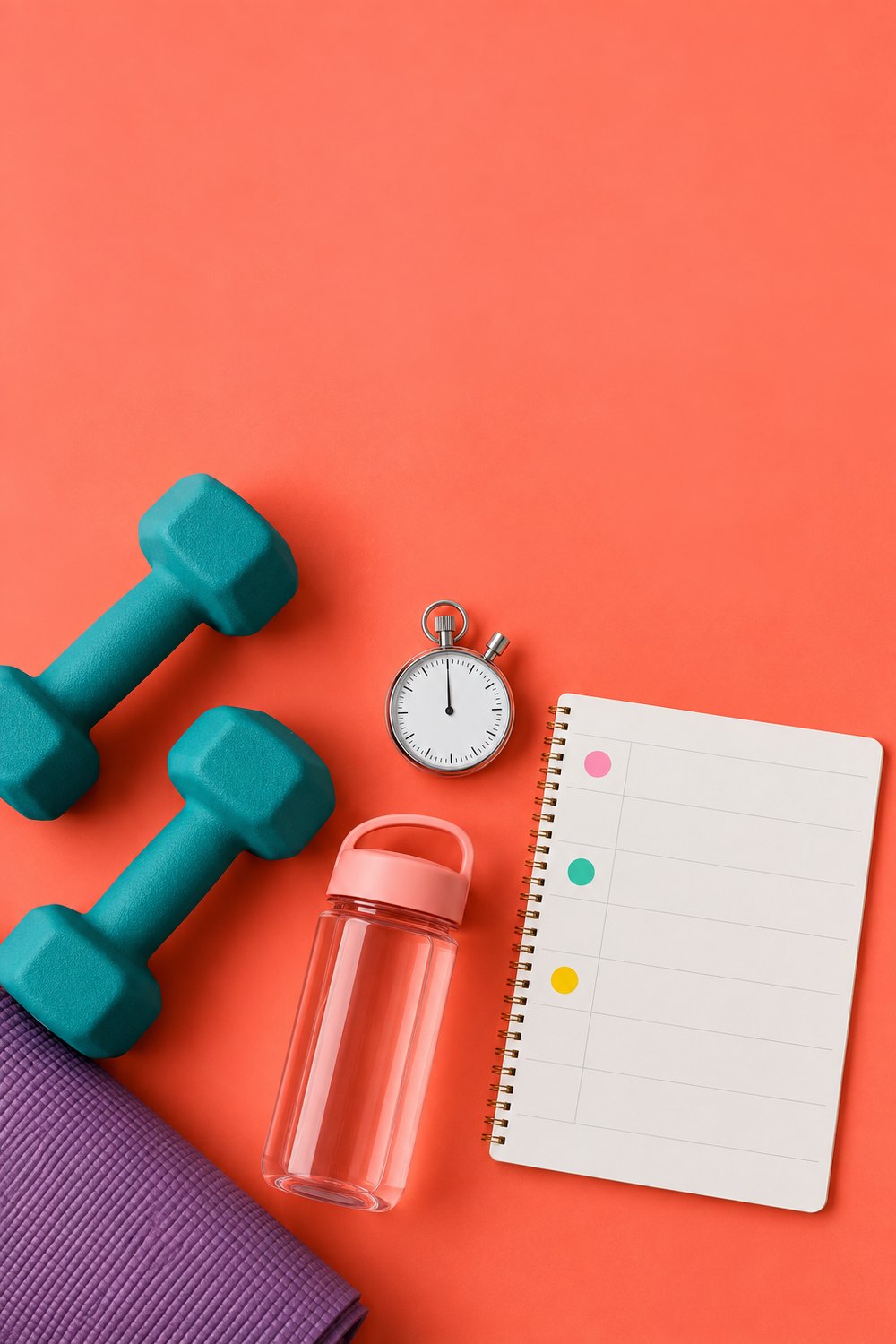
Workout A
- Goblet squat or barbell back squat: 3 sets of 8 to 10
- Dumbbell bench press: 3 sets of 8 to 10
- Lat pulldown: 3 sets of 10 to 12
- Dumbbell Romanian deadlift: 2 sets of 10
- Dumbbell lateral raise: 2 sets of 12 to 15
- Plank: 3 holds of 20 to 40 seconds
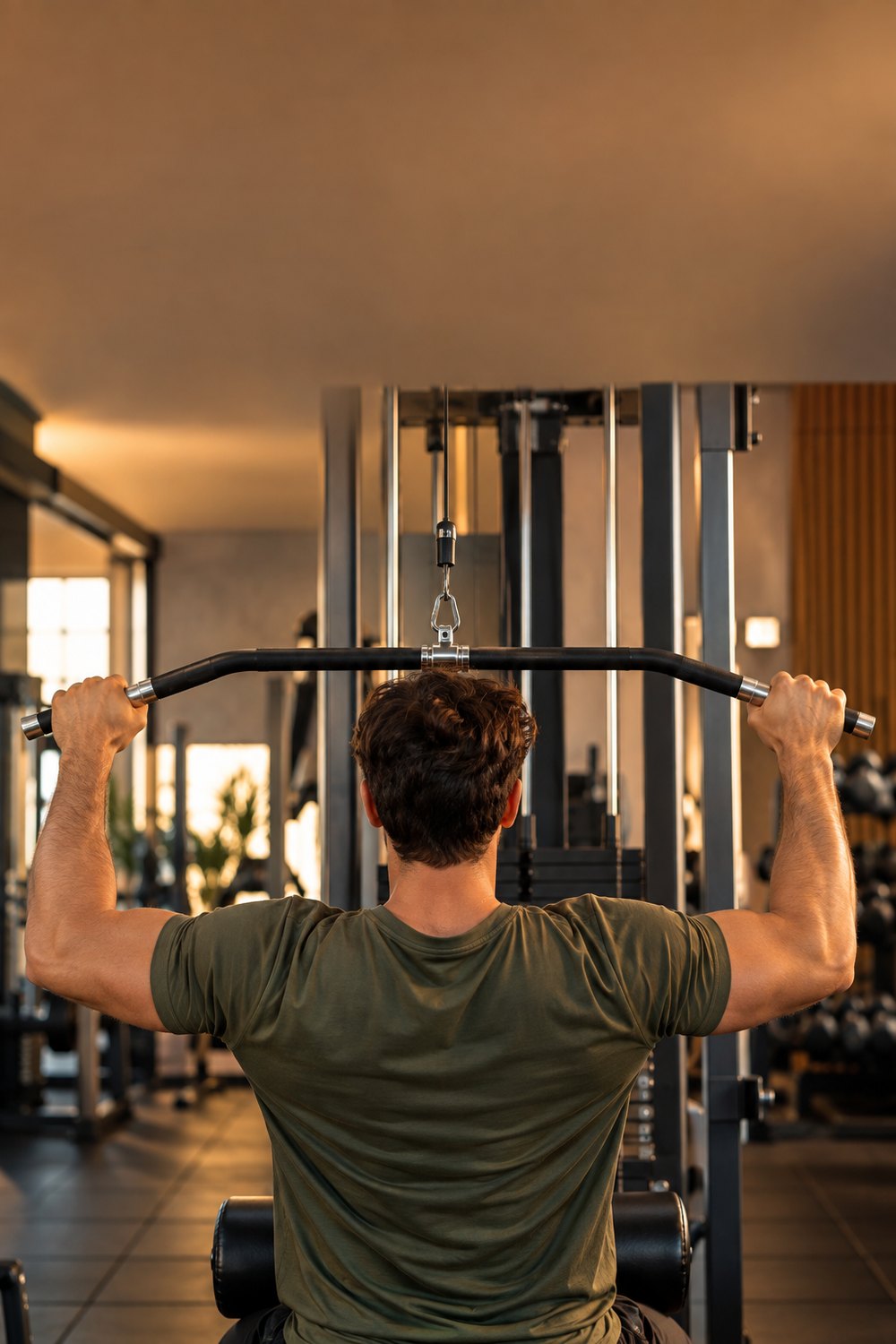
Workout B
- Leg press: 3 sets of 10 to 12
- Seated cable row: 3 sets of 10 to 12
- Dumbbell overhead press: 3 sets of 8 to 10
- Hip thrust or glute bridge: 3 sets of 10 to 12
- Dumbbell split squat: 2 sets of 8 per leg
- Dead bug: 3 sets of 8 per side
Rest about two minutes between sets of the big lifts and 60 to 90 seconds on the smaller ones. Each session should take 45 to 60 minutes including a short warm-up: five minutes of easy cardio, then one or two light sets of your first exercise.
How much should you lift?
Pick a weight you could lift for two or three more reps than the target with good form. That’s your starting point. It will feel easy at first, which is the point. The first month is about learning the movements and building the habit.
Then use double progression:
- Start at the bottom of the rep range (say 3 sets of 8).
- Each session, try to add a rep or two at the same weight.
- When you hit the top of the range on all sets (3 sets of 10), add the smallest weight jump available and drop back to 8 reps.
Write everything down. A notes app or a paper log both work. Progress you can see is the best motivation there is.
Is this enough volume?
Across a full week, this plan gives most major muscles roughly 6 to 12 hard sets, depending on the week and the muscle. That’s a solid beginner dose. In his write-up of his own training volume meta-analysis, Schoenfeld reports that 10 or more weekly sets per muscle produced almost twice the gains of fewer than five (9.8% versus 5.4%). The cost of more volume is more time and more fatigue, so for a beginner this is the right place to start. You can add a set to the exercises you care most about after the first two or three months.
The quick-glance version
Screenshot this for the gym floor.
Common beginner mistakes (and the fix)
- Going too heavy in week one. Start lighter than your ego wants. You have months of progress ahead.
- Changing the plan every two weeks. Progress comes from repeating the same lifts and slowly adding weight. Give this plan at least eight to twelve weeks.
- Skipping the lower body. Legs and hips are your biggest muscles. Don’t swap squats for extra curls.
- Not writing anything down. If you don’t log it, you can’t beat it next time.
- Treating soreness as the goal. Some soreness early on is normal. It’s not a sign the workout was good.
Swaps for every setup
Dumbbell-only (home or hotel gym)
Goblet squat, dumbbell floor or bench press, one-arm dumbbell row instead of the pulldown and cable row, dumbbell RDL, dumbbell overhead press, single-leg glute bridge, split squat. Everything else stays the same.

Machines only (Planet Fitness style)
Leg press, chest press machine, lat pulldown, seated row machine, leg curl, shoulder press machine, hip abduction, and the cable or ab machine for core. Machines are a perfectly good place to start: they’re stable, easy to load and hard to get badly wrong.
Glute-focused version
Swap the lateral raise in Workout A for a 3 x 12 hip thrust, and the dead bug in Workout B for cable kickbacks or 45-degree back extensions. Glutes then get direct work three times a week without making the sessions longer.
For runners and hybrid athletes
Keep lifting days away from your hardest runs, or lift after an easy run on the same day. Our hybrid athlete training plan shows how to fit both into one week without wrecking either.
What about cardio and body recomposition?
Lifting three times a week doesn’t cover heart health on its own. The CDC also recommends 150 minutes of moderate activity a week, like brisk walking or easy cycling. Walk on your rest days and you’re most of the way there. If your goal is body recomposition (losing fat while gaining some muscle), this plan plus daily walking and enough protein is about as reliable a setup as you’ll find for a beginner.
Keep building
New to the gym entirely? Our beginner gym workout plan walks you through your first visits and gym etiquette. For a deeper look at lower-body training, see our leg day workout for beginners, and print our weekly workout plan template to keep your log in one place.
This plan is general information for healthy adults, not medical advice. SportsFable’s writers train regularly but are not certified coaches. If you have an injury or health condition, check with a doctor or physical therapist before starting.
Questions people ask
Is a 3 day workout split good for beginners?
Yes. Three full-body sessions train every muscle about three times a week, leave room for recovery, and are realistic enough to keep doing for months.
What is the best 3 day split for women?
The same full-body plan works well. For extra glute focus, add hip thrusts to Workout A and cable kickbacks or back extensions to Workout B.
Can I do a 3 day split with only dumbbells?
Yes. Use goblet squats, dumbbell presses, one-arm rows, Romanian deadlifts, split squats and glute bridges. Add reps before adding weight if your dumbbells are limited.
Is full body or push pull legs better for 3 days a week?
For most beginners, full body. It trains each muscle three times a week instead of once, which research suggests is better for growth.
Can I build muscle working out 3 days a week?
Yes. Beginners respond quickly, and three sessions with roughly 6 to 12 weekly sets per muscle is plenty to build muscle in your first year.
Should I do cardio on my rest days?
Easy cardio like walking or cycling is a good idea. Aim for around 150 minutes a week of moderate activity, as the CDC recommends.
Images in this article are AI-generated illustrations and original graphics created by SportsFable. They show workout setups, not real people, teams or events.
Related Post