

Every gym has the chest-day guy. Monday is chest, always chest, and by Thursday he’s on arms and the bench press queue is finally empty. It’s the bro split, and for decades it was simply how people trained.
Then the internet discovered push pull legs, and suddenly the bro split was “outdated.” Plenty of people switched without really knowing why, and plenty of others still swear by one muscle a day.
Here’s the honest version. A push pull legs split usually beats a classic bro split for most people, but not for the reason you might think, and the gap is smaller than the arguments suggest. Below you’ll find what each split actually is, what the research says about frequency and volume, sample weeks for both, how to choose, and how to run PPL with only dumbbells.

What each split actually is
The bro split
One major muscle group per day, usually five days a week:
- Monday: chest
- Tuesday: back
- Wednesday: shoulders
- Thursday: legs
- Friday: arms
Each muscle gets one big session a week, with lots of sets packed into that day.
Push pull legs
Workouts are grouped by movement pattern:
- Push: chest, shoulders, triceps (presses, flyes, dips)
- Pull: back, rear delts, biceps (rows, pulldowns, curls)
- Legs: quads, hamstrings, glutes, calves (squats, hinges, lunges)
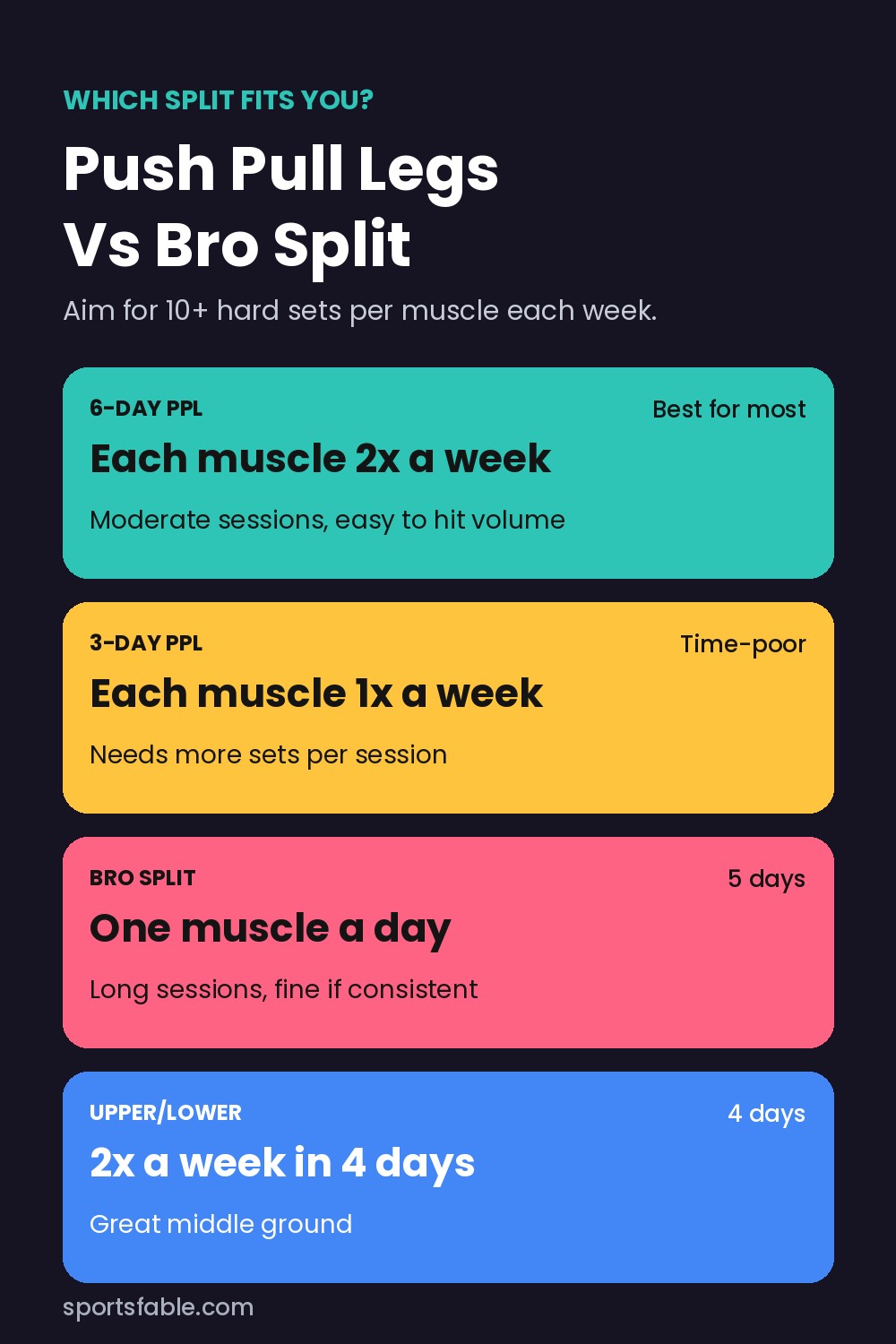
You can run it three days a week (each muscle once) or six days a week (each muscle twice). Six-day PPL is the version most people mean, and it’s the one that changes the comparison.
What the research says about frequency
The biggest difference between the two splits is how often each muscle gets trained. A 2016 meta-analysis in Sports Medicine by Brad Schoenfeld and colleagues found that training each muscle group at least twice a week produced better hypertrophy than once a week, when total volume was matched.
That’s the main argument for six-day PPL: every muscle gets hit twice. A bro split hits each muscle once.
The bigger lever, though, is weekly volume. Schoenfeld’s dose-response meta-analysis found average muscle growth of about 5.4% with fewer than 5 weekly sets per muscle, 6.6% with 5 to 9 sets, and 9.8% with 10 or more. In plain terms: hard sets per muscle per week matter more than how you slice the week.
So the honest summary is this. PPL makes it easier to reach 10-plus quality sets per muscle without one marathon session per body part. A bro split can match that volume, but it crams it into one day, and the last six sets of chest on a Monday are rarely high quality.
Push pull legs vs bro split: side by side
- Frequency: PPL (6-day) trains each muscle 2x a week. Bro split trains each muscle 1x a week.
- Session length: PPL sessions are moderate (45 to 70 minutes). Bro sessions can be long if you chase volume.
- Soreness: bro split leaves you very sore in one area. PPL spreads it out.
- Missing a day: miss a bro day and a muscle goes two weeks without training. Miss a PPL day and you still hit it later in the week.
- Beginner fit: neither is ideal. Beginners usually progress fastest on full-body or upper/lower plans.
A 6-day push pull legs routine
Run Push, Pull, Legs, then repeat, with Sunday off. Use 3 sets per exercise, leaving 1 to 2 reps in reserve.
Push (A)
- Bench press or dumbbell press: 6 to 8 reps
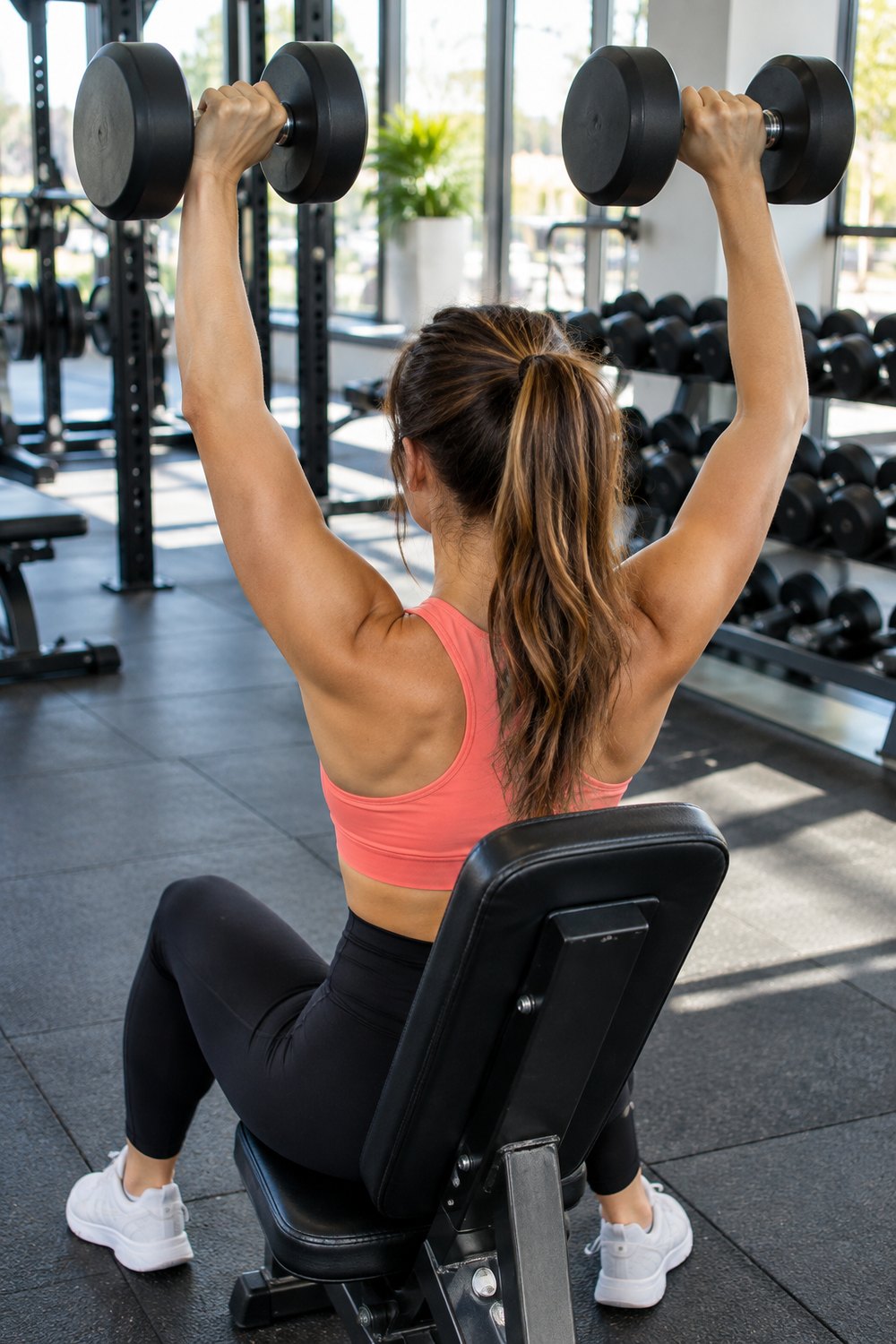
- Seated overhead press: 8 to 10
- Incline dumbbell press: 10 to 12
- Lateral raises: 12 to 15
- Triceps pushdowns: 10 to 12
Pull (A)
- Barbell or chest-supported row: 6 to 8
- Lat pulldown or pull-ups: 8 to 10
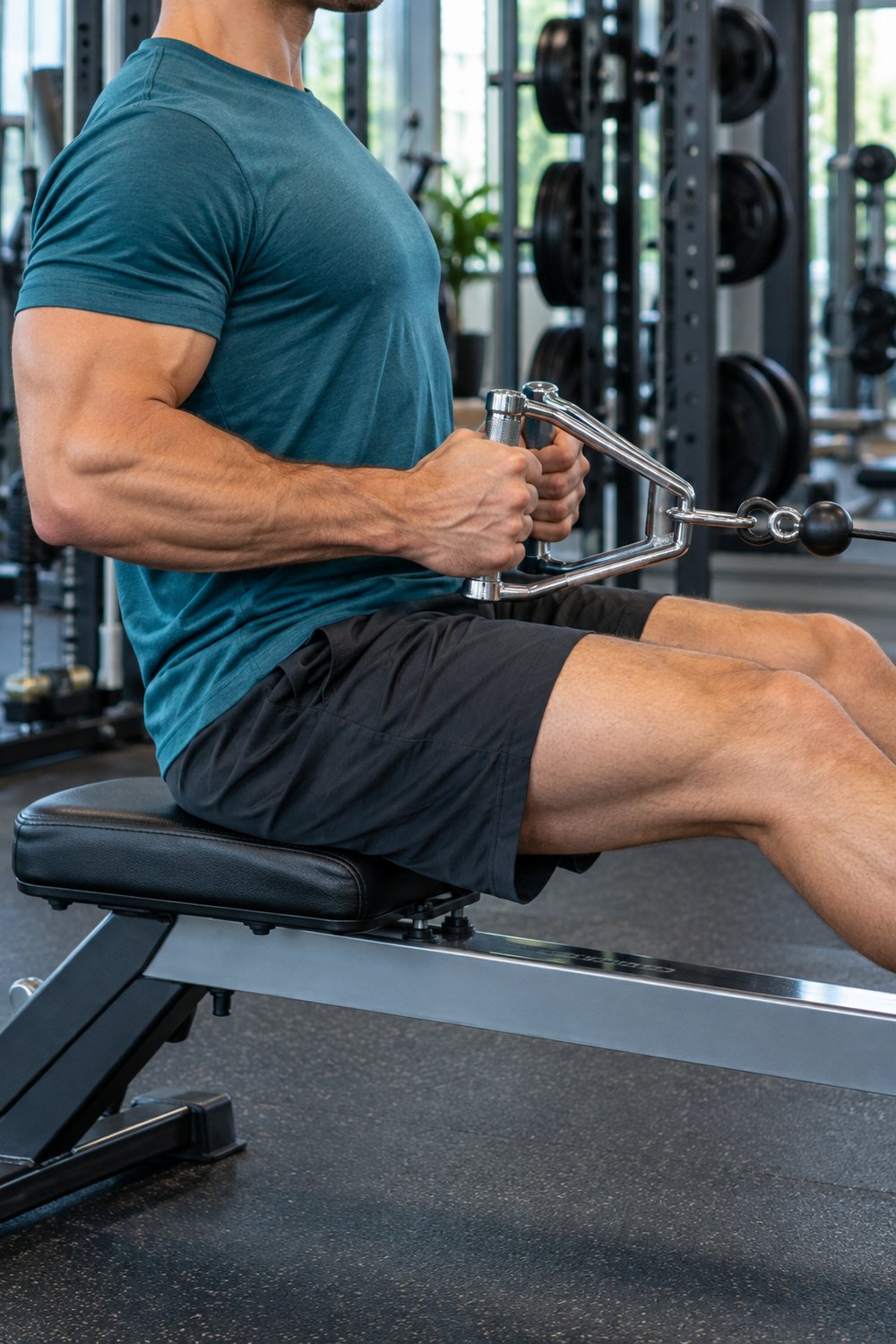
- Seated cable row: 10 to 12
- Face pulls: 12 to 15
- Dumbbell curls: 10 to 12
Legs (A)
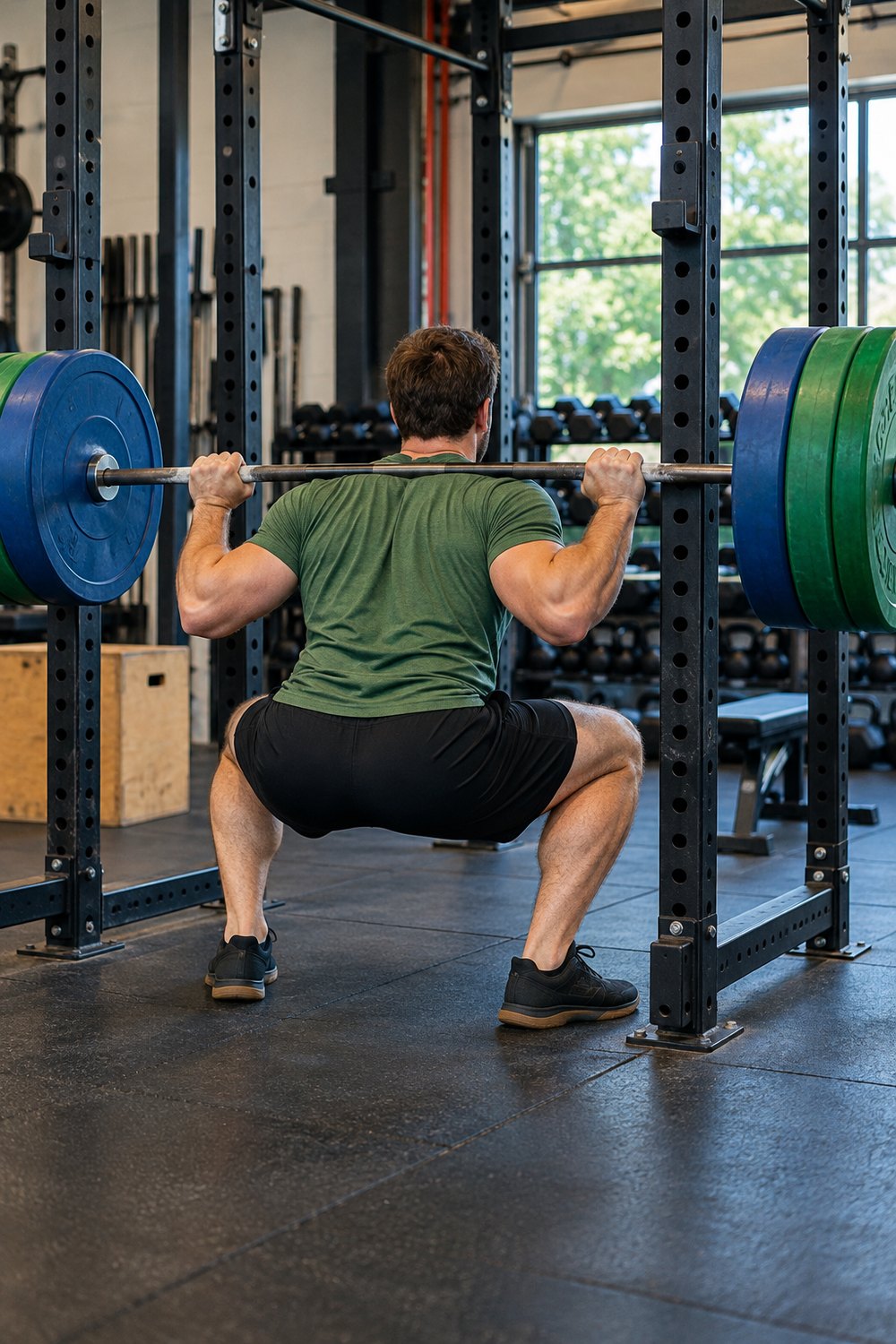
- Back squat or leg press: 6 to 8
- Romanian deadlift: 8 to 10
- Walking lunges: 10 per leg
- Leg curls: 10 to 12
- Calf raises: 12 to 15
For the second rotation of the week (B days), swap the main lift for a variation (incline press instead of flat, deadlift instead of row, front squat or hack squat instead of back squat) and keep the rest.
Progressing the plan
The American College of Sports Medicine’s progression guidelines suggest increasing the load by about 2 to 10% once you can perform one to two more reps than your target on two consecutive sessions. In practice: when you hit the top of the rep range twice, add the smallest jump the equipment allows.
Which split should you pick?
- Pick 6-day PPL if you can train six days most weeks, want to build muscle and enjoy shorter, focused sessions.
- Pick 3-day PPL only if you add volume per session. Once a week per muscle works, but it’s the weakest version.
- Pick a bro split if you love it, train consistently and can keep set quality high late in the session. Consistency beats the “optimal” split you quit.
- Pick an upper/lower split if you can only train four days. It gives you twice-a-week frequency with less time in the gym.
- Beginners: start with a full-body plan like our 3-day workout split for beginners for at least three months.
Push pull legs with dumbbells only
Home gym or a crowded commercial gym? PPL works with a pair of adjustable dumbbells and a bench:
- Push: dumbbell bench press, seated dumbbell press, incline press, lateral raises, overhead triceps extension.
- Pull: one-arm rows, chest-supported rows, rear-delt flyes, hammer curls, pullovers.
- Legs: goblet squats, Romanian deadlifts, Bulgarian split squats, hip thrusts, single-leg calf raises.
Is PPL good for women?
Yes. The split doesn’t care who’s training. Many women prefer a PPL variation with two leg days and extra glute work, such as Push, Pull, Legs (quad focus), Upper, Legs (glute focus). Our 5-day workout split for women is built that way.
Common push pull legs mistakes
- Treating every day as max day. Six days a week only works if most sets stop one or two reps short of failure.
- Skimping on leg day. Leg sessions are the hardest, so they’re the easiest to cut short. Put them early in the week when you’re fresh.
- Too many exercises. Five well-chosen movements per day beat eight rushed ones.
- No rest day. Keep at least one full day off. Sleep and recovery are part of the program.

Your quick checklist
- Count hard sets per muscle per week. Aim for 10 or more.
- Train each muscle at least twice a week if you can.
- Keep 1 to 2 reps in reserve on most sets.
- Add load when you beat the top of the rep range twice.
- Log every session.
- Pick the split you’ll still be doing in six months.
Keep building
Want a ready-made week to fill in? Use our weekly workout plan template. Looking for a longer block? The 12-week workout plan runs on a similar structure with planned progression.
Questions people ask
Is push pull legs better than a bro split?
For most people building muscle, a 6-day PPL is slightly better because each muscle is trained twice a week. The bigger factor is total weekly sets and consistency.
Is push pull legs good for women?
Yes. Many women run PPL with an extra leg or glute day. The principles are the same for everyone.
Push pull legs or upper lower?
Upper/lower fits a four-day week. PPL fits six days. Both train each muscle twice a week, so pick the one that suits your schedule.
Can I do push pull legs with dumbbells?
Yes. Use the dumbbell swaps above. Adjustable dumbbells and a bench cover the whole program.
What is the best push pull legs routine?
The one with enough weekly sets, compound lifts first, steady progression and a schedule you can stick to. The 6-day routine above is a solid starting point.
How many days is a PPL week?
Three days if you run it once, six if you run it twice. Most people use six days with one rest day.
Images in this article are AI-generated illustrations and original graphics created by SportsFable. They show training ideas, not real people or events.
Related Post