The sticky note on the fridge is nothing fancy. Someone drew a grid of 30 boxes in blue pen, six across and five down, and the first box already has a fat X through it. The other 29 are just sitting there, waiting to see if this time is different.
Here’s the honest part before the plan: a 30 day workout challenge won’t remake your body. Thirty days is too short for dramatic visible change, and anyone promising a new physique by day 30 is selling something. What a month can do is real, though. You’ll get noticeably better at the moves, stairs and grocery bags will feel easier, and you’ll build the habit that makes month two possible.
So this plan is built for exactly that. Four short strength sessions a week (20 to 30 minutes each), one longer walk, one stretch day and one full rest day, all at home with your body weight and an optional pair of dumbbells. Each week gets a little harder, and day 29 tells you exactly how far you came.
What 30 days can and can’t do

Most of what you gain in the first four weeks of strength work is skill. Your brain gets better at recruiting the muscles you already have, so your squat gets deeper, your push-ups get steadier and your plank stops shaking at 15 seconds. That’s why beginners often see their numbers jump early.
What you probably won’t see is a big change in the mirror. Muscle grows slowly, and body composition depends far more on food, sleep and months of consistency than on any single circuit. Treat a 30 day workout challenge as a foundation instead of a finish line and you’ll be far less likely to quit on day 12 because nothing looks different yet.
How the plan works
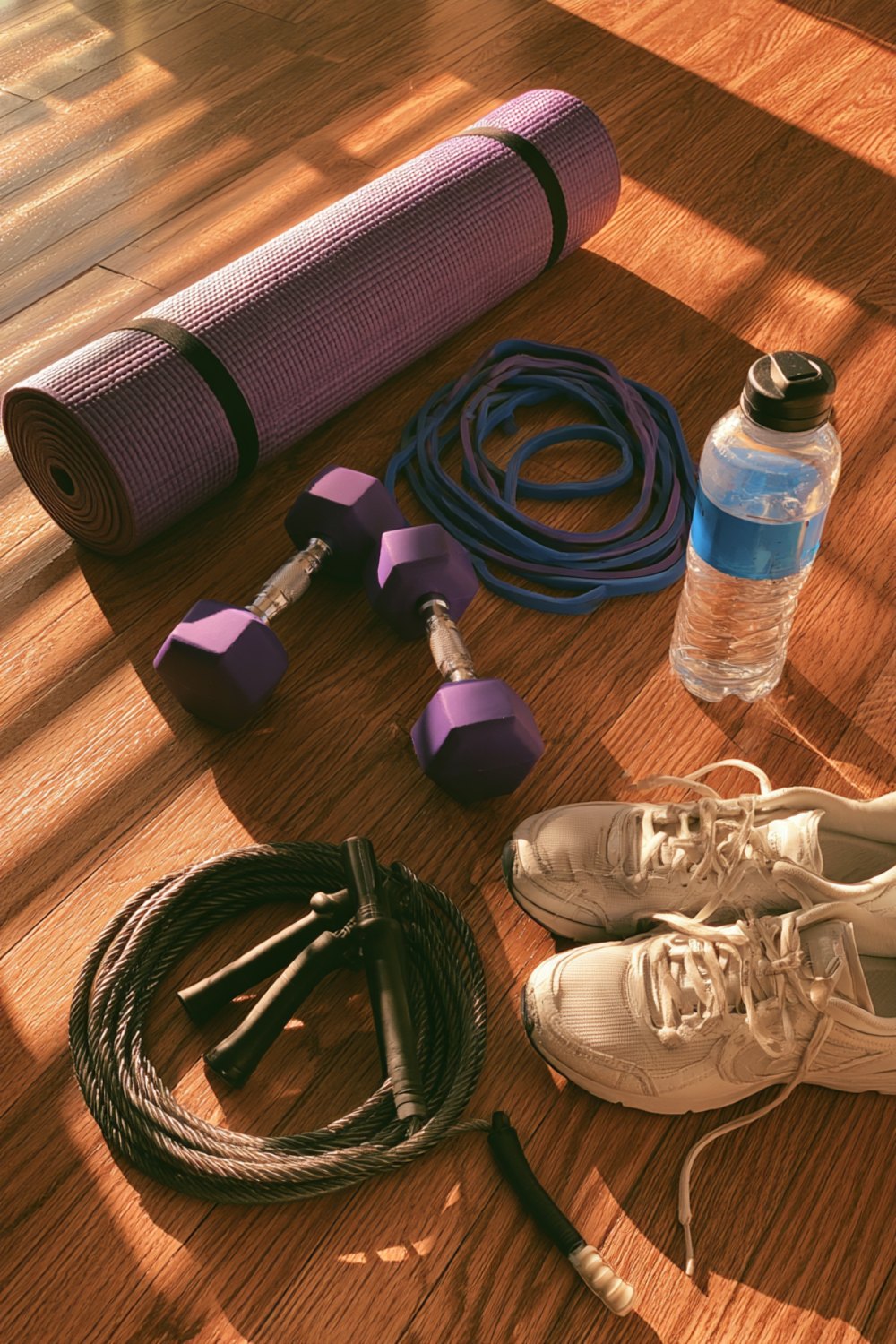
There are two workouts. A trains legs and core, B trains upper body and back, so you can do them on back-to-back days without hitting the same muscles twice in a row. Do each as a circuit: one set of every move, rest 60 to 90 seconds, then repeat for the number of rounds listed that week. Pick a rep count you could beat by two with good form. When you hit the top of the range two sessions in a row, move to the harder version.
Warm up (4 minutes, every time)
Two minutes of brisk marching or walking around the house, 10 arm circles each way, 10 slow bodyweight squats, then 5 hip hinges with your hands on your thighs.
Workout A: legs and core
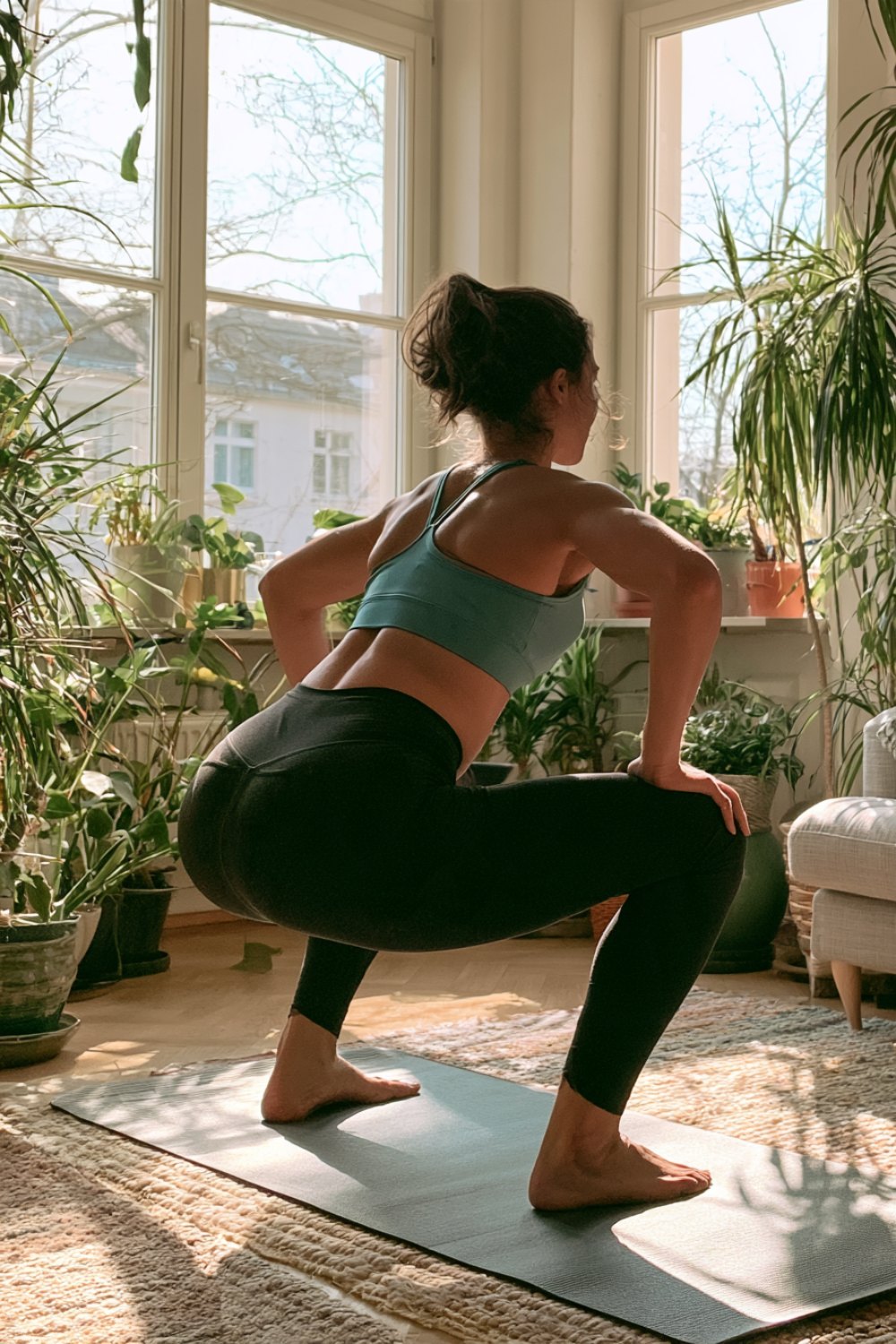
- Squats to a chair: 10 to 15 reps (dumbbell swap: goblet squat with one dumbbell at your chest)
- Reverse lunges: 8 to 10 per leg (dumbbell swap: hold one in each hand)
- Glute bridges: 12 to 15 reps (dumbbell swap: rest one across your hips on a folded towel)
- Wall sit: 20 to 45 seconds
- Front plank: 20 to 40 seconds (on your knees is fine for week 1)
Workout B: upper body and back
- Incline push-ups: 8 to 12 reps (kitchen counter, then a table, then a sofa seat or bench, then the floor)
- Backpack rows with 5 to 10 pounds of books inside: 10 to 15 reps (dumbbell swap: bent-over dumbbell rows)
- Chair dips with bent knees: 8 to 12 reps (dumbbell swap: overhead triceps extensions)
- Bird dogs: 8 per side, slow, with a 2 second pause
- Superman holds: 3 holds of 10 seconds
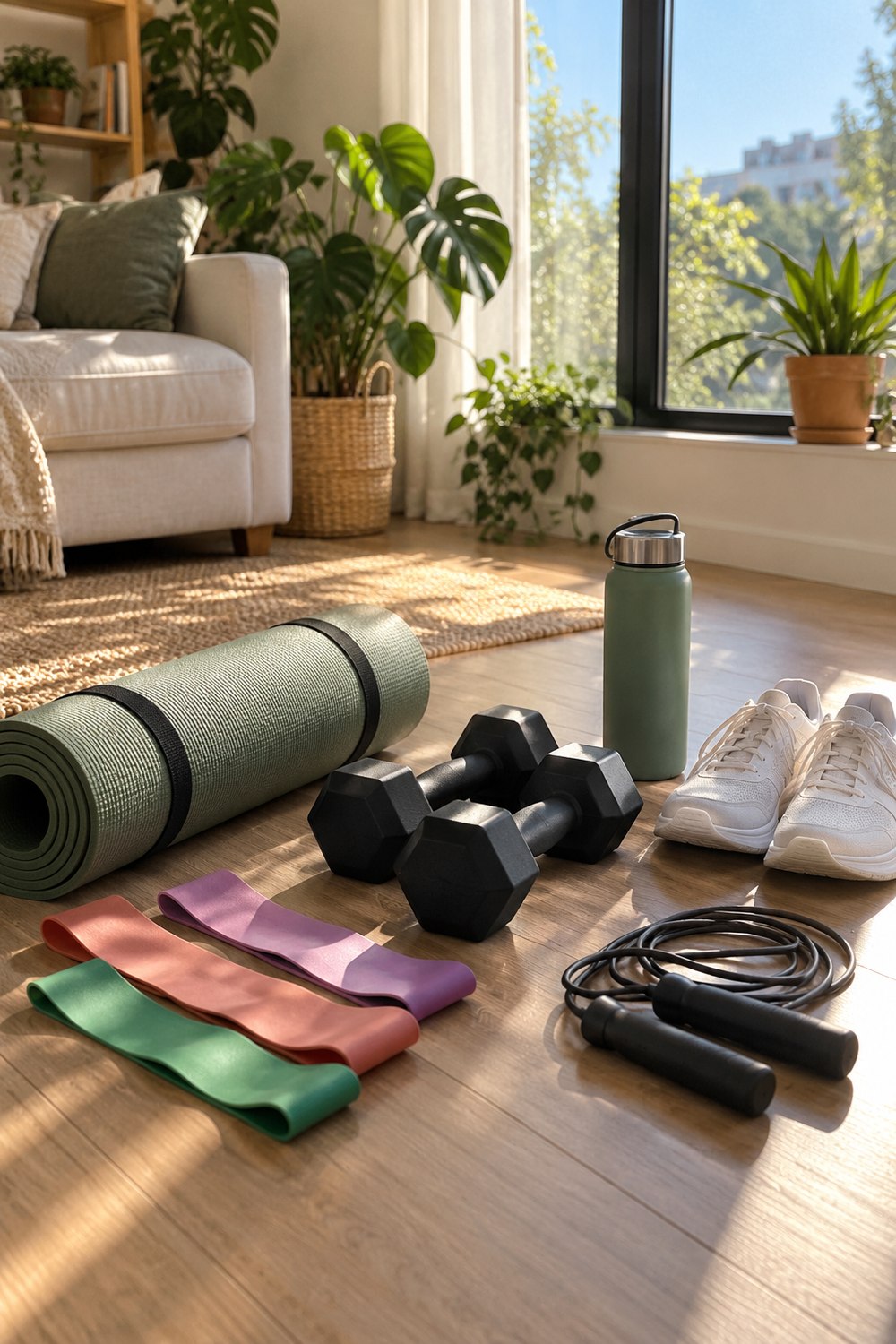
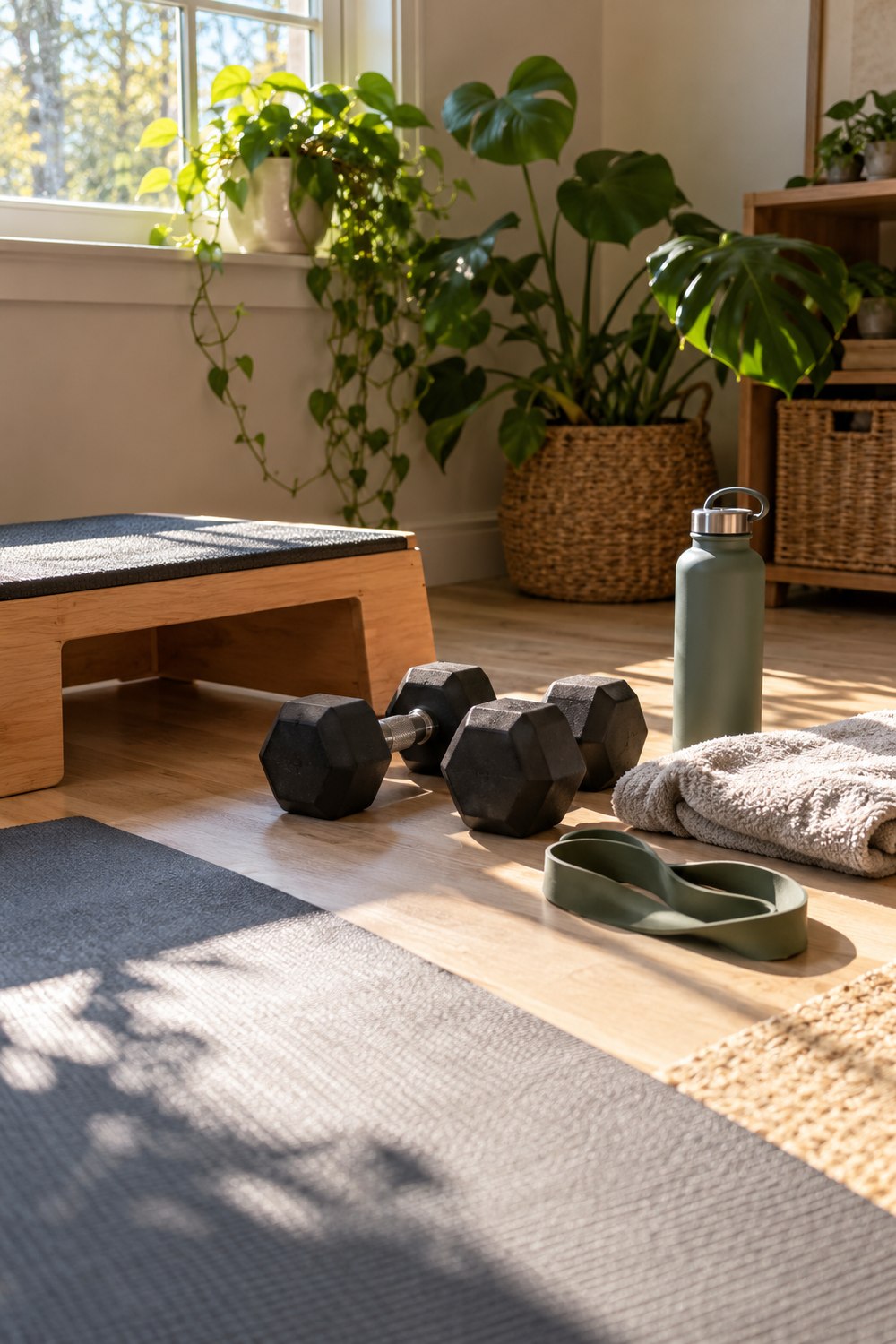
Dumbbells aren’t required. If you have them, a light pair (roughly 5 to 15 pounds for most beginners) is plenty for month one. Adjustable sets run anywhere from about $60 to $300, so there’s no rush to buy before you know you’ll stick with it.
The full 30 day workout challenge, day by day
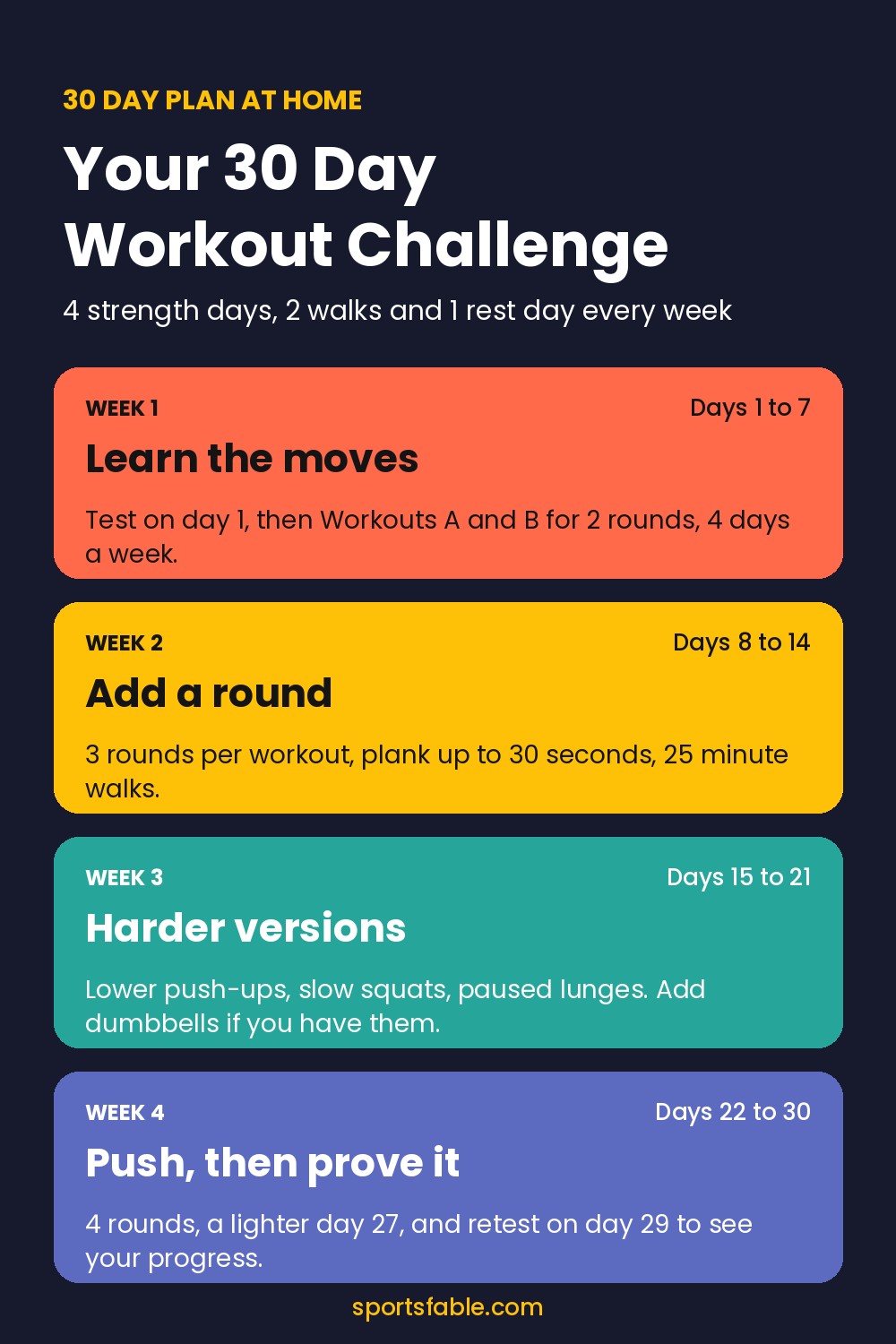
Every week follows the same rhythm; only the rounds and the difficulty change. If you’d rather not copy all this onto a sticky note, grab the free printable calendar below: every day’s workout is already written in its box.
Free printable
30 Day Workout Challenge Calendar
A 2 page printable: a 30 day calendar with every workout written in its box, plus a week-by-week log for your rounds and test results.
Week 1 (days 1 to 7): learn the moves
- Day 1: Test day. Max incline push-ups on a counter, squats in 60 seconds, longest plank. Write the numbers down, then do Workout A for 2 rounds.
- Day 2: Brisk walk, 20 minutes.
- Day 3: Workout B, 2 rounds, bottom of every rep range.
- Day 4: Stretch, 10 minutes.
- Day 5: Workout A, 2 rounds.
- Day 6: Workout B, 2 rounds.
- Day 7: Full rest.
Week 2 (days 8 to 14): add a round
- Day 8: Workout A, 3 rounds.
- Day 9: Brisk walk, 25 minutes.
- Day 10: Workout B, 3 rounds.
- Day 11: Stretch, 10 minutes.
- Day 12: Workout A, 3 rounds, plank up to 30 seconds.
- Day 13: Workout B, 3 rounds.
- Day 14: Full rest.
Week 3 (days 15 to 21): harder versions
Keep 3 rounds, but upgrade each move: push-ups one surface lower, squats with a 3 second lowering, lunges with a 1 second pause at the bottom, wall sits to 40 seconds. If you own dumbbells, this is the week to bring them in.
- Day 15: Workout A, harder versions.
- Day 16: Brisk walk, 30 minutes.
- Day 17: Workout B, harder versions.
- Day 18: Stretch, 10 minutes.
- Day 19: Workout A, harder versions.
- Day 20: Workout B, harder versions.
- Day 21: Full rest.
Week 4 (days 22 to 30): push, then prove it
- Day 22: Workout A, 4 rounds.
- Day 23: Brisk walk, 30 minutes, with a few hills or stairs.
- Day 24: Workout B, 4 rounds.
- Day 25: Stretch, 10 minutes.
- Day 26: Workout A, 4 rounds.
- Day 27: Workout B, 3 rounds (lighter on purpose, so you’re fresh for the retest).
- Day 28: Full rest.
- Day 29: Retest. Same three tests as day 1, same counter, same rules.
- Day 30: Easy walk, then compare your numbers and plan month two.
Missed a day? Don’t double up. Pick up where you left off and let the challenge run to day 32. The grid on the fridge doesn’t care about the calendar.
If you’d rather do it at the gym
The same structure works with machines and free weights, and progress is easier there because the weight goes up in small, exact jumps. Swap the moves like this:
- Squats: leg press or goblet squat
- Glute bridges: machine or barbell hip thrust
- Incline push-ups: machine chest press
- Backpack rows: seated cable row
- Chair dips: cable triceps pushdown
Do 1 to 3 sets of 10 to 15 reps and add the smallest weight jump once the top of the range feels easy. If you want a plan built for the gym from the start, our beginner gym workout plan lays out the machines and settings.
How to track it without losing interest
The fridge grid works because it’s visible. Cross off the box the moment you finish, not later. Track three things only: did you do it, how many rounds, and one word on how it felt (easy, fine, tough).
The second page of the printable is a week-by-week log with space for your day 1 and day 29 test numbers. If you’d like a longer-term sheet once the month is over, our printable workout tracker handles sets, reps and weights for any plan.
Safety, guidelines and the postpartum note
This 30 day workout challenge lines up with the basics most health bodies agree on. The CDC’s activity guidelines for adults call for 150 minutes of moderate activity a week, such as brisk walking, plus at least 2 days of muscle-strengthening work. The four strength days cover the second part easily. The walks alone don’t reach 150 minutes, so add a 10 to 15 minute walk after your strength sessions if you want to close that gap.
Mayo Clinic’s guide to strength training notes that a single set of 12 to 15 reps with the right load can build strength in most people, that 20 to 30 minute sessions are enough to notice a difference, and that you should rest a full day between working the same muscle group. That last point is why A and B split the body in half. It also says to stop an exercise if it causes pain.
Muscle soreness for a day or two in week one is normal. Sharp pain, joint pain, dizziness or chest discomfort is not, and it means stop and get checked. If you have a heart condition, a recent injury or haven’t exercised in years, talk to your doctor before you start.
If you’ve recently had a baby, get clearance from your doctor, midwife or other provider before starting any program, this one included. Recovery timelines vary a lot, and your provider knows your birth and your body. The American College of Obstetricians and Gynecologists has a plain-language page on exercise after pregnancy that’s worth reading before that conversation.
Your quick-start checklist
- Print the calendar (or draw your 30 box grid) and stick it somewhere you’ll see daily.
- Find a sturdy chair that won’t slide, a counter for push-ups and a backpack you can load with books.
- Clear a space about 6 by 6 feet, ideally with a mat or rug.
- Do the day 1 tests and write the numbers on page two of the printable.
- Warm up for 4 minutes before every session.
- Pick the same time slot each day so you’re not deciding from scratch.
- Plan month two before day 30 ends.
Keep building the habit: once the month is done, roll into our 7 day home workout plan for more variety, add mobility with a daily stretching routine, start working toward your first chin-up with this pull-up progression, or set up a corner of the house with these small home gym ideas.
Questions people ask
Is there a free printable version of this challenge?
Yes. The download above has two pages: a 30 day calendar with each day’s workout written in its box, and a week-by-week log for rounds, notes and your test numbers.
Is this a calisthenics plan?
Mostly, yes. The bodyweight version is beginner calisthenics: squats, lunges, push-up progressions, bridges, planks and holds. It skips pull-ups and bar dips, which usually need a few months of base strength first.
Will a 30 day workout challenge change my arms or glutes?
It’ll make those muscles stronger, and you’ll likely feel the difference before you see any. Visible change usually takes several months of steady training with progressively harder work, plus enough protein and sleep. Use this month to build the base and the routine.
Can I do it with dumbbells?
Yes. Every lower body move and most upper body moves have a dumbbell swap, and week 3 is the natural place to add them. Start light enough that the last two reps are hard but your form doesn’t change.
How long does each workout take?
About 15 minutes in week 1 and 25 to 30 minutes by week 4, including the warm-up. The walks run 20 to 30 minutes and the stretch days take 10.
Is it okay postpartum?
Only once your provider has cleared you for exercise. After that, ask them whether these specific moves (especially planks and lunges) suit where you are in recovery, and drop back to the week 1 version whenever you need to.
What should I do after day 30?
Don’t restart at week 1. Repeat week 4 with harder versions or added dumbbells, or move to a structured split. The best plan for month two is one that keeps the four strength days you’ve already made room for.
Images in this article are AI-generated illustrations and original graphics created by SportsFable. They show training scenes, not real people, teams or events. The printable is an original SportsFable resource.
Related Post