
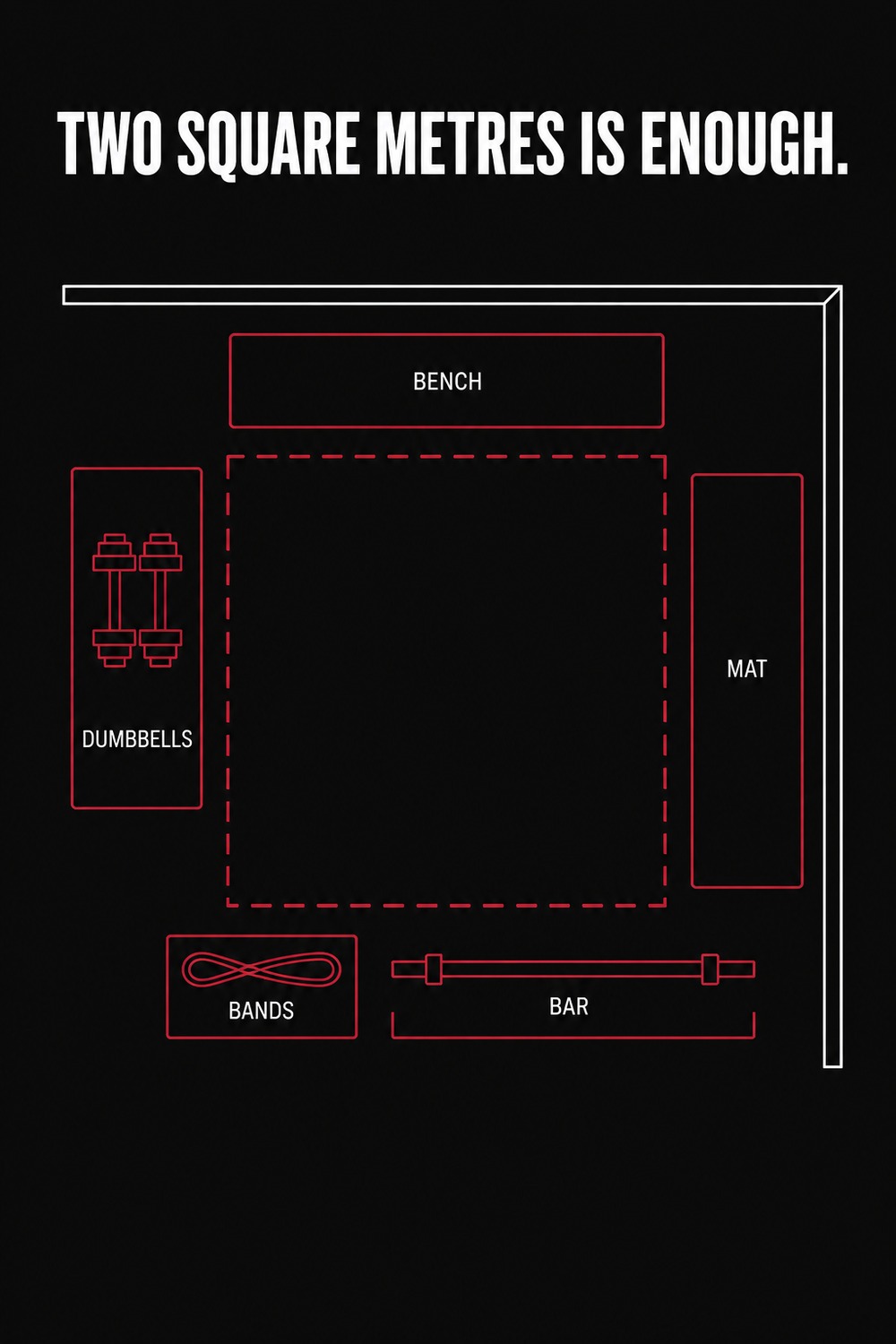
You don’t need a spare room. You need about two square metres and a bit of ruthlessness about what actually earns its place.
Most small home gym content shows you a converted double garage and calls it compact. This is what genuinely fits in a corner, an alcove, or the end of a bedroom — and what to leave in the shop.
Work out your actual footprint first
Before buying anything, lie down on the floor with your arms stretched overhead.
That rectangle is your real minimum. It’s what you need for floor pressing, hip thrusts, stretching and most bodyweight work. If you can’t clear that space, no amount of clever equipment fixes it.
Then check your ceiling. Standing overhead press with a bar needs around 2.4m for most people. If you’ve got a low ceiling, that’s not a disaster — it just means dumbbells and landmine work instead of a barbell overhead.
The five-item setup that covers almost everything
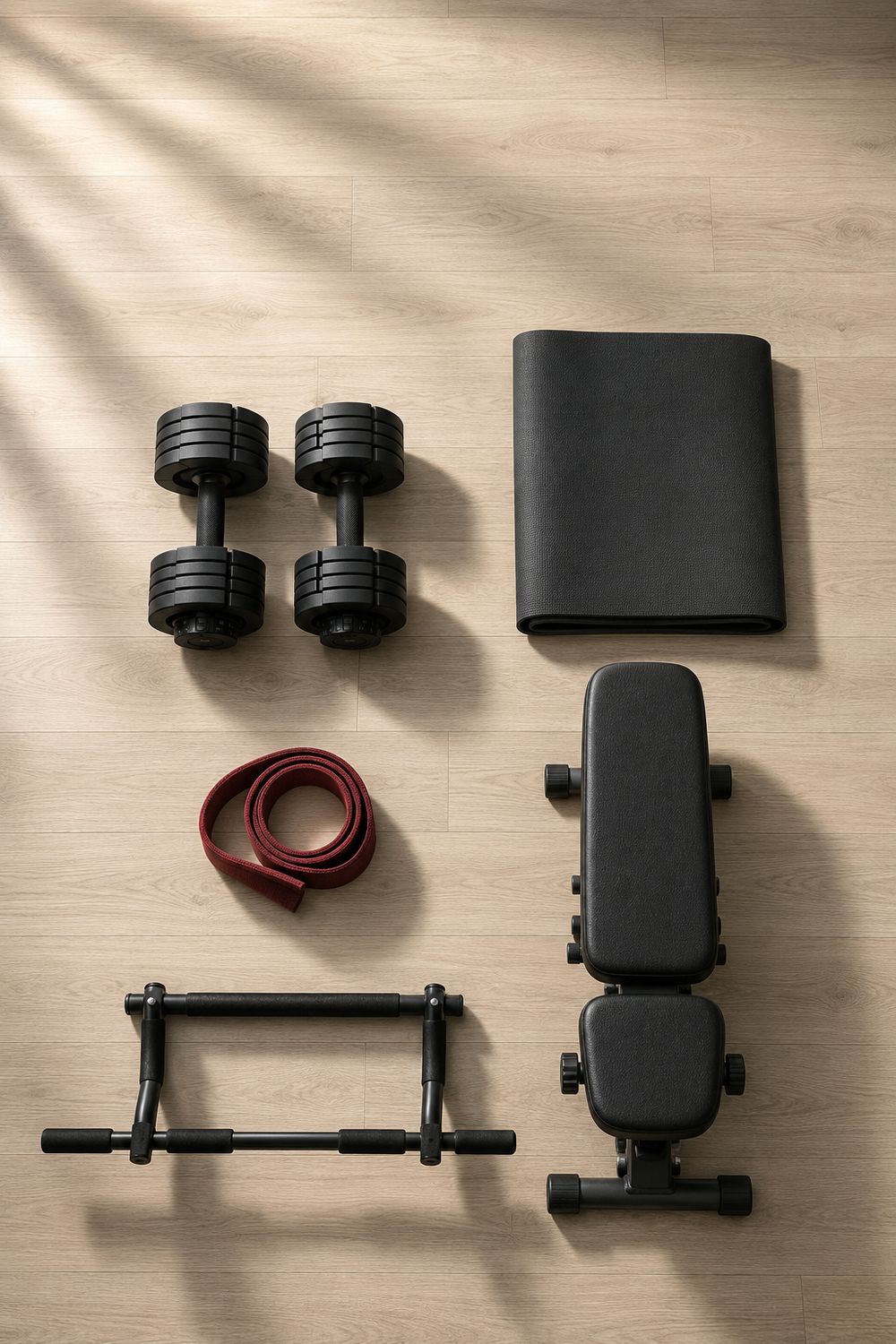
If you buy nothing else, buy these.
1. Adjustable dumbbells. The single best purchase in a small space. One pair replaces an entire rack. They’re not cheap, and they’re worth it.
2. An adjustable bench. Flat, incline, upright. Folds away. Doubles as a step and a bench for hip thrusts.
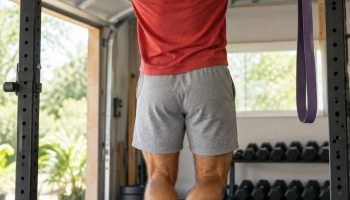
3. A pull-up bar. Doorway mounted if you’re renting, wall mounted if you’re not. Nothing else trains your back this well for this little space.
4. Resistance bands. Genuinely useful, not a compromise. Warm-ups, assistance work, and everything on the days you travel.
5. A decent mat. Protects the floor, protects your knees, and marks out your training space psychologically. That last part matters more than it sounds.
That’s it. That combination will take a beginner to genuinely strong.
What to skip in a small space
A treadmill. Enormous, expensive, and you live somewhere with roads. If cardio’s the goal, a bike trainer or a rower folds away and a treadmill doesn’t.
A full power rack, unless you’ve genuinely got the room and the ceiling. A wall-mounted folding rack is the small-space answer if you’re set on barbell work.
Fixed dumbbells. A rack of them eats the wall you needed for everything else.
Machines. One machine trains one or two movements and occupies the space of your entire setup.
Five layouts that actually work
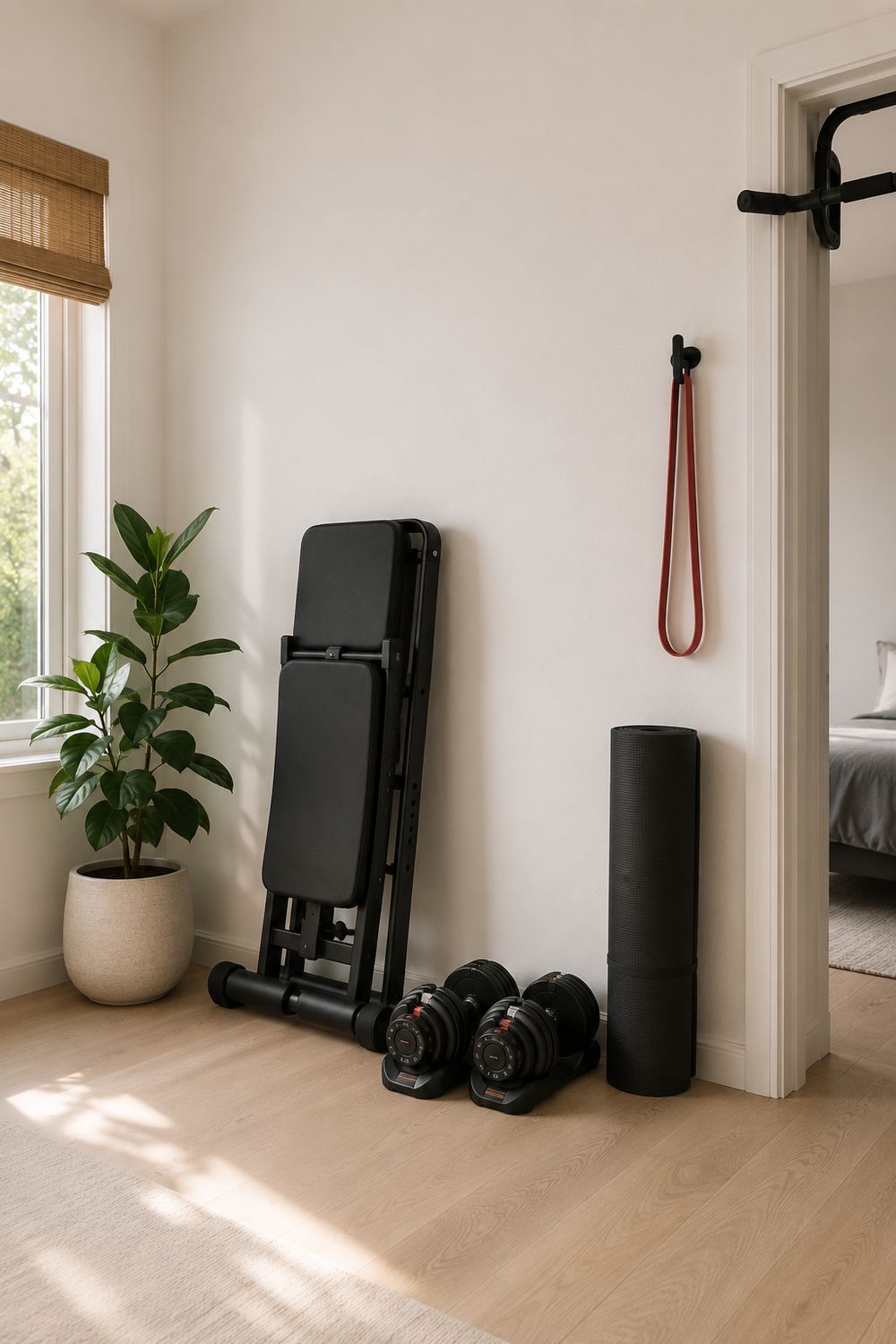
The corner. Bench against the wall, dumbbells underneath, bar in the door frame, mat rolled up behind. Sets up in a minute.
The alcove. Shallow shelving above, mat below. If you’ve got a chimney breast recess, that’s your gym.
The wardrobe. Everything lives behind doors, comes out for the session, goes back after. Best option if the room has to look like a room.
Under the stairs. Awkward height, fine for storage. Train in the hallway, store in the cupboard.
The balcony or shed. Cold in January, but it’s space nobody’s competing for. Rubber matting and a dehumidifier if it’s damp.
Making it look like somewhere you want to be
This isn’t vanity. A space you’re slightly embarrassed by is a space you’ll train in less.
Mirror. Doubles the perceived size and lets you check your form. The highest-value cosmetic purchase by a distance.
Light. One warm lamp beats a ceiling light. It stops the corner feeling like a utility area.
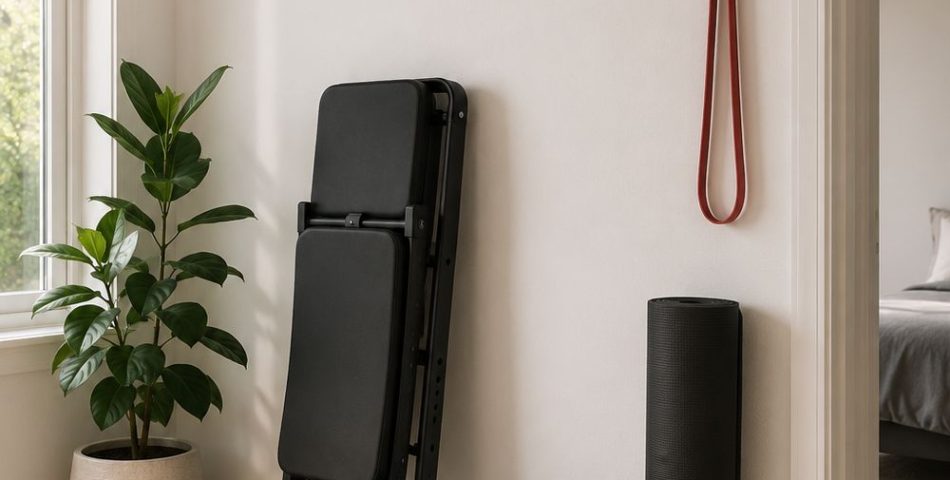
One rule: everything has a home. Bands on a hook, dumbbells under the bench, mat rolled and standing. A small gym that’s tidy feels twice the size.
Roughly what it costs
Adjustable dumbbells are the big line item and the one worth spending on. Bench, bar, bands and mat together usually come to less than the dumbbells do.
You can build the whole thing secondhand for a fraction. Home gym equipment gets bought in January and sold in March, every single year, and it’s almost impossible to damage.
What to actually do in it
Once it is built, our 7-day beginner gym plan adapts to dumbbells easily, and the leg day plan swaps machines for goblet squats and Romanian deadlifts. Running outdoors as well? choosing running shoes is worth five minutes before you spend anything.
Looking for home gym presents? Our gifts for gym lovers guide includes equipment worth the space.
Before you buy anything, try a week of bodyweight training with our 7-day home workout plan. It shows you which equipment you will actually use.
Have a garage to work with? Our garage gym ideas cover single-car, two-car and detached setups.
Choosing what goes under your weights? Read home gym flooring compared.
Building a gym as a gift? Our gifts for athletes guide has smaller ideas at every budget.
Free printables: grab 10 printable treadmill workouts.
Questions people ask
How much space do I actually need for a home gym?
About two square metres for most training, plus room to lie down with arms overhead. Ceiling height matters more than floor area if you want to press overhead.
What’s the best equipment for a small home gym?
Adjustable dumbbells, an adjustable bench, a pull-up bar, resistance bands and a mat. That covers nearly everything a beginner or intermediate needs.
Can you build muscle in a small home gym?
Yes. Muscle responds to load and effort, not to floor space. Adjustable dumbbells heavy enough to challenge you will take you a long way.
Is a home gym cheaper than a gym membership?
Over a couple of years, usually yes. In the first six months, usually no. Buy secondhand and the maths shifts a lot.
What should I not buy for a small home gym?
A treadmill, fixed dumbbells and single-purpose machines. All three take enormous space for what they give back.
Related Post