

Runners are told to lift for two reasons: to run faster, and to stop getting injured. Both are true. Neither is automatic.
The type of lifting decides which one you get, and some of the most commonly prescribed work does nothing at all.

What actually improves running economy
Running economy is how much oxygen you burn at a given pace. Improve it and the same speed costs you less.
The meta-analysis on strength training and running economy separates the methods, and the separation matters:
- Heavy loads — small improvements across a wide speed range, 8.6 to 17.9 km/h
- Combined heavy plus plyometric — moderate improvements, the best of the group
- Plyometrics alone — improvements only at slower speeds, 12 km/h and under
- Isometric and submaximal work — no improvement found
That last line is the useful one. If your “runner’s strength routine” is bodyweight circuits and wall sits, the research doesn’t support it doing anything for your economy.
The prescription that comes out of the pooled evidence: two to three sessions a week for eight to twelve weeks, mixing heavy resistance work with plyometrics.
The knee problem, and what to do about it
Most running injuries aren’t dramatic. They’re the knee that aches on descents, the outside-of-the-knee pain at mile four, the thing that goes away with rest and comes straight back.
The common thread is control, not weakness in a straight line. You need the hip to stop the knee collapsing inwards every time you land on one leg — which, running, is every single stride.
So single-leg work is the priority, and it’s why this plan looks light on bilateral lifting.
The twice-weekly session
Two days a week, on days you aren’t doing hard running. Not before a quality session, and not the day before your long run.
Day A — heavy
- Back squat — 4 × 5, heavy enough that rep five is genuinely hard
- Romanian deadlift — 3 × 6
- Bulgarian split squat — 3 × 8 each leg
- Calf raise, straight leg — 4 × 12
- Side plank with leg lift — 3 × 20 seconds each side
Day B — power and control
- Pogo hops — 4 × 12, stiff ankle, quick off the floor
- Single-leg box step-up — 3 × 8 each leg, slow down
- Single-leg Romanian deadlift — 3 × 8 each leg
- Banded lateral walk — 3 × 12 each direction
- Copenhagen plank — 3 × 20 seconds each side

Won’t lifting make me heavier and slower?
This is the fear, and it deserves a straight answer rather than reassurance.
Lifting twice a week at these volumes does not build meaningful muscle mass in an endurance athlete who is also running a lot. The interference effect works in your favour here — it blunts hypertrophy, which is exactly what you want in this context.
The cost is real but it’s elsewhere: it’s time, and it’s fatigue on the days you lift. If your legs feel heavy on an easy run the day after Day A, that’s normal. If they feel heavy on your quality session, you’ve put the days in the wrong order.

How this fits with everything else
The full picture of training strength and endurance together — including the measured cost — is in the four-day hybrid split. If you’re building toward a race, the half marathon plan for people who lift folds this session structure into a full race build.
And since none of this matters if your shoes are wrong, the guide to choosing running shoes covers what the evidence actually supports — which is less than the shop will tell you.
Training through the cold months? See our cold weather running guide on what to wear at every temperature, from 45°F down to below freezing.
Still building your running base? Start with the couch to 5K schedule, then add these strength sessions once 30 minutes feels comfortable.
Combining running and lifting for a race? The Hyrox training plan for beginners shows how to balance both across 12 weeks.
Looking for a present for a runner in your life? Our gifts for runners guide pairs recovery tools and resistance bands with the gear they actually use.
Free printables: grab a free 12-week half marathon training plan, an 8-week 10K training plan, and a printable running pace chart.
New training plans: an 8-week pull up progression, a 10-minute stretching routine and our 18-week marathon training plan.
Questions people ask
How many times a week should runners strength train?
Two to three sessions a week for eight to twelve weeks is the range the pooled research supports.
Does strength training help knee pain when running?
Single-leg and hip control work addresses the mechanism behind most runner’s knee pain — the knee collapsing inward on landing. It isn’t a diagnosis or a cure, and persistent pain needs a physio.
Should runners lift heavy or light?
Heavy. Submaximal and isometric work showed no running economy improvement in the meta-analysis; heavy loads combined with plyometrics showed the most.
Can beginners do this?
Yes, with lighter loads. The movements are the same; the weight is what changes.
When should I lift around my runs?
Not before a quality session and not the day before a long run. Separate hard lifting and hard running by at least a day.
Before you start
This summarises published training research rather than personal coaching experience. If you’re currently injured, a physio who can watch you run beats every article on the internet, this one included.
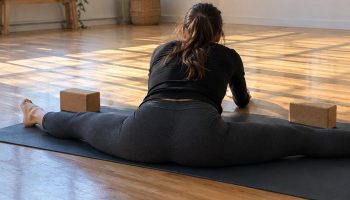
About the images on this page. The illustrations in this article were generated with AI by the SportsFable team. They are not photographs of real people, real events or real products, and no image here depicts an identifiable individual. We use AI imagery rather than licensed press photography, and we would rather tell you that plainly than let you assume otherwise. Our full approach to sourcing is on our About page.
Related Post